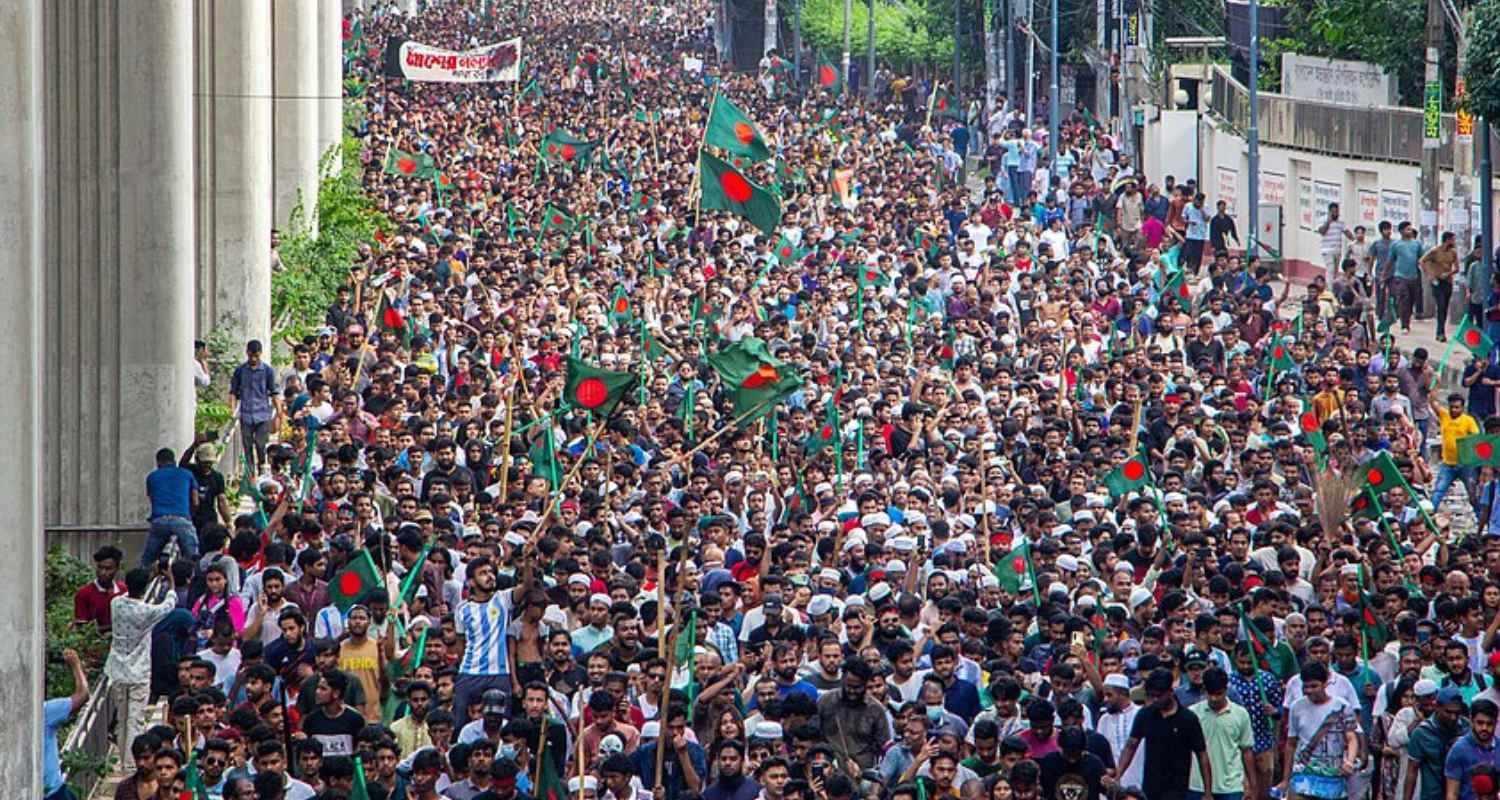
Two years after the events surrounding Bangladesh’s 2024 “July Uprising,” serious inconsistencies in reported death tolls, disputed evidence, and allegations of political manipulation have raised fresh questions about the official narrative and subsequent legal proceedings. From the outset, estimates of casualties have varied sharply across officials and organisations. On September 4, 2024, then Information Adviser Nahid Islam claimed that 800 people had been killed. Weeks later, the Anti-Discrimination Student Movement put the figure at 1,581.
Subsequent statements further muddied the picture. On November 11, 2024, Chief Adviser Muhammad Yunus cited 872 deaths, while in April 2025, movement leaders Sarjis Alam and Hasnat Abdullah separately claimed figures ranging from 1,000 to over 1,400.
The United Nations Human Rights Office later reported that “up to 1,400 people” may have been killed between July 1 and August 15, 2024. However, a Bangladeshi newspaper (Prothom Alo) estimated 767 deaths over a longer period stretching to November.
Despite repeated claims of large-scale casualties, none of these figures clearly identifies victims or establishes how many deaths occurred before August 5, 2024—a key date marking the political transition.
Inflated figures and external influence
Multiple intelligence and investigative sources suggest that casualty figures may have been exaggerated, particularly for deaths occurring before August 5. Reports indicate that the prosecution team of the International Crimes Tribunal (ICT) allegedly attempted to influence UN investigators by proposing a target figure of 2,000 deaths.
Critics argue that such actions, if substantiated, could have shaped international reporting without independent verification. The UN report itself acknowledged reliance on available data, raising concerns about the robustness of its conclusions.
The ‘Martyrs’ definition
The controversy extends to the July Uprising Martyrs’ Families and Welfare Ordinance, 2025, which defines a martyr as someone killed in attacks by state forces or ruling party affiliates during the uprising.
However, critics allege that in practice, the definition has been applied broadly, allowing inclusion of individuals whose deaths may not be directly linked to the movement. Recognised families are entitled to significant state benefits, including financial aid, housing, and employment quotas—raising questions about incentives behind inclusion.
Investigations by foreign intelligence establishments in Dhaka and independent groups suggest that many individuals listed in the July Martyrs Gazette may have died after the political transition or due to unrelated causes.
Evidence under scrutiny in Sheikh Hasina case
The ICT’s case against former Prime Minister Sheikh Hasina—including a death sentence in a genocide case—rests heavily on three key elements: the UN report, an audio recording, and a confession by former police chief Abdullah Al Mamun.
All three are now under question. Analysts note that the UN’s “up to 1,400” figure has not been conclusively established. The audio recording allegedly linking Hasina to orders for “lethal force” remains fragmentary and lacks clear context.
Further allegations claim that the confession of the former police chief was obtained under pressure. Investigators have also raised concerns about possible manipulation of audio evidence, with suggestions that recordings from unrelated events—such as conversations during the 2016 Holey Artisan Bakery attack—may have been repurposed.
On July 28, 2026, the Bangladesh High Court dismissed a petition challenging the legality of the International Crimes Tribunal Act. The petition argued that the 1973 law had become outdated and was being used to suppress political opposition.
It also raised constitutional concerns and questioned the tribunal’s expansion beyond its original mandate of prosecuting crimes from the 1971 Liberation War.
At the same time, the case has revived historical debates about the role of parties such as Jamaat-e-Islami and the Muslim League, which were accused of collaborating with Pakistani forces during the independence struggle.
Unanswered questions over use of force
A key unresolved issue remains the nature of the violence itself. While initial narratives focused on police gunfire, former Home Affairs Adviser Brigadier (retd) Sakhawat Hossain has claimed that police lacked access to 7.62 mm sniper ammunition.
The UN Human Rights Office, however, attributed many deaths to such ammunition, typically associated with military-grade weapons. This discrepancy has led to allegations that unidentified snipers may have been involved.
The death of Mugdha, a figure described as a “water boy” during the protests, has become emblematic of these uncertainties, with video evidence reportedly suggesting long-range gunfire.
Role of ex-military figures
Attention has also turned to the alleged involvement of former military personnel. Individuals such as Lt Col (dismissed) Hasinur Rahman and Delwar H Khan have publicly claimed roles in the events, raising further questions about the dynamics behind the political transition.
Analysts argue that these claims, if verified, could reshape understanding of whether the events constituted a spontaneous uprising or a more coordinated intervention. Despite extensive legal, political, and international attention, critical questions remain unanswered: the exact number of deaths, the identity of victims, the chain of command behind the violence, and the evidentiary basis of genocide allegations.
With conflicting data, contested investigations, and allegations of manipulation on multiple fronts, the events of 2024 continue to be fiercely debated—underscoring the need for transparent, independent verification to establish an authoritative account.
By Pranab Mondal

 Follow us