Yudelaimys Barrero Muñoz once spent up to three hours standing along a highway under the scorching sun, waving money at passing drivers in hopes of getting a ride from Cienfuegos to Santa Clara. The 43-mile (70-kilometre) journey was essential for her small business, where she buys goods to resell, and support her husband and two young children. Traveling by her husband’s bicycle had been impractical, and even after acquiring a rechargeable three-wheeled vehicle, its limited battery capacity made the round trip impossible.
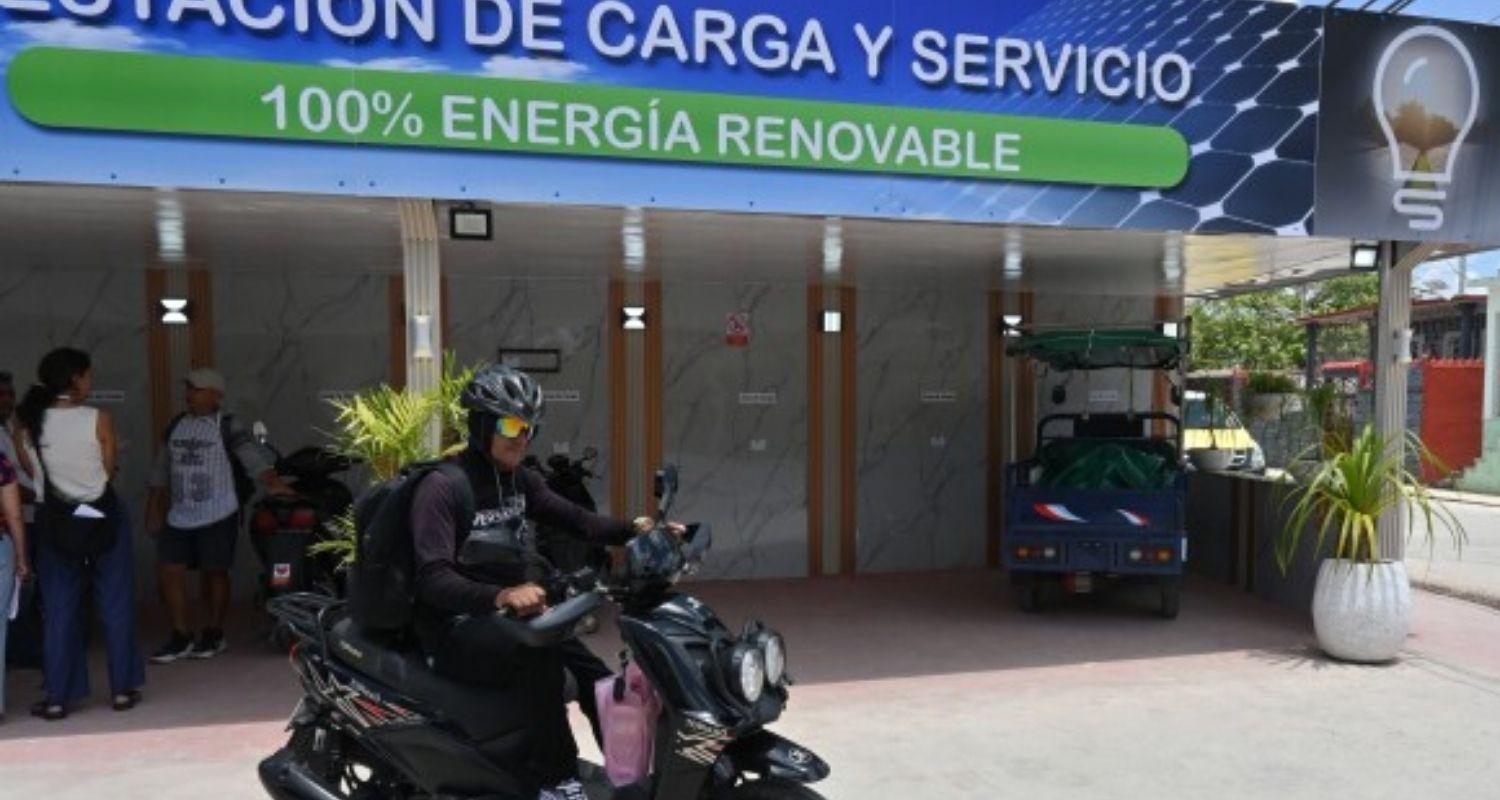
Everything changed in early April when a local entrepreneur launched what is believed to be Cuba’s first solar-powered charging station. The service was free, and word spread quickly. Soon, people began gathering at the station—locally dubbed a ‘solinera’—to charge not only electric vehicles but also everyday devices like phones, kitchen appliances, and even UV nail lamps.
This initiative comes as Cuba faces persistent blackouts and a worsening fuel shortage linked to a US energy blockade. In response, the government has accelerated the installation of solar panels in hospitals, public spaces and newly built solar farms. Renewable energy now makes up about 10 per cent of the country’s electricity supply, up from just 3.6 per cent in 2024. Still, access remains uneven, and most citizens cannot afford their own systems.
Also read: Iran imposes new transit permit rules in Strait of Hormuz
Across the world, renewable sources such as solar, wind and hydropower generate just over 30 per cent of electricity, according to energy research group Ember. In Cuba, however, the scarcity of fuel has driven many to rely on alternatives. People travel long distances to the Santa Clara solar station using electric motorcycles, three-wheelers or even on foot. They bring along nearly depleted phones, rice cookers, pressure cookers, and other essentials that require power.
Santa Clara, a city of nearly 250,000 residents, is known for its historical significance and relatively calm pace of life. The highway from Havana to the city sees few cars, especially in rural areas where horse-drawn carts remain common and economic hardships are often more severe.
The station itself was developed with support from a nearby business. While the total cost remains unknown, it features solar panels generating 30 kilowatts of energy and a battery with a 60-kilowatt capacity—roughly enough to power an average U.S. home for a day. It includes 20 outlets for devices, 16 vehicle charging spots and 12 cooking stations.

 Follow us