Sri Lanka on Wednesday declared 22 of the island’s 25 administrative districts as 'disaster zones' in the aftermath of massive devastation due to Cyclone Ditwah as India expanded its humanitarian assistance under Operation Sagar Bandhu. The country has been grappling with widespread flooding, landslides and severe infrastructure collapse, leaving several districts isolated and severely straining the country's disaster-response capacity.
At least 479 people have been killed and 350 missing as of Wednesday evening due to catastrophic floods and landslides caused by extreme weather conditions since November 16.
A special cabinet meeting also approved supplementary expenditure estimates for recovery work in the aftermath of Cyclone Ditwah. As the island nation continues to pick up pieces, the special cabinet meeting, headed by President Anura Kumara Dissanayake, was crucial for the handling of the recovery process, officials said here.
Leader of the House and senior minister Bimal Rathnayake told Parliament that the special cabinet meeting approved the supplementary estimates for expenditure for disaster recovery work to give people relief from this unexpected disaster.
It will be referred to Parliament’s committee on public finance for approval, he said.
Earlier in the day, the government named 22 of the country’s 25 administrative districts as disaster zones under an extraordinary gazette under the Registration of Deaths Act of 2010.
“All districts other than the three southern districts are included (in the notification). This was done in view of the large number of deaths reported and the number of disappearances recorded so far in the Ditwah devastation,” the officials added.
As of Wednesday, over 1.4 million people have been affected, with more than 2,33,000 sheltering in 1,441 relief centres, the government data said.
Sri Lanka's total economic loss from Cyclone Ditwah is estimated to be between USD 6 billion and 7 billion, which is roughly 3-5 per cent of the island nation’s GDP, Prabath Chandrakirthi, Commissioner General of Essential Services, told reporters here.
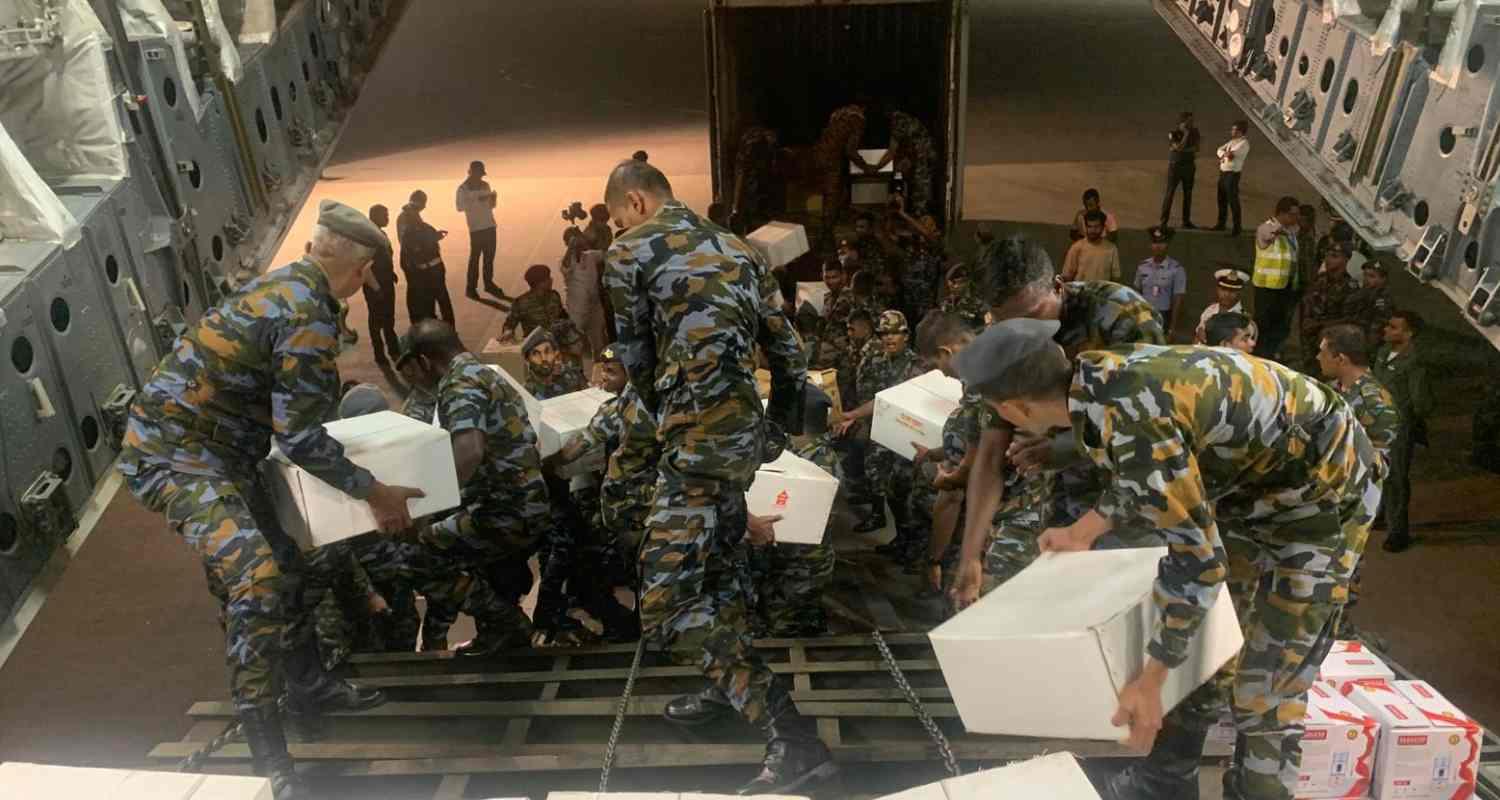
India has continued its humanitarian assistance to Sri Lanka under Operation Sagar Bandhu, with extensive air, sea and ground operations delivering urgent relief to those affected, the Indian High Commission said on Wednesday.
Sri Lanka President Dissanayake in a social media post on Wednesday expressed appreciation for Prime Minister Narendra Modi for India’s steadfast support to Sri Lanka.
“India’s prompt assistance under the SAGAR-BANDHU initiative underscores the depth of our partnership and the enduring goodwill between our nations,” he said.
Also Read: India sends 53 tn of aid to Sri Lanka, evacuates 2,000+ nationals
“Indian rescue teams continued large-scale life-saving evacuations across multiple districts, bringing vulnerable residents from remote and inaccessible areas to safety,” the Indian High Commission said.
In Puttalam, NDRF personnel rescued individuals in distress – including expectant mothers, those requiring immediate medical attention – and delivered essential supplies to nearly 800 stranded people through difficult, door-to-door operations, it said.
“Across the central region, Indian Air Force helicopters carried out critical missions, air-dropping more than 5.5 tonnes of relief material and conducting high-risk extractions from locations where landing was impossible,” the Indian High Commission said.
“Several severely injured survivors were winched up from a remote area near Ganthuna and flown to Rivisanda for emergency treatment,” it added.
In close coordination with the Sri Lankan Air Force, the Indian Air Force IFC 1885 flew essential relief to Poramadulla and transported personnel from Nuwara Eliya to support ongoing response efforts.
“The IAF IFC 1875 helicopter further intensified these operations by airlifting more than 2,000 kilograms of essential goods to Mandaram Nuwara and evacuating people in urgent need of medical care,” it said.
In Kotmale, 24 individuals — including women and children — were safely rescued and transported to Colombo, it added.
Meanwhile, the Sri Lankan tourism industry on Wednesday said tourists are safe with free access to all attractions despite the disaster and claimed that the services remained uninterrupted on the island nation.
Sri Lanka is a popular tourist destination not just for South Asian travellers but also for high-end European tourists, who prefer the tropical beaches and serendipitous internal locales during peak winters from December to February.

 Follow us