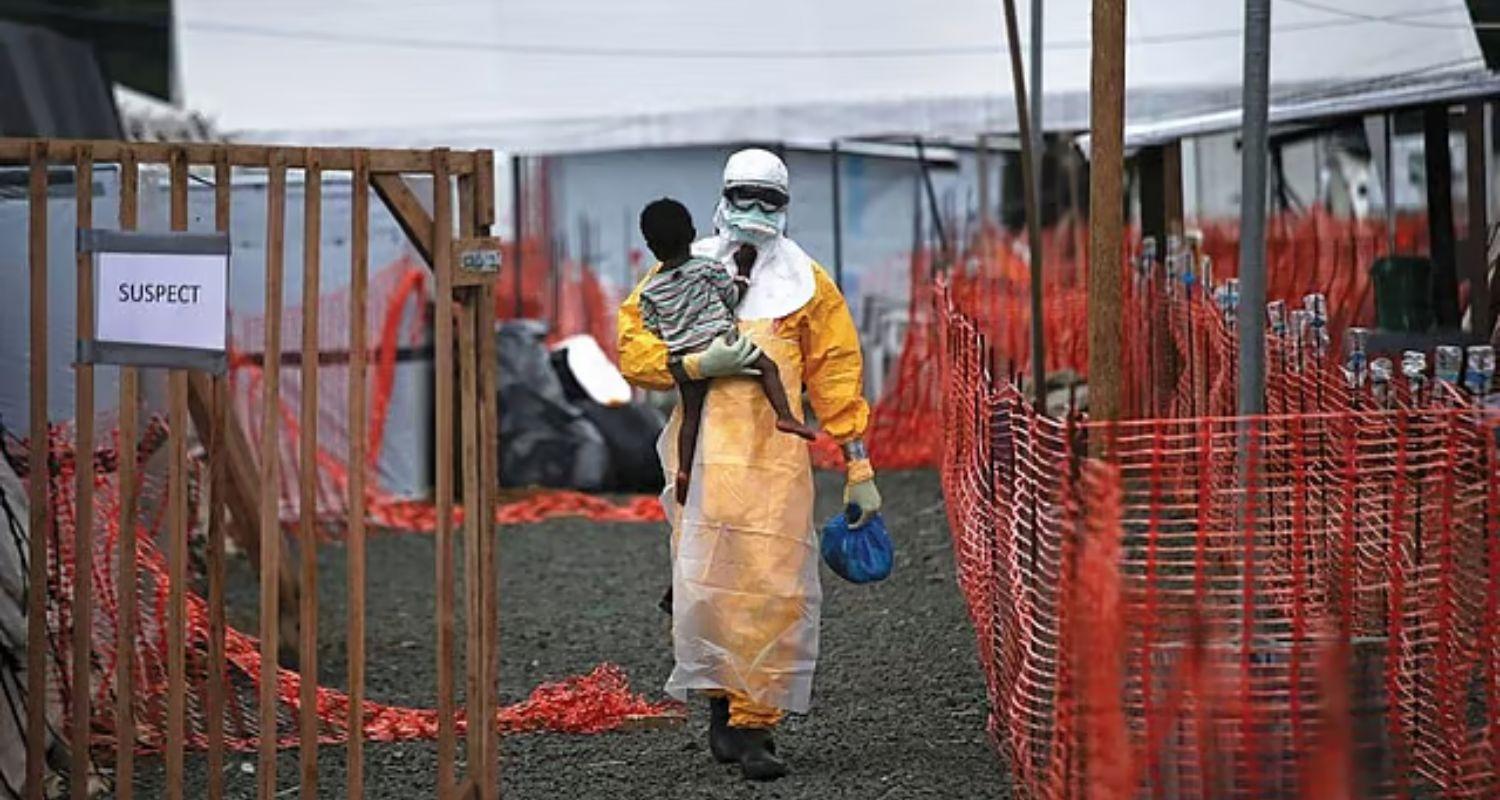
More than 2,000 people have died from Ebola in the Democratic Republic of the Congo (DRC) since the latest outbreak was declared less than three months ago, with the virus continuing to spread rapidly across several provinces.
At least 1,000 of the reported deaths have occurred in the past three weeks, highlighting the alarming acceleration of the outbreak and placing enormous pressure on the country’s already strained health infrastructure. As of Tuesday, a total of 4,381 Ebola cases had been confirmed across five provinces of the DRC, including 2,011 deaths.
The scale and speed of the outbreak have raised serious concerns among health authorities and international humanitarian organisations. It is reportedly the fastest-growing Ebola outbreak recorded in the Central African nation and is second in size only to the major West African Ebola epidemic of 2014-2016, which claimed 11,310 lives.
The rapidly rising death toll has prompted urgent calls for stronger international and community-level action. Julien Harneis, designated Senior Ebola Coordinator by the UN Emergency Relief Coordinator, highlighted the worsening situation in a post on X.
“Today the Ebola epidemic surpassed 2,000 deaths, half of these in the last 20 days,” Harneis said, stressing the need for aid workers, governments, organisations, donors and local communities involved in the response to intensify their efforts immediately to prevent further loss of life.
To strengthen treatment capacity on the ground, the World Health Organization (WHO) has begun expanding a treatment centre it built in Lita. The facility’s capacity is being doubled from 40 beds to 80 beds as authorities attempt to accommodate the growing number of patients requiring medical care.
The expansion is being undertaken with the support of the DRC Ministry of Health and humanitarian partners, including UNICEF, ALIMA, the World Food Programme (WFP) and MONUSCO.
The WHO has also provided 20 beds to a local maternity ward to ensure that essential maternal and other healthcare services can continue despite the strain caused by the Ebola response. The agency said it is also strengthening infection prevention and control measures and preparing additional personnel for frontline operations.
According to the WHO, 100 hygienists and 100 surveillance and infection prevention and control officers are being trained. Four decontamination teams and two teams specialising in safe and dignified burials are also being deployed as part of the wider response.
The agency has reiterated its commitment to mobilising available resources to contain the outbreak and prevent further transmission. Last week, the Africa Centres for Disease Control and Prevention (Africa CDC) and the WHO jointly called for an immediate expansion of the community-led response in the DRC. The two organisations warned of critical operational gaps in areas including contact tracing and follow-up, early detection, treatment capacity and other essential medical infrastructure.
The appeal followed a joint high-level mission to Uganda and the DRC on August 4 and 5, led by WHO Director-General Tedros Adhanom Ghebreyesus, Africa CDC Director-General Jean Kaseya and WHO Regional Director for Africa Mohamed Janabi.
The delegations met national authorities, emergency response coordinators, healthcare workers and community leaders in Kampala, Bunia and Kinshasa to assess the operational challenges confronting the response.
Africa CDC and WHO said immediate steps were required to expand treatment and burial capacity, ensure timely payment and adequate protection for frontline healthcare workers, improve access to insecure and hard-to-reach areas and ensure that pledged funding reaches frontline operations without delay.
Also read: 10 militants killed in northwest Pakistan
India has also announced support for the international response. In June, Union Health Minister JP Nadda said India had committed USD 10 million towards preparedness, response and recovery efforts linked to the Ebola outbreak during a virtual summit organised by the African Union.
The virtual summit was chaired by African Union Chairperson and Burundi President Évariste Ndayishimiye. Ebola disease is a viral haemorrhagic fever caused by infection with Ebola virus, including the Bundibugyo virus strain. It is a severe disease associated with a high mortality rate. According to the information provided, there are currently no vaccines or specific treatments approved specifically for Ebola disease caused by the Bundibugyo virus strain.
With cases and deaths continuing to rise rapidly, health agencies and humanitarian organisations are pressing for an urgent expansion of treatment, surveillance, community engagement and other containment measures to bring the outbreak under control.

 Follow us