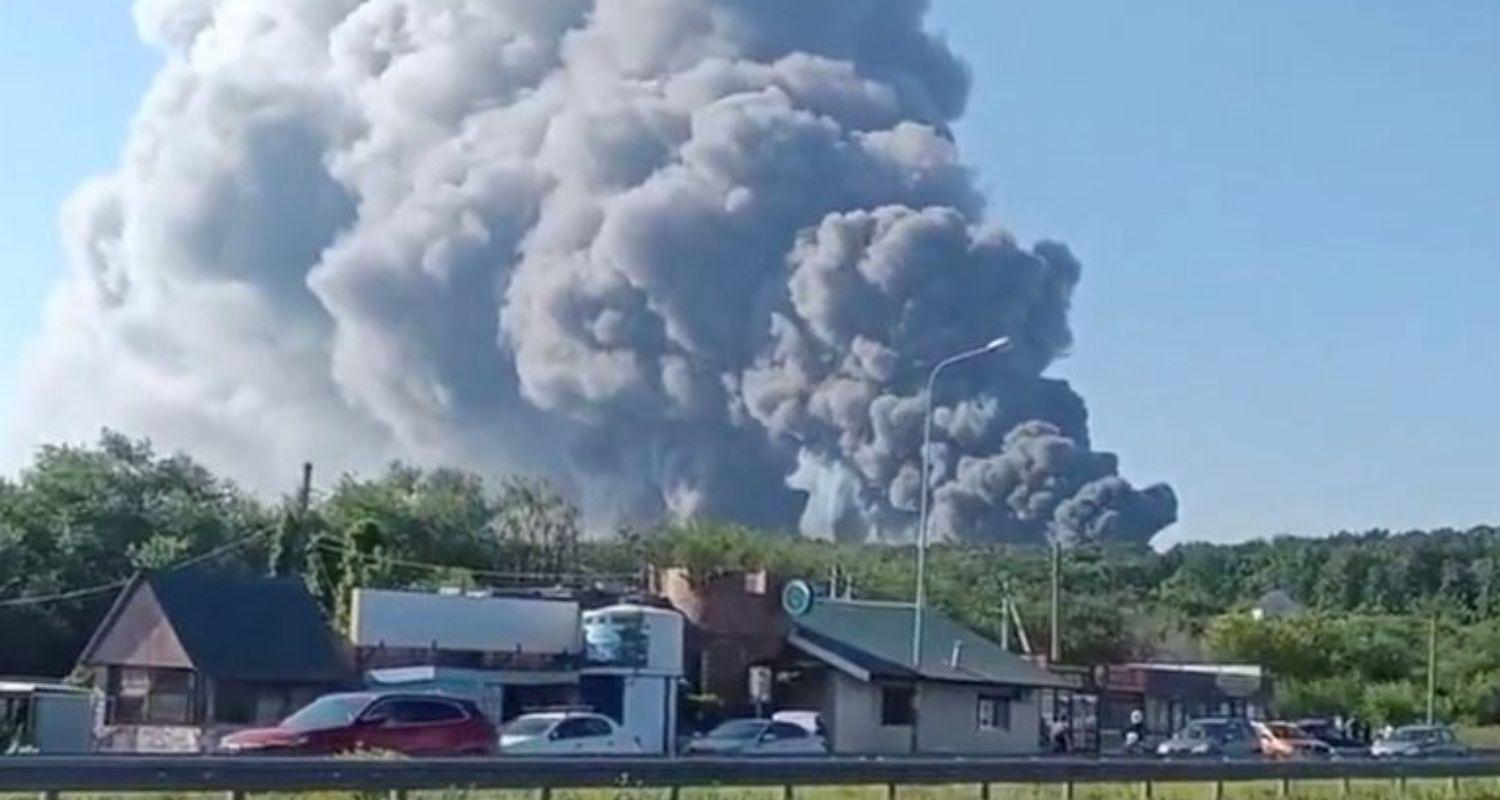
At least eight people were killed and several others injured after Ukraine launched one of its largest overnight drone attacks on targets deep inside Russia, striking military, energy, and civilian infrastructure across multiple regions, according to Russian and Ukrainian officials.
Russia's Defence Ministry said its air defence systems intercepted 635 Ukrainian drones during the large-scale assault, describing it as one of the most extensive aerial attacks since the conflict began in February 2022. While the ministry did not provide independent evidence to verify the figure, it said drones were detected and destroyed over several Russian regions, including areas far from the front lines.
Among the hardest-hit locations was Engels, a city on the left bank of the Volga River in the Saratov region. Local authorities said residential buildings were struck during the attack, killing two people and causing damage to homes. In nearby Saratov City, another apartment building sustained damage, prompting emergency crews to respond and assess the extent of the destruction.
Officials also reported casualties in other regions. In Udmurtia, located about 1,300 kilometres from the Ukrainian border, three people were killed and two others injured following drone strikes. Meanwhile, in the border region of Belgorod, authorities confirmed three deaths and five injuries, adding that emergency services were working to assist affected residents and restore damaged infrastructure.
Ukrainian President Volodymyr Zelenskyy acknowledged that Ukrainian forces had carried out strikes on strategic military and energy facilities inside Russia. He said the operation targeted a military air base in Engels believed to house Russian long-range bombers, as well as an oil refinery in the Saratov region.
According to Zelenskyy, the attacks were intended as a response to continued Russian military operations against Ukraine and demonstrated Kyiv's ability to strike targets used to support Russia's war effort.
Ukrainian officials further claimed that the attacks caused fires at both the Engels military facility and the Saratov oil refinery. Kyiv also reported striking an oil depot in Russia's Kaluga region. Videos circulating on social media appeared to show large fires burning at the Saratov refinery, although the footage could not be independently verified.
In addition to military and energy targets, Ukrainian drones reportedly struck a logistics warehouse operated by Wildberries, one of Russia's largest online retail companies, in the Samara region, more than 800 kilometres from the nearest front line. According to Ukrainian authorities, the company has been accused of supporting Russia's military logistics, making its facilities legitimate targets. Local officials confirmed that a fire broke out at the warehouse but said it was quickly brought under control and that no casualties were reported.
Also read: Pak suicide bombing: Death toll rises to 17
The latest strike is part of what Ukrainian officials describe as a broader campaign against infrastructure believed to assist Russia's military operations. Since mid-July, Ukraine has reportedly targeted several Wildberries warehouse facilities across Russia as part of efforts to disrupt logistics networks supporting the war.
The exchange of long-range drone attacks has become an increasingly significant aspect of the conflict, allowing both sides to target strategic assets well beyond the battlefield. Ukraine has steadily expanded its capability to conduct deep strikes inside Russian territory, while Russia continues to launch frequent missile and drone attacks against Ukrainian cities and infrastructure.
Although the scale of Sunday's operation underscores Ukraine's growing long-range strike capability, the reported number of intercepted drones has not been independently verified. The latest attacks nevertheless highlight the widening geographical reach of the conflict, with military, industrial, and civilian sites increasingly affected as the war enters another prolonged phase. Both sides continue to intensify aerial operations, while international efforts to secure a negotiated settlement remain stalled.

 Follow us