Finland is preparing to operationalise the world’s first permanent underground repository for spent nuclear fuel, even as experts caution that the long-term risks could extend to future generations.
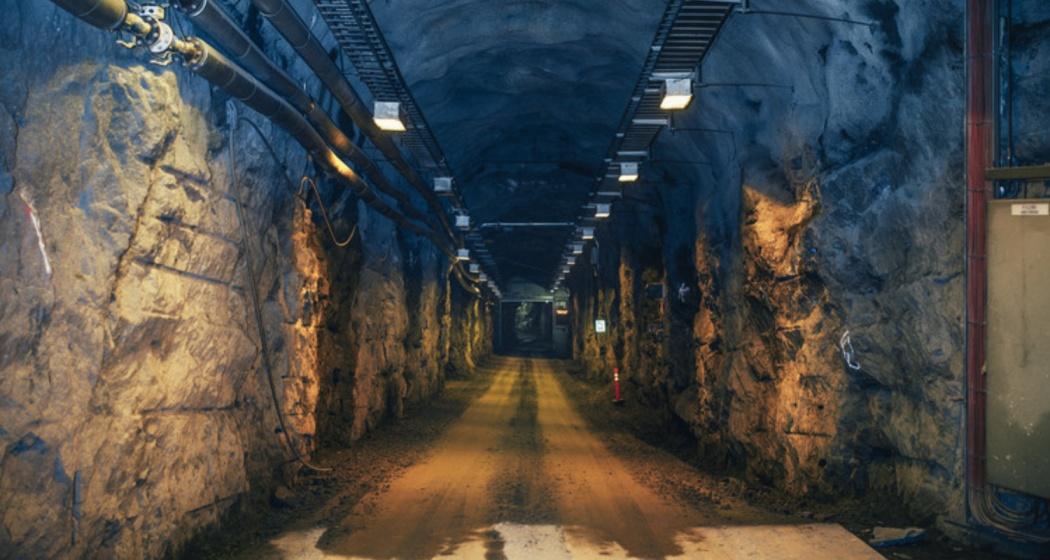
The facility, named Onkalo, meaning “cave” in Finnish, lies about 430 metres beneath the surface on Olkiluoto island, where a network of tunnels has been carved into 1.9-billion-year-old bedrock. Built over two decades at a cost of around €1 billion, the repository is expected to receive its operating licence within months.
Developed by Posiva, the site is designed to store up to 6,500 tonnes of spent nuclear fuel. The waste will be sealed in copper canisters using remote-controlled systems and buried deep underground, surrounded by layers of bentonite clay intended to absorb water and prevent leakage.
Officials say the geological stability of the migmatite-gneiss bedrock, combined with the site’s isolation, makes it a safer alternative to surface storage. “We can dispose of the waste more safely than by storing it in facilities located on the ground,” a site geologist said during a tour.
The repository will operate until the 2120s, after which it will be permanently sealed, leaving the radioactive material to decay over hundreds of thousands of years.
Also Read: A new era in nuclear power policy
Globally, nearly 400,000 tonnes of spent nuclear fuel have been produced since the 1950s, according to the International Atomic Energy Agency. Most of it remains in temporary storage, either in cooling pools at reactor sites or in dry casks above ground.
Finland’s project is being closely watched, as no other country has yet operationalised a permanent disposal facility for commercial nuclear waste. Sweden is constructing a similar repository, while France’s proposed facility is still at the planning stage.
However, experts warn that deep geological disposal is not without risks. Edwin Lyman, director of nuclear power safety at the Union of Concerned Scientists, described it as the “least bad option” among imperfect solutions.
He cautioned that the copper canisters used to store the fuel could eventually corrode, though the timeline remains uncertain. “The hope is that is such a slow process that most of the radioactive material will have decayed away by then. But again, there are uncertainties,” he said.
Lyman noted that while underground storage reduces the risk of sabotage compared to surface facilities, long-term safety cannot be guaranteed.
The challenge of communicating danger across millennia has also emerged as a concern. Researchers in the field of nuclear semiotics are exploring ways to warn distant future generations, long after current languages and symbols may be forgotten.
One such proposal involves embedding durable ceramic plates carrying “nuclear messages” in surrounding areas to convey the risks.
Finnish authorities maintain that the project reflects a commitment to responsibly manage nuclear waste domestically, in line with a 1994 law mandating its disposal within national borders.

 Follow us