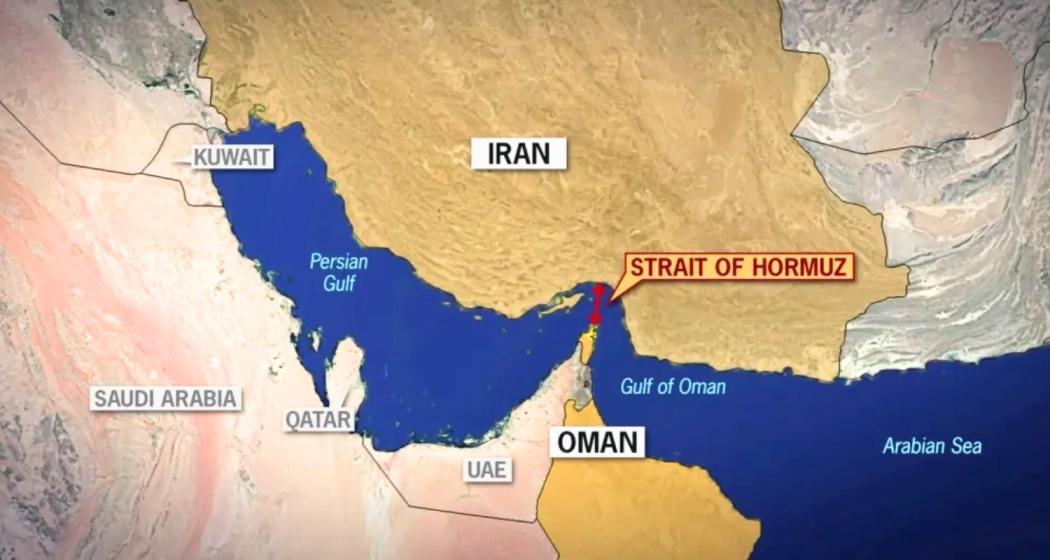
Authorities in Iran have said they are allowing India and several other ‘friendly nations’, including China and Russia, to continue commercial shipping through the Strait of Hormuz, even as restrictions remain in place for others.
Iranian Foreign Minister Seyed Abbas Araghchi stated that Tehran has selectively permitted access through the vital waterway, which lies between the Persian Gulf and the Gulf of Oman. The strait is a crucial global energy corridor, carrying roughly 20 per cent of the world’s oil and liquefied natural gas.
Energy markets have reacted sharply, with oil and gas prices climbing amid concerns that Iran has effectively curtailed broader access to the passage. West Asia remains a key supplier for India’s energy needs, heightening the stakes for New Delhi.
Also read: Israeli media claims Iran Naval commander killed in strike
“We have permitted certain countries that we consider friendly to pass through,” Araghchi said, according to Iranian state television. “We allowed China, Russia, India, Iraq, and Pakistan to transit.”
At the same time, he emphasised that vessels linked to Iran’s adversaries would not be granted passage. “We are in a state of war. The region is a war zone, and there is no reason to allow the ships of our enemies and their allies to pass through. But it remains open to others,” he said.
Addressing reports of mediation efforts by third-party countries, Araghchi reiterated that there are currently no negotiations underway with the United States. Speaking to MEHR News Agency, he said several regional foreign ministers have reached out to Tehran, but Iran’s stance has remained firm.
“International guarantees are not 100 per cent reliable,” he said, adding that Iran has established its own deterrence. “Through the inherent guarantee that we created ourselves, no one will dare again to go to war with the Iranian people.”
Concerns are mounting globally over disruptions to shipping through the Strait of Hormuz, with Donald Trump warning Iran of serious consequences if it fails to fully reopen the route.
In recent weeks, India has stepped up diplomatic engagement aimed at de-escalating tensions in West Asia and ensuring uninterrupted energy flows through the strait. Officials in New Delhi have warned that a prolonged disruption could have significant consequences for fuel availability and fertiliser supplies, both domestically and worldwide.

 Follow us