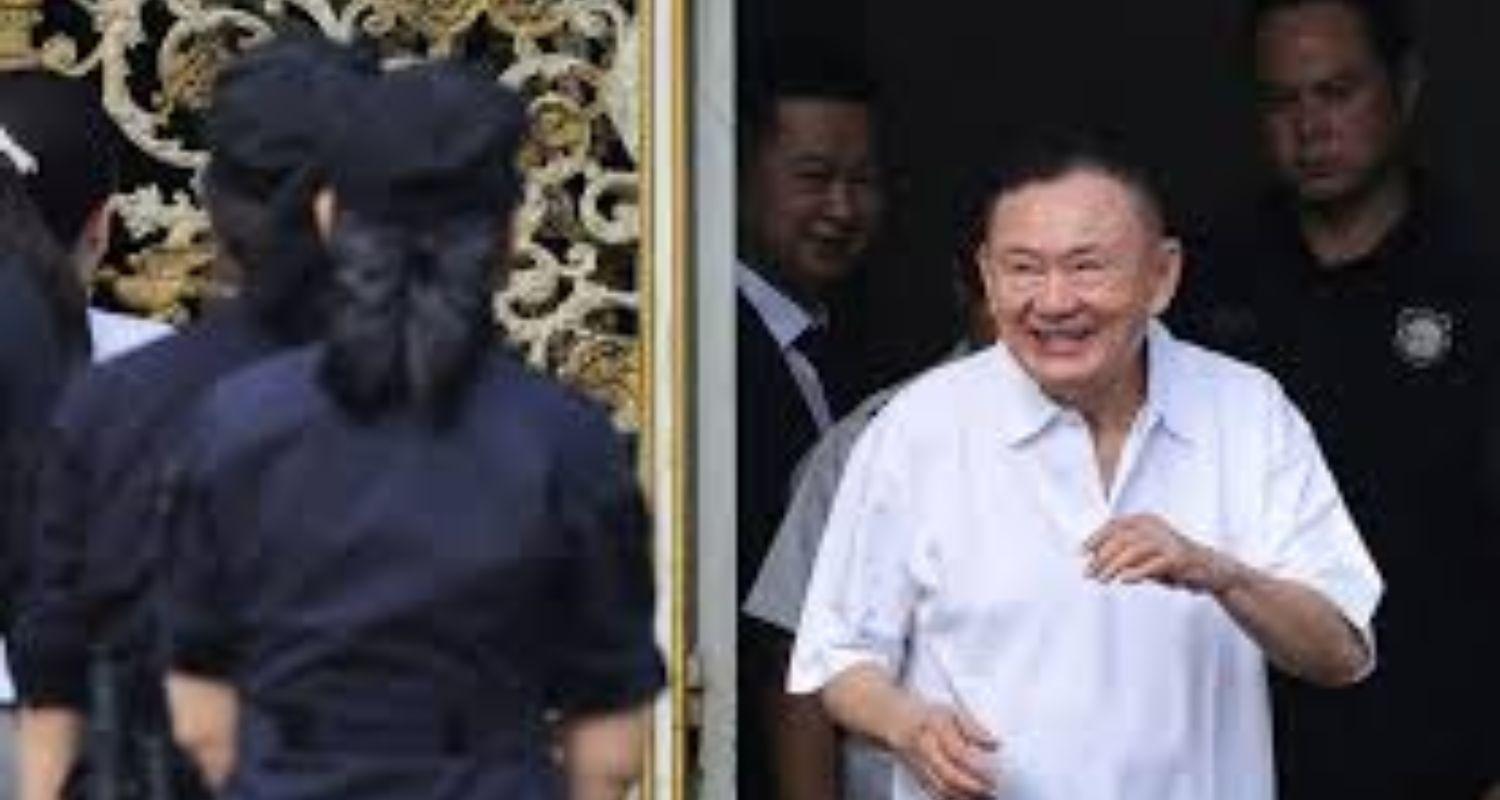
Thailand’s former prime minister Thaksin Shinawatra, whose turbulent political journey deeply divided Thai society for decades, was released from a Bangkok prison on Monday after completing eight months of a one-year sentence linked to a corruption case.
As many as 300 supporters and political allies gathered outside Klong Prem Central Prison to welcome the 76-year-old billionaire populist leader.
A telecommunications tycoon, Thaksin founded his political party in 1998 and served as prime minister from 2001 until he was overthrown in a 2006 military coup while abroad.
His removal from office sparked nearly two decades of intense — and at times violent — political polarization. Despite remaining in self-imposed exile to avoid what he described as politically motivated legal action, Thaksin’s political network repeatedly regained influence in Thai politics.
His three children, including former prime minister Paetongtarn Shinawatra, along with other family members, arrived early at the prison to greet him.
Also read: Kathmandu airport shut after Turkish jet catches fire
Dressed in a white polo shirt and blue pants, Thaksin emerged smiling from the prison gates and embraced his family. He walked through the crowd greeting cheering supporters, who chanted ‘we love Thaksin’ and handed him red roses, before leaving without speaking to reporters.
About an hour later, he arrived at his residence in western Bangkok. In footage streamed by Thairath News, Thaksin lowered his car window to acknowledge supporters gathered outside his home, jokingly responding to reporters’ questions by saying, “I was in hibernation, I can’t remember anything now.”
Thaksin became the first democratically elected Thai prime minister to complete a full four-year term. His signature policies—including a nationwide healthcare program and infrastructure projects targeting poorer rural regions in the north and northeast—earned him strong backing among lower-income voters. However, his immense popularity and often forceful leadership style also widened divisions between his supporters and Thailand’s urban elites, royalist groups, and military establishment.
He faced charges of abuse of power over allegations that he used his office to benefit business interests connected to him and improperly approved a state lottery scheme that resulted in government losses.
Although convicted in absentia, Thaksin returned to Thailand in 2023 to serve his sentence as the Pheu Thai Party, his latest political vehicle, formed a government.
Many observers believed he had struck a behind-the-scenes deal with the country’s traditional royalist establishment. His original eight-year sentence was reduced to one year by King Maha Vajiralongkorn, and he was later allowed to serve his term in a suite at Bangkok’s Police Hospital on medical grounds.
Following criticism that he had received preferential treatment, Thailand’s Supreme Court ruled in September 2025 that Thaksin must complete his sentence in prison.
Last month, a Justice Ministry panel approved his parole as part of a broader review involving more than 900 inmates, citing his good conduct, advanced age, and the low likelihood of reoffending.
Under the terms of his release, Thaksin will remain on probation for four months. During that period, he must stay at his registered Bangkok residence, wear an electronic monitoring device, and regularly report to probation authorities.
His daughter Paetongtarn became Thailand’s youngest prime minister in 2024, but the Constitutional Court removed her from office in August 2025 after the leak of a controversial phone conversation with former Cambodian leader Hun Sen.
Meanwhile, the Pheu Thai Party secured only a third-place result in this year’s general election.

 Follow us