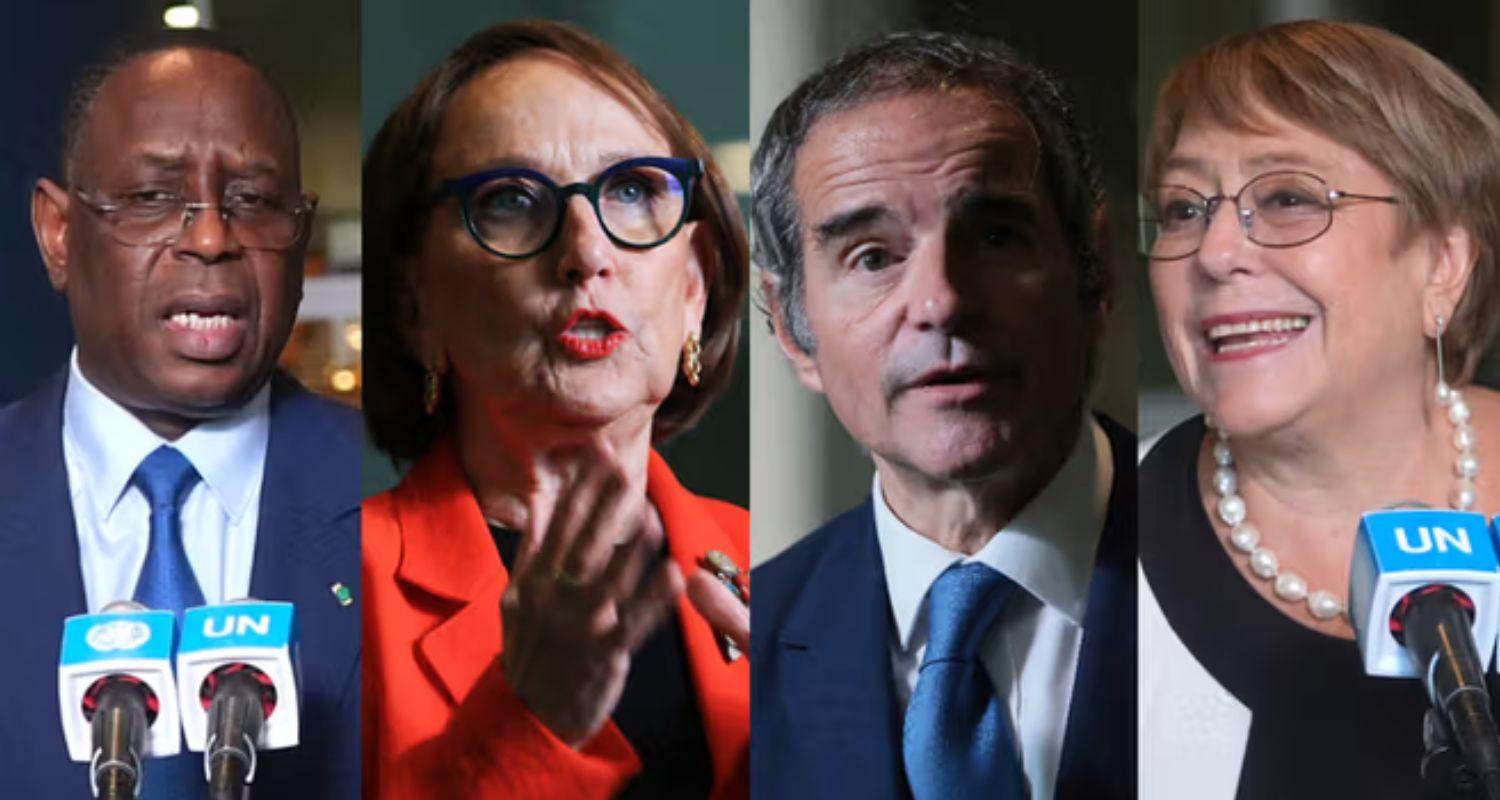
The race to appoint a successor to António Guterres has officially entered its most intense phase, with four high-profile candidates recently enduring what UN General Assembly President Annalena Baerbock described as one of the world's most gruelling job interviews. Over several days of questioning, Michelle Bachelet of Chile, Rafael Grossi of Argentina, Rebeca Grynspan of Costa Rica, and Senegal's Macky Sall laid out their competing visions for the future of the United Nations. Despite their efforts, no clear frontrunner has emerged, leaving the door open for late entrants to join the contest before the new term begins on January 1.
Baerbock emphasised the gravity of the role, noting that the Secretary-General acts as the world’s premier diplomat and represents the interests of all eight billion people. The candidates largely agreed on the necessity of revitalising the UN’s three core pillars: peace, development, and human rights. The focus shifts at a time when the organisation has been sidelined by deep internal divisions, struggling to exert influence in conflicts across Gaza, Ukraine, Sudan, and Iran. All four contenders pledged to reform the 80-year-old institution to make it more relevant in a fractured geopolitical landscape.
Bachelet, a 74-year-old former Chilean president and UN human rights chief, positioned herself as a champion of dialogue and preventive diplomacy. She, further, argued that the next leader must be more physically present in conflict zones to address crises at their source. Similarly, Grossi, currently the head of the International Atomic Energy Agency, acknowledged the widespread scepticism regarding the UN’s efficacy. He argued that without decisive leadership and the full backing of member states, the organisation would fail to regain its seat at the decision-making table.
Grynspan, who currently leads the UN trade and development agency, offered a more provocative critique, labelling the UN a "risk-conservative" body. She expressed a willingness to take bold actions, even at the risk of failure, to ensure the Secretary-General remains an impartial moral authority. Macky Sall, the former president of Senegal, presented himself as a "bridge-builder" capable of restoring trust and reducing global fragmentation.
The campaign has not been without controversy. Meanwhile, Sall’s candidacy has broken with the informal tradition of regional rotation, which would typically favour a Latin American candidate this cycle. His bid has also been met with protests outside the UN headquarters amidst allegations of corruption, which he firmly denies.
As it stands, the selection process remains firmly in the hands of the 15-member Security Council. The five permanent, veto-wielding members — the US, UK, France, China, and Russia — have yet to signal their preferences. While advocacy groups like GWL Voices continue to push for the appointment of the first-ever female Secretary-General, analysts suggest that the Council’s ultimate choice will depend on finding a leader with the courage to take the risks necessary to navigate a dangerously polarised world.
Also read: NPT summit looms as nuclear powers accelerate arms build-up

 Follow us