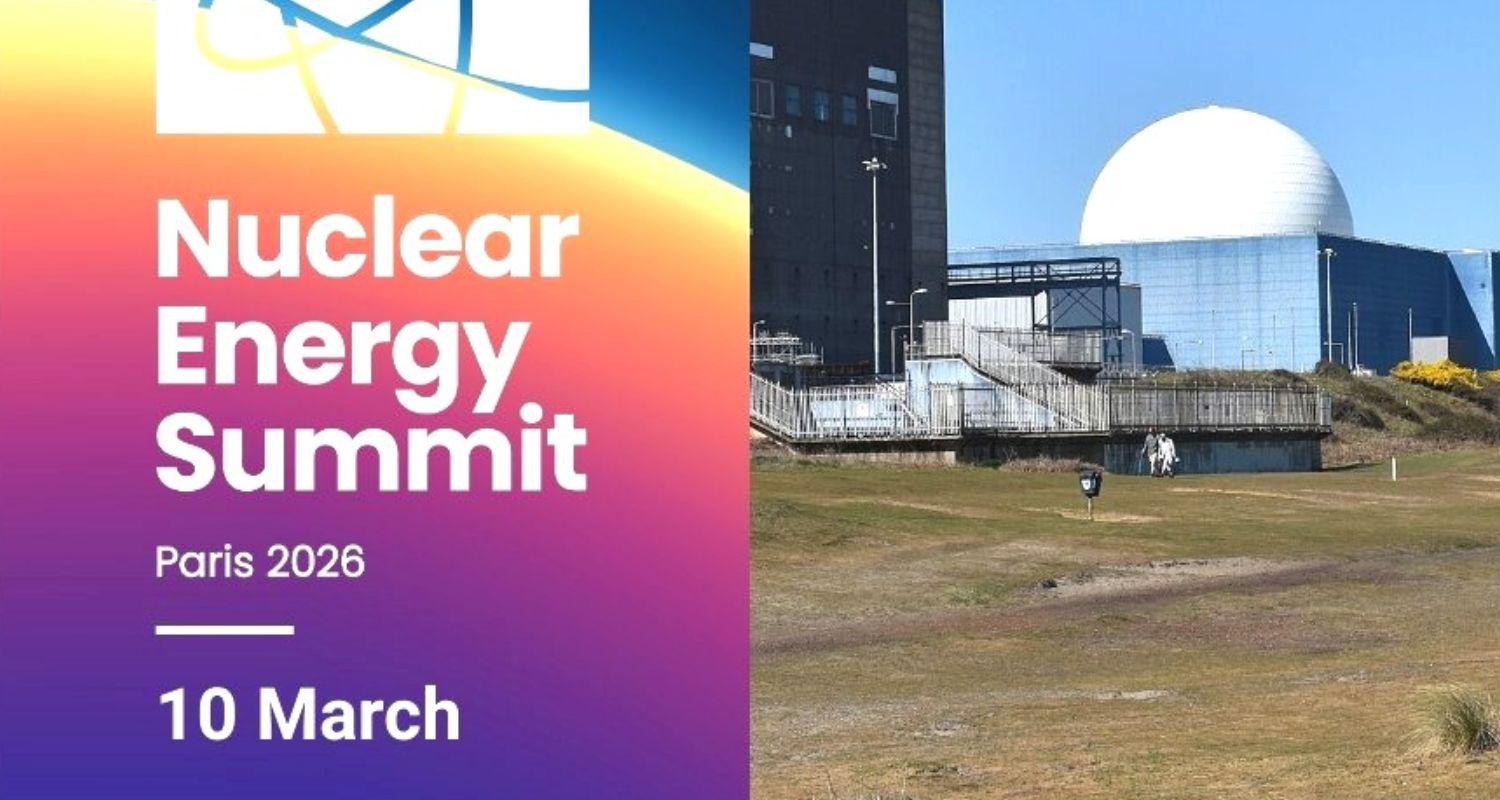
A major world nuclear summit aimed at accelerating the expansion of civilian nuclear energy opened in Paris today, even as the ongoing Israeli war against Iran underscores the vulnerabilities and dangers of continued reliance on fossil fuels.
With growing global environmental concerns and the urgent need to shift away from traditional energy sources, nuclear power is increasingly viewed as a viable, low-carbon alternative for energy security and climate goals.
Representatives from more than 40 countries and international organisations are attending the conference, which will be formally opened by French President Emmanuel Macron.
Two of the world’s three largest nuclear powers — China and the United States — will be present, while Russia has decided to skip the summit due to its ongoing war in Ukraine.
Nuclear energy suffered a major setback after the 2011 Fukushima disaster in Japan, which revived long-standing fears first amplified by the 1986 Chernobyl accident— despite nuclear power’s proven efficiency and low operational emissions.
However, renewed global interest in nuclear energy has surged in recent years, driven by the twin imperatives of energy sovereignty and the pursuit of clean, reliable baseload power to combat rising global warming.
Currently, nuclear power accounts for only about 9 per cent of the world’s total electricity consumption, despite its ability to generate substantial amounts of electricity with minimal greenhouse gas emissions.
According to the World Nuclear Association, there are approximately 440 operational reactors across around 30 countries.
The International Atomic Energy Agency (IAEA), co-sponsor of the conference alongside the International Energy Agency (IEA), has projected that global nuclear power generation could double by 2050.
IAEA Director General Rafael Grossi stated on Monday that around 40 countries are either building new reactors or actively exploring nuclear programmes.
He highlighted China in particular, which is constructing an additional 29 reactors to add to its existing 57 operational plants.
Also read: France to host G7 finance ministers' meeting on Iran war impact

 Follow us