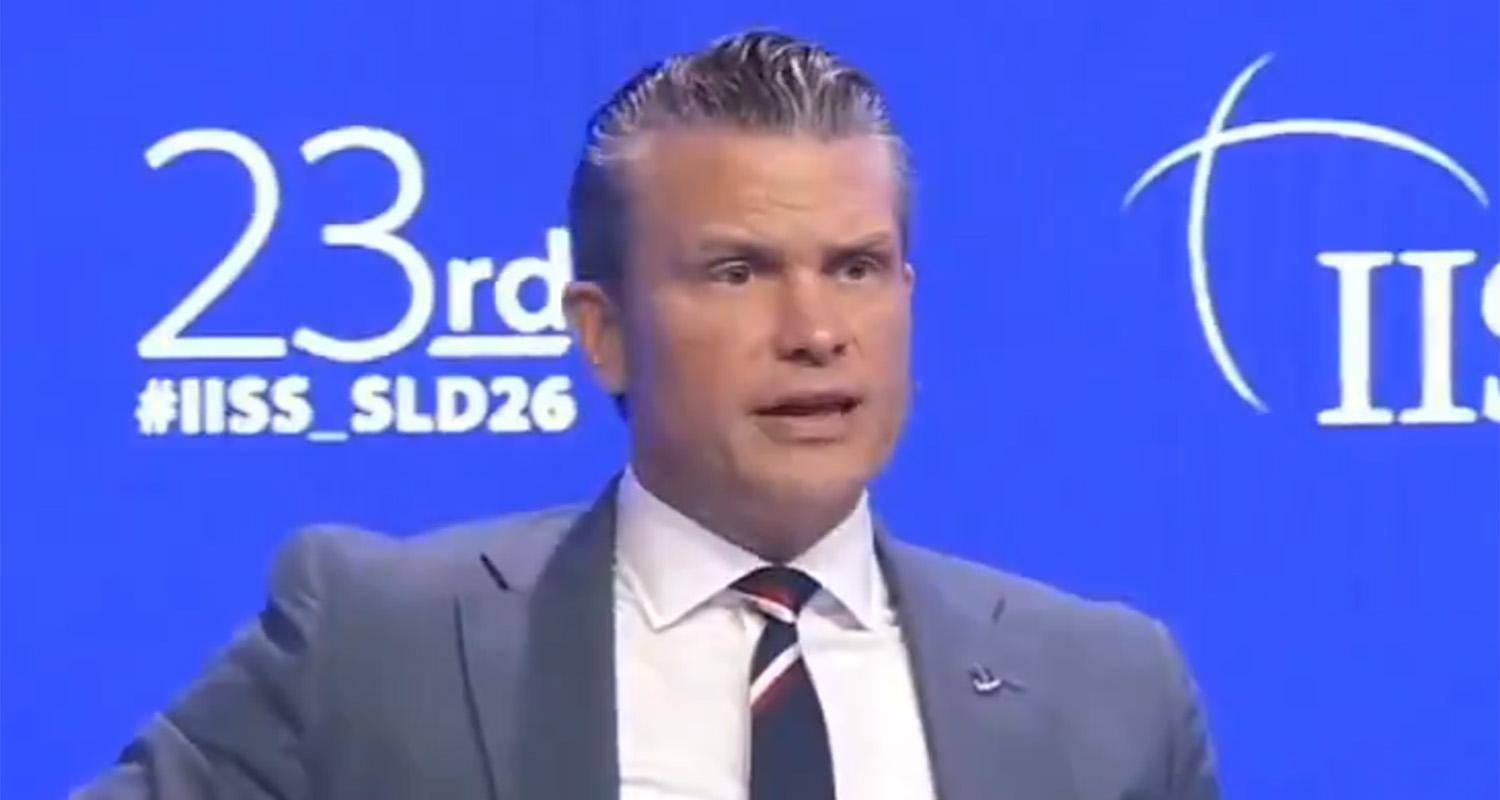
US Secretary of Defense Pete Hegseth on Saturday credited President Donald Trump with helping defuse tensions between India and Pakistan after last year's military confrontation, while describing India as a vital partner in Washington's Indo-Pacific strategy.
Speaking at the Shangri-La Dialogue in Singapore, Hegseth pointed to the understanding reached between the two nuclear-armed neighbours following their brief conflict and praised Trump's role in reducing tensions.
"You saw that in the ability of the president to help broker peace between India and Pakistan, two nuclear-capable countries," he said.
Trump has repeatedly claimed that he played a role in securing peace after the four-day conflict that followed the terror attack in Jammu and Kashmir's Pahalgam, which killed 26 people. India, however, has consistently maintained that the understanding was reached directly between New Delhi and Islamabad, rejecting any suggestion of third-party mediation.
Hegseth said both countries would continue to view each other through the lens of national security concerns.
"Both sides will naturally see threats from the other, some of which we may view differently. Countries will seek to develop capabilities they believe are necessary for their security, but we are not currently viewing either nation as a threat to the United States," he said.
He also acknowledged the role both countries play in maintaining global stability, saying Washington appreciated their respective contributions to peace and security.
Referring to Pakistan's leadership, Hegseth said Islamabad was playing an important role in ongoing diplomatic efforts in West Asia.
"I mentioned India, but I could just as easily have mentioned Pakistan and the role its leadership is playing in peace negotiations," he said, adding that stronger ties and cooperation in the region were positive developments.
Pakistan has recently positioned itself as a mediator in efforts to ease tensions between the United States and Iran. While talks held in Islamabad last month did not produce an agreement, Pakistani Prime Minister Shehbaz Sharif has expressed hope that another round of negotiations will take place soon.
Highlighting India's growing strategic importance, Hegseth said the country was rapidly modernising its military and expanding its industrial and logistics capabilities, making it an increasingly significant security partner in the Indo-Pacific.
"We have also committed to pursuing co-production with India to advance capabilities," he said.
The US defense chief said Washington's Indo-Pacific strategy aims to preserve regional stability and maintain a balance of power in which no single country can dominate.
"What we seek is a stable and durable balance of power that benefits the United States and its allies, where no nation, including China, can impose its hegemony," he said.
Hegseth stressed that the Indo-Pacific remains central to US security and economic interests and sought to reassure regional partners of Washington's long-term commitment to the region despite challenges elsewhere.
He also called for greater burden-sharing among allies, saying the era of the US shouldering a disproportionate share of defense responsibilities was over.
"We need partners, not protectorates. Alliances must be built on shared responsibility, not dependency," he said.
Hegseth said the US would continue strengthening defense cooperation with regional partners, including India, Japan, South Korea, Australia, Singapore, Malaysia, Thailand, Vietnam and the Philippines.
At the same time, he emphasized that Washington was not seeking confrontation with China, despite concerns over Beijing's expanding military capabilities.

 Follow us