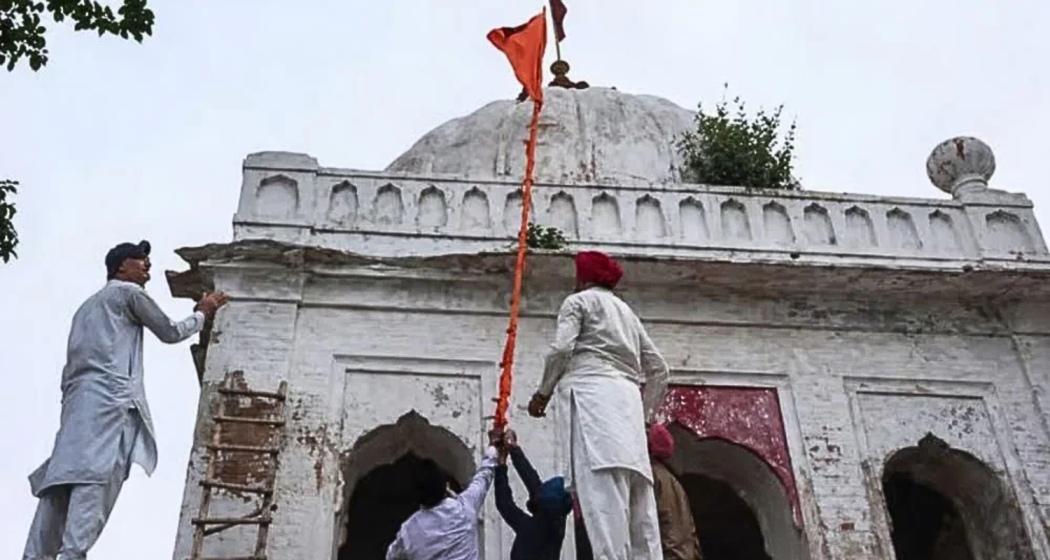
A historic gurdwara associated with Guru Hargobind, the sixth Sikh Guru, has reopened to devotees in Lahore after remaining inaccessible for nearly 79 years following the Partition of India in 1947.
Gurdwara Patshahi Chhevin, located in Amar Sidhu on the Lahore-Kasur road, was formally reopened after restoration works were completed. Members of the local Sikh community marked the occasion by performing Sukhmani Sahib Path and ardas, signalling the revival of an important place of worship and heritage.
The shrine is one of the three historic gurdwaras in Lahore linked to Guru Hargobind. According to Sikh historical accounts, the Guru halted at the site while returning from Kashmir before continuing his journey to Amritsar. The shrine is also associated with Bibi Kaulan, who is believed to have travelled with the Guru and the Sikh congregation.
Also read: Pak trader razes historical gurdwara, admin orders restoration
According to Sikh historian Davinder Singh Dhillon, editor of Gurdwara Pedia, the site originally featured a simple memorial before a grand gurdwara was constructed in 1923 through the efforts of Bhai Mohan Singh Akali (Nihang) with support from Lahore's Sikh community. Eminent civil engineer Sir Ganga Ram, known for designing several landmark buildings in undivided Punjab, also contributed to its construction.
Before Partition, the sprawling 17-kanal complex included a langar hall, accommodation for pilgrims and a beautifully maintained garden. It was managed by the local Sikh sangat under the supervision of the Shiromani Gurdwara Parbandhak Committee (SGPC).
The shrine suffered extensive damage during the communal violence of 1947 and was abandoned after the migration of the Sikh population to India. Over the decades, the structure deteriorated, the adjoining sarovar disappeared and parts of the land were encroached upon. The premises were also reportedly occupied by a private family for several years.
The restoration and reopening of Gurdwara Patshahi Chhevin marks a significant step in preserving Sikh religious heritage in Pakistan and once again provides the local Sikh community access to one of Lahore's most important historic shrines.

 Follow us