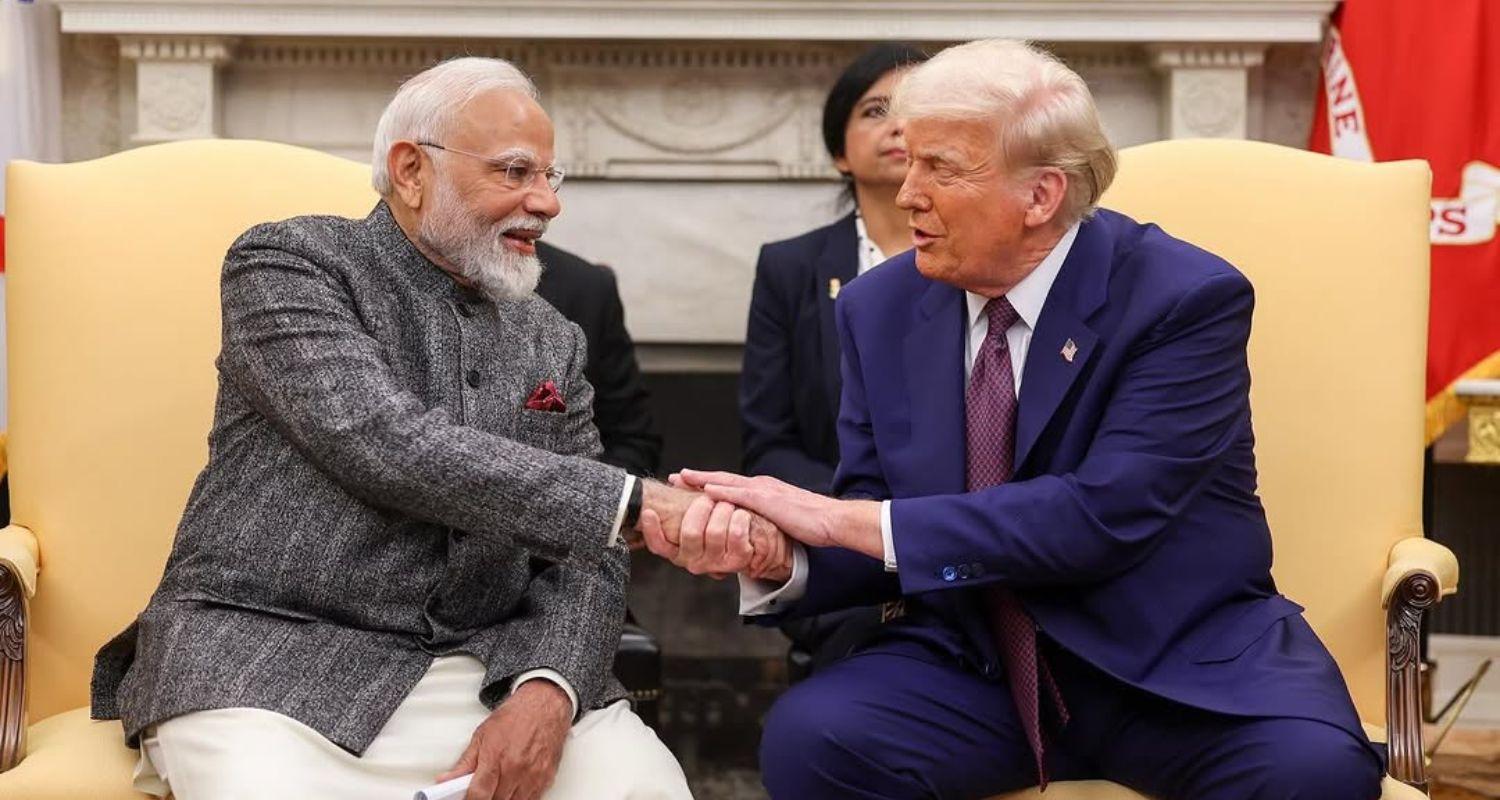
The White House announced on Friday that a historic trade deal has been finalised with India, aiming to pry open the South Asian nation's massive market of over 1.4 billion people to American products. This agreement has come in the wake of the recent dialogue between the President of the United States, Donald Trump, and the Prime Minister of India, Narendra Modi, wherein the contours of an agreement on an interim basis, focusing on the concept of reciprocity in trade, have been established.
Additionally, in an important move that highlights the geopolitical implications of the agreement, the President of the United States has issued an executive order to eliminate an additional tariff of 25 per cent on Indian imports. This has been done in recognition of the Indian commitment of not buying crude from the Russian Federation. Additionally, as India moves to partner the US in terms of the systemic imbalances and the geopolitical challenges it faces, the reciprocal rate on Indian imports would reduce from 25 percent to 18 pc.
Under the terms of this new framework, India has agreed to eliminate or drastically reduce tariffs on a wide array of American industrial goods and agricultural products, ranging from dried distillers' grains and tree nuts to wine, spirits, and processed fruits. Beyond tariff cuts alone, India has committed to a gigantic buying game plan through which New Delhi plans to procure more than USD 500 billion of US energy, technology, coal, and farm products.
This agreement also addresses tricky subjects: digital services taxes, which India would be removing; lays the groundwork for the rules of origin negotiations necessary for improved assurances that benefits will flow primarily to the United States and India. Historically, India has imposed some of the highest tariffs in the world, particularly on autos and agricultural commodities, and protectionist non-tariff barriers-a major policy pivot. Going forward, both countries intend to promptly carry out the provisions of this framework while continuing negotiations to finalize a comprehensive agreement that reaps benefits for American workers and businesses, aimed at addressing the trade deficit highlighted in the national emergency declaration issued by Trump last year.
Also read: US to prioritise arms sales to high-spending defence partners

 Follow us