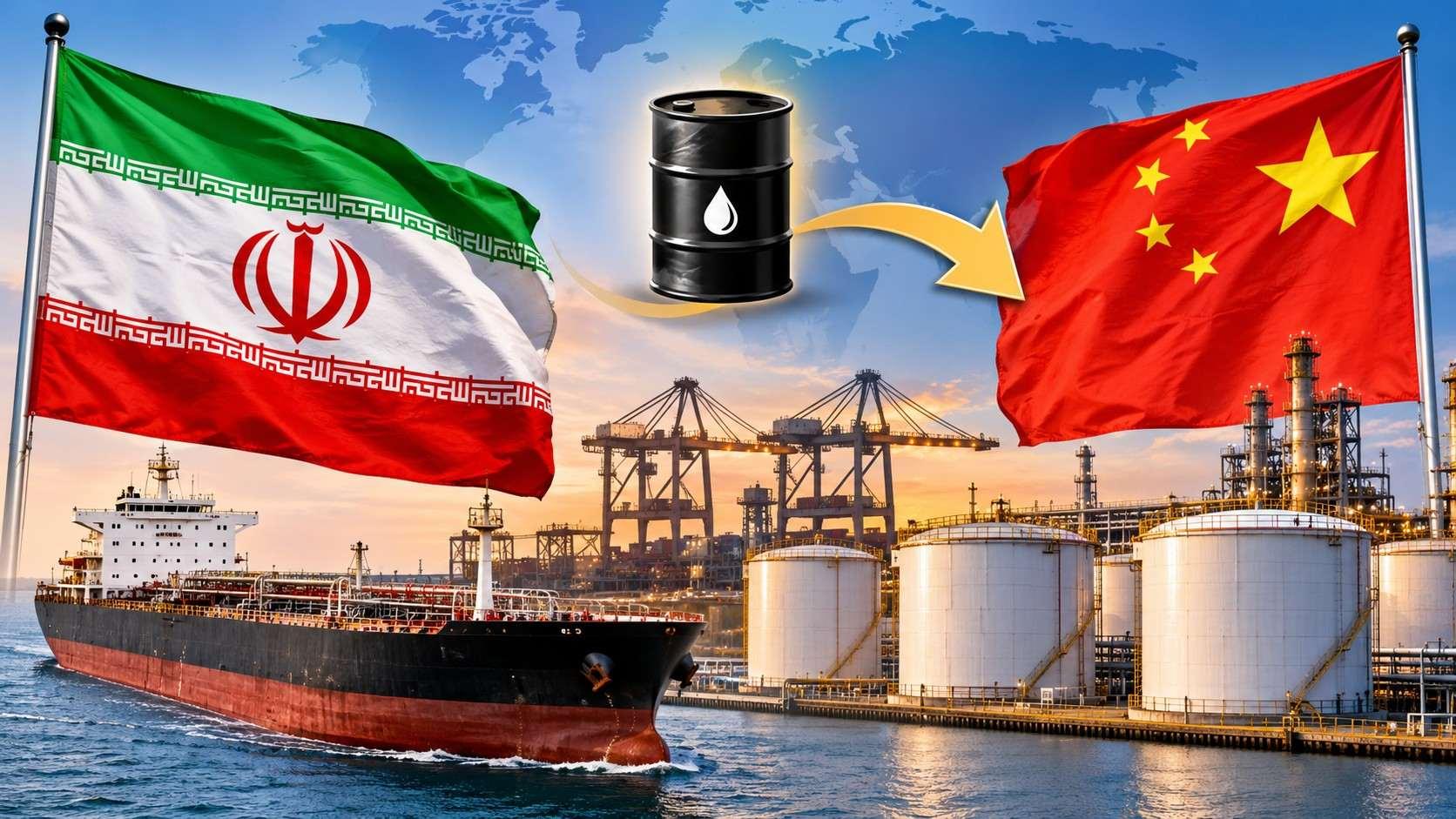
Iran has set up an oil logistics network in China involving access to three port locations and seven storage tanks, allowing sanctioned vessels to deliver crude directly to Chinese facilities and reducing the need for ship-to-ship transfers and conventional shipping routes.
The arrangement was outlined in a confidential letter written by Hamid Bovard, former head of the National Iranian Oil Company (NIOC) and acting oil minister. The letter was addressed to Ali Shamkhani, former secretary of Iran’s Supreme National Security Council and adviser to then-supreme leader Ali Khamenei.
Bovard criticised the oil-trading policies followed during former president Ebrahim Raisi’s tenure and described an alternative system developed under President Masoud Pezeshkian’s administration. The system involved covert cooperation with Chinese entities, continued use of sanctioned tankers through trusted intermediaries, and access to Chinese terminals negotiated by Iran’s foreign ministry.
Iran also arranged long-term leases for storage facilities as part of the plan. Two Iranian Oil Ministry sources said Tehran had obtained control of facilities at three locations in China.
Three ports and seven storage tanks
One of the facilities is a terminal in the Ningbo-Zhoushan free trade zone. Iran is reported to have gained control there after assisting with the construction of smaller transit facilities. Tehran also holds stakes in docks at Qingdao and Pant in Shandong province.
The Qingdao and Pant docks are linked to nearby pipelines, enabling crude to be transported to Chinese refineries without requiring another transfer between vessels.
Iran has also reportedly purchased seven storage tanks. Four are located at Dalian, Huizhou, Dongying and Weifang. The remaining three, controlled by the oil ministry, are in the Zhoushan area at Aoshan and Shulanghu islands and the Zengyamuo oil zone.
Tankers associated with Hossein Shamkhani, the son of Ali Shamkhani and an operator of a shadow fleet, use the facilities, according to the information available. The United States Treasury has sanctioned 51 vessels linked to him.
How payments for Iranian oil are handled
China is Iran’s largest crude buyer, with independent “teapot” refineries purchasing significant volumes through intermediaries. More than 80% of Iran’s shipped oil exports went to China in 2025, with deliveries averaging approximately 1.4 million barrels per day.
The two countries are also reported to use a barter-like payment system. Proceeds from oil sales move through a special-purpose vehicle (SPV), which pays Chinese suppliers for medicines, vehicles and communication equipment.
This mechanism avoids direct payments between Iranian buyers and Chinese suppliers through conventional international banking channels. It reduces exposure to sanctions while enabling Chinese buyers to obtain Iranian crude at discounted prices.
Pressure from Beijing over discounts
Bovard’s correspondence indicated that China had increased pressure on Tehran. Beijing reportedly rejected Iran’s request for higher refinery import quotas, raised its purchases of Venezuelan oil and demanded deeper discounts on Iranian crude.
The letter also raised allegations involving Hossein Shamkhani. Bovard claimed that Shamkhani purchased vessels using Iranian government loans but used them to transport Russian crude. He further alleged that Shamkhani sold Iranian oil received on consignment without providing collateral.
Bovard also alleged that the United Arab Emirates had become Shamkhani’s exclusive trading territory and that the Iranian oil ministry was effectively serving his commercial interests.
Ali Shamkhani had reportedly told Khamenei that discounts on Iranian oil had risen from 50 cents per barrel during Raisi’s presidency to $9 per barrel under Pezeshkian. Bovard disputed that assessment.
In September, Mohammad Javad Bavand, the oil minister’s special assistant, instructed four intermediaries, including Hossein Shamkhani, to sell 86 million barrels of crude at an 8.5% discount.
 Follow us