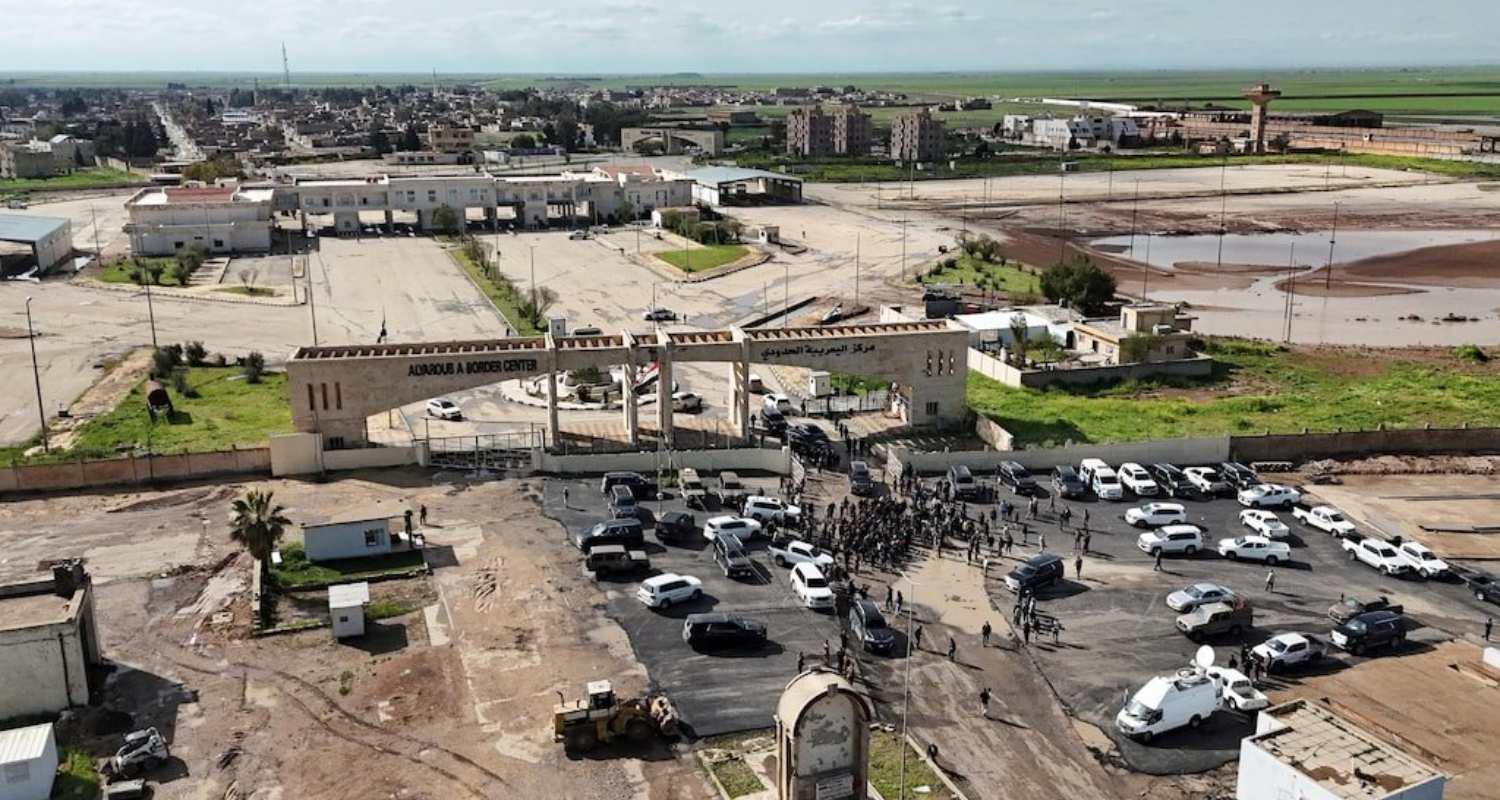
Iraq and Syria’s Rabia-Yarubiyah border is reopened on Monday, after over a decade (10 years). The officials pointed out the reopening as a potential for trade and oil exports.
Syria touted the crossing as a safe overland route for oil exports and an alternative to the Strait of Hormuz at the focus of the Iran war.
Reason for closure —
Hostility between Syria and Iraq started in 1966 when both were under Ba'athist rule. The crossing — known as Rabia in Iraq and Yarubiyah in Syria — was closed after the Syrian civil war began in 2011. Then in 2014, militants from the Islamic State group seized the area. Iraqi Kurdish forces later retook it.
Syria's state-run news agency claimed that Syrian and Iraqi officials at the crossing discussed how to improve coordination and ease transit and trade “in line with shared interests.”
Nadia al-Jubouri, a member of Iraq's provincial council of Nineveh, said at the ceremony that the reopening will allow for "trade exchange and oil transportation towards this great gate.”
Iraq relies heavily on oil revenues for roughly 90 per cent of its budget, and most of its oil is exported through the Strait of Hormuz, the narrow mouth of the Persian Gulf, and a critical chokepoint through which 20 per cent of the world's oil normally flows. Since the US/Israel-Iran war, the Strait of Hormuz has once again been closed by Tehran, making difficult to export oil.

 Follow us