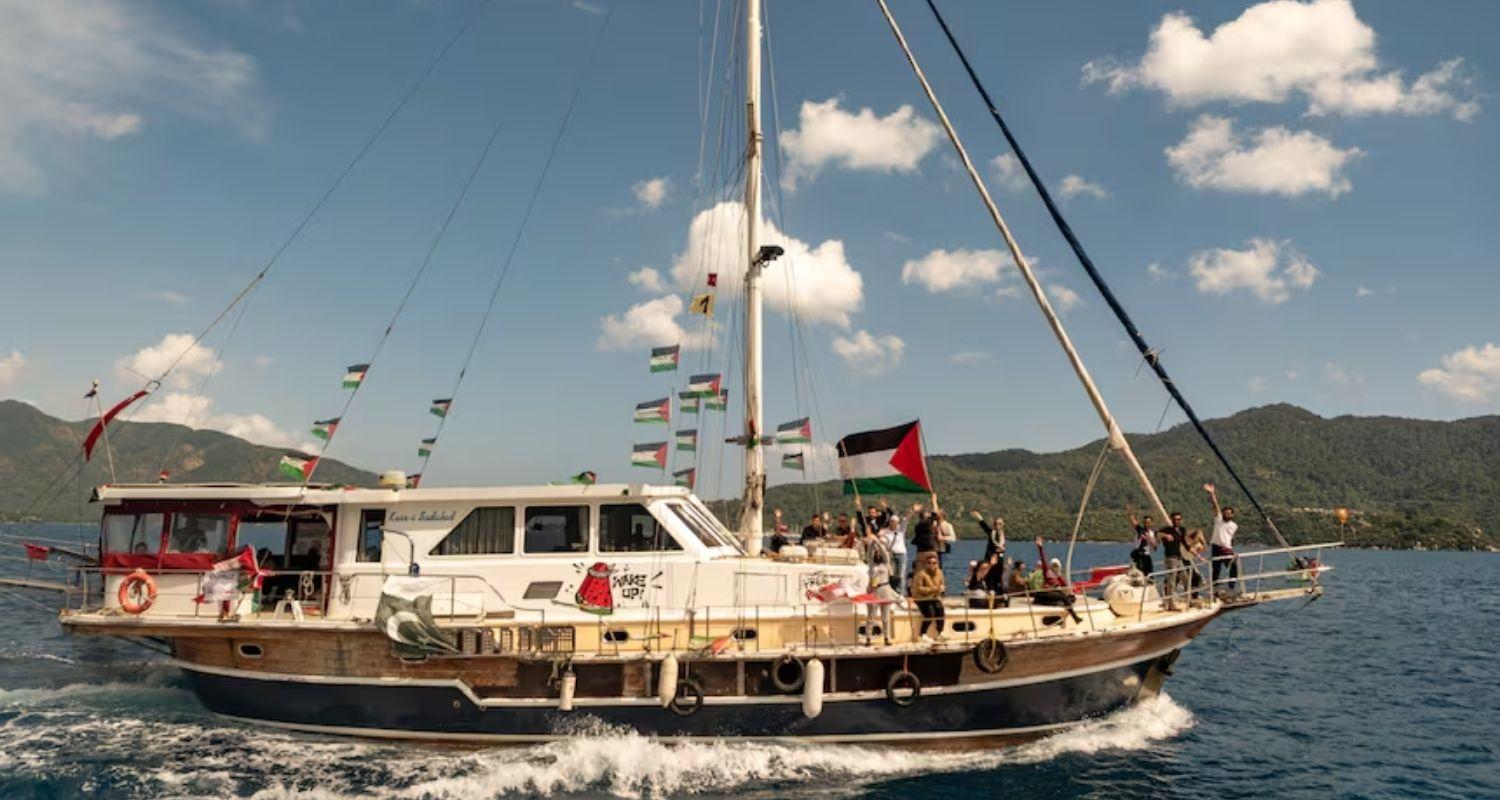
The Israeli military on Monday began intercepting boats belonging to the latest flotilla of activists attempting to challenge the long-standing blockade of Gaza. The vessels were part of an international campaign organised by the Global Sumud Flotilla, whose members say they aim to draw global attention to the humanitarian crisis in the Palestinian territory.
More than 50 boats had departed from the Turkish port city of Marmaris last week in what organisers described as the final stage of their planned journey towards Gaza. The flotilla included hundreds of activists from dozens of countries, many of whom hoped to symbolically break the blockade and deliver solidarity messages to Palestinians living in the enclave.
Also read: Time is running out for Iran, says Trump
Livestream footage released by organisers on Monday showed tense scenes aboard several vessels as activists donned life jackets and raised their hands while Israeli forces approached. One of the videos showed troops in tactical gear boarding a ship after arriving on a military vessel, before the livestream was abruptly cut off. Separate footage captured Israeli speedboats surrounding the flotilla and ordering activists to gather at the front of their boats. Several of the flotilla vessels were reported to be off the coast of Cyprus at the time of the interception.
Shortly before the operation began, Israel’s Foreign Ministry issued a warning to the flotilla participants, urging them to ‘change course and turn back immediately’. In a post on X, the ministry described the mission as ‘another so-called humanitarian aid flotilla’ and accused organisers of staging a political provocation rather than carrying genuine aid. The Israeli military declined to publicly comment on the operation while it was ongoing.
According to flotilla organisers, the vessels were intercepted approximately 250 nautical miles from Gaza’s coastline. Unlike several previous operations carried out during the night, this interception took place in broad daylight and was widely documented through social media broadcasts and video recordings from activists on board.
The blockade on Gaza has been in place for nearly 18 years, well before the current war. Israel and Egypt imposed restrictions after Hamas took control of Gaza in 2007, saying the measures were intended to prevent weapons smuggling and militant activity. Israel has since maintained control over Gaza’s airspace and coastline while regulating the movement of goods and people in and out of the territory. Critics, however, have repeatedly described the blockade as a form of collective punishment against Gaza’s civilian population.
This was not the first time the flotilla movement faced Israeli intervention. On April 30, Israeli forces intercepted more than 20 boats from a similar convoy near the Greek island of Crete and detained around 175 activists.
Israeli authorities said the early interception was necessary because of the large number of vessels involved. Two activists —Spanish-Swedish citizen of Palestinian origin Saif Abukeshek and Brazilian activist Thiago Ávila—were taken to Israel, interrogated and held for several days before being deported. Both accused Israeli authorities of mistreatment and torture during detention, allegations Israel strongly denied. Brazil and Spain criticised the operation and accused Israel of unlawfully detaining their citizens.

 Follow us