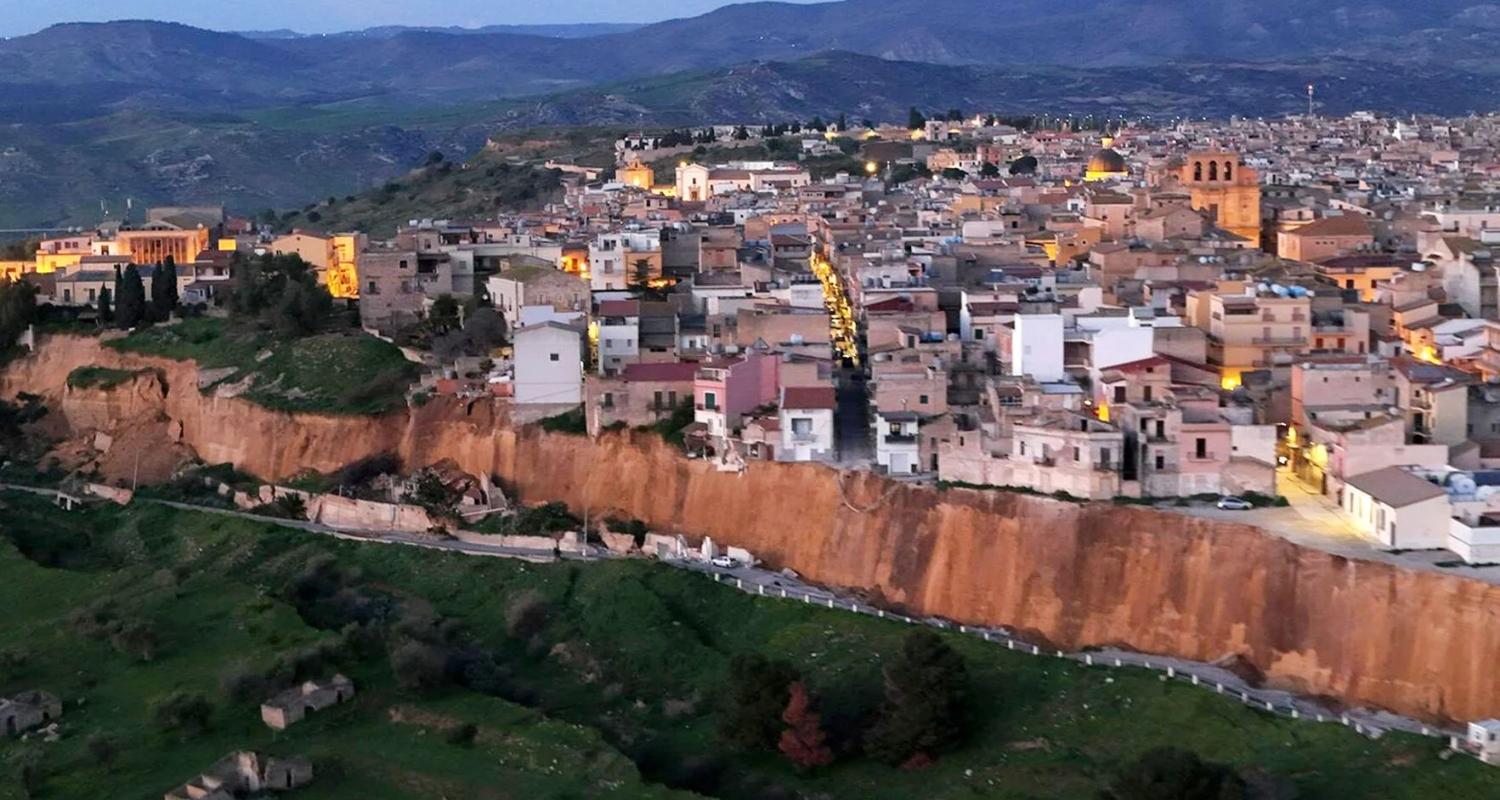
The Sicilian town of Niscemi is witnessing massive rain-induced landslides that have torn away a big chunk of a mountainside, leaving hundreds of houses teetering on the edge and forcing more than 1,500 residents to flee.
The 4-kilometre-wide landslide has prompted civil protection authorities to declare a 150-metre-wide “no-go zone”.
According to Italy’s Civil Protection Department, on January 16, a significant landslide struck the municipality of Niscemi, in the province of Caltanissetta, causing initial critical issues in the western part of the town.
Italian Prime Minister Giorgia Meloni also visited the site after declaring a state of emergency in the region on Monday, while stating that the damage caused by the landslides in the region might reach €2 billion.
Meanwhile, Civil Protection Chief, Fabio Ciciliano said the houses located on the edge of the landslide are no longer habitable.
“We need to work with the mayor to find a permanent relocation for these families,” he said, adding that danger still looms for over hundreds of citizens.
Also Read: Mt Maunganui landslide: Human remains found; rescue ops halted
Ciciliano warned that “the entire hill is collapsing onto the plain of Gela”.
On January 25, a second, larger landslide reactivated an old fault line near the southern part of the town, impacting much of the local road network, compromising the stability of numerous buildings, and disrupting essential services.
Several firefighting teams, along with approximately 60 volunteers from different local civil protection organisations, were operating in the area to provide logistical support and assist the population, said the government.
Officials added that many of the people living in the area will not be able to return to their homes, as the territory has become dangerously vulnerable due to constant rains.
Hundreds of cars and several buildings were sunk metres down the slope, while more houses remain dangerously close on unstable ground.
The town of Niscemi was built on layers of sand and clay. The continuous rain in the area has posed increased challenges for administrative officials trying to stabilise the structures that are hanging on the cliff.
This is not an isolated landslide incident in Niscemi, with the most recent major one being in 1997, when 400 people were evacuated from the town.
The disaster has set off political debate over construction in high-risk areas.

 Follow us