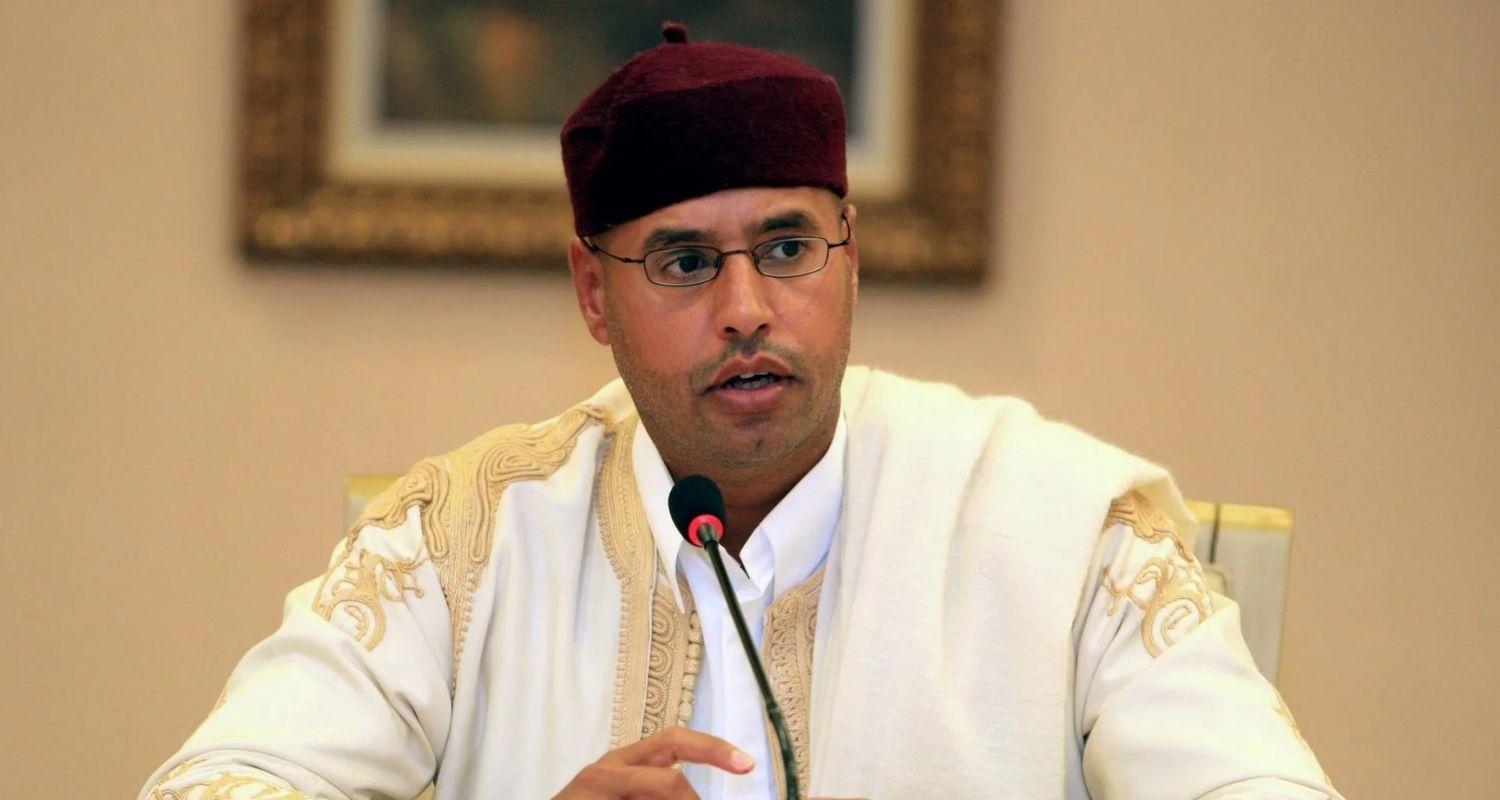
The son of ousted Libyan dictator, late Muammar Gadhafi, was killed in the northern African country, said Libyan officials. Seif al-Islam Gadhafi, 53, one-time heir apparent of Muammar Gadhafi, was killed in the town of Zintan, 136 kilometres (85 miles) southwest of the capital, Tripoli, according to Libya’s chief prosecutor’s office, which also mentioned that he was “shot to death”.
Seif al-Islam’s political team later released a statement saying that “four masked men” stormed his house and killed him in a “cowardly and treacherous assassination”. The statement also said he clashed with the assailants, who closed the CCTV cameras at the house “in a desperate attempt to conceal traces of their heinous crimes”.
Also Read: Libyan army chief, 7 others killed in plane crash in Turkey
Khaled al-Zaidi, a lawyer for Seif al-Islam, and Abdullah Othman Abdurrahim, who represented Gadhafi in the UN-brokered political dialogue that aimed to resolve Libya’s long-running conflict, too confirmed his death on Facebook.
Born in June 1972 in Tripoli, Seif al-Islam was the second-born son of the long-time dictator. He studied for a Ph.D. at the London School of Economics and was seen as the reformist face of the Gadhafi regime.
But, in late 2011, after his father’s killing in October that year, Seif al-Islam was captured by fighters in Zintan while attempting to flee to neighbouring Niger. The fighters released him in June 2017 after one of Libya’s rival governments granted him amnesty. He had since lived in Zintan.
Seif al-Islam had charges of inciting violence and murdering protestors slapped on him by a Libyan court in 2015, which also sentenced him to death in absentia. He was also wanted by the International Criminal Court on charges of crimes against humanity related to the 2011 NATO-backed uprising that led to his father’s killing.
In November 2021, Seif al-Islam announced his candidacy in the country’s presidential election in a controversial move that was met with outcry from anti-Gadhafi political forces in western and eastern Libya.
The country’s High National Elections Committee disqualified him, but the election wasn’t held over disputes between rival administrations and armed groups that have ruled Libya since the bloody ouster of Moammar Gadhafi. The country has since remained in chaos and divided between rival armed groups and militias.

 Follow us