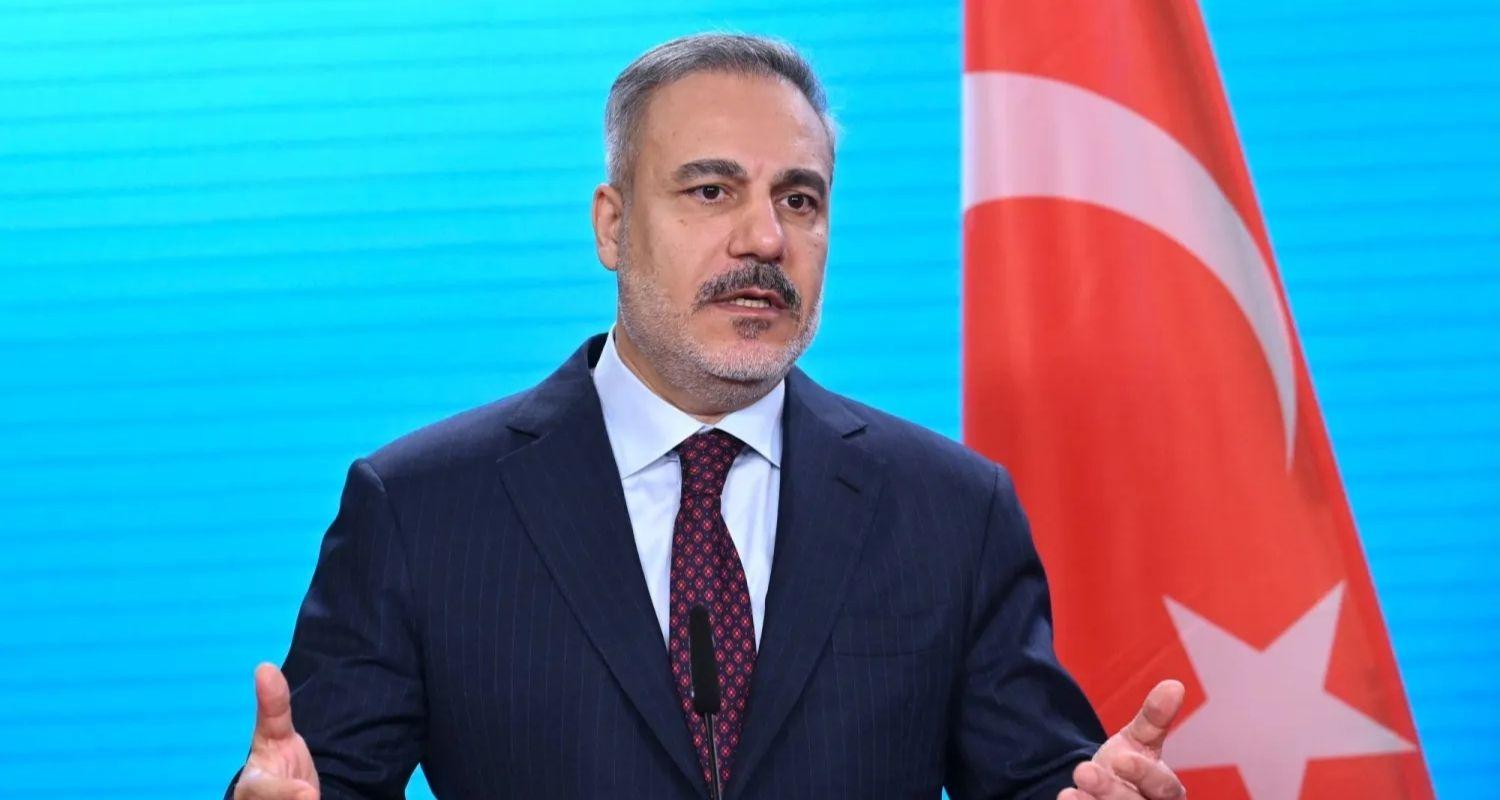
Turkish Foreign Minister Hakan Fidan said the recently signed Mecca Joint Defence Agreement between Turkiye, Saudi Arabia and Pakistan is not directed against Iran, stressing that the alliance is defensive in nature and is not intended to attack or eliminate any country.
During an interview on Saturday, Fidan said Saudi Arabia had no strategy to attack or eliminate Iran and instead wanted an end to the violence surrounding the Strait of Hormuz.
Fidan said Riyadh had conveyed to the United States that military intervention against Iran would not provide a solution and favoured resolving the issue through dialogue and an agreement.
He added that Saudi Crown Prince Mohammed bin Salman had reiterated the position during their recent meeting in Mecca and that the same message had been conveyed during discussions with US President Donald Trump.
"You have to be deterrent enough not to be attacked. But problems need to be managed in different ways," Fidan said.
Fidan said the Saudi-Iran issue could not be viewed merely as a dispute between the two countries, arguing that the involvement of the United States and Israel had also contributed to the emergence of the problem.
He said Turkiye had been discussing regional issues with Iranian officials for more than two years and maintained that Iran could play a constructive role in regional cooperation once it addressed its regional challenges.
Also read: Iran sets six conditions for the US to reopen Hormuz
"There is no common threat that we have put in writing," Fidan said, adding that the agreement does not target any country that does not attack its signatories.
"Saudi Arabia, Pakistan and Turkiye, when you look at their foreign policy positions, are not countries that have expansionist policies. They are countries concerned with their own borders, their own problems and their development, and, if possible, they want to contribute positively to their environment through good relations and good neighbourliness," he said.
Fidan said the three countries have different capabilities and approaches but that their coming together would result in a defence-orientated organisation rather than an offensive alliance.
"Unless it is attacked by a country, whether from inside or outside the region, this alliance cannot have any dispute with any country. But, of course, the power composition we have put forward will make a constructive contribution to regional stability," he added.
The Foreign Minister further compared the Mecca Joint Defence Agreement to NATO's Article 5 on collective defence, noting that it was technically similar, under which an armed attack against one member is treated as an attack against all.
He said Turkiye's experience as a NATO member since 1952 would provide an important reference for the new alliance, particularly in terms of deterrence and institutional practices.

 Follow us