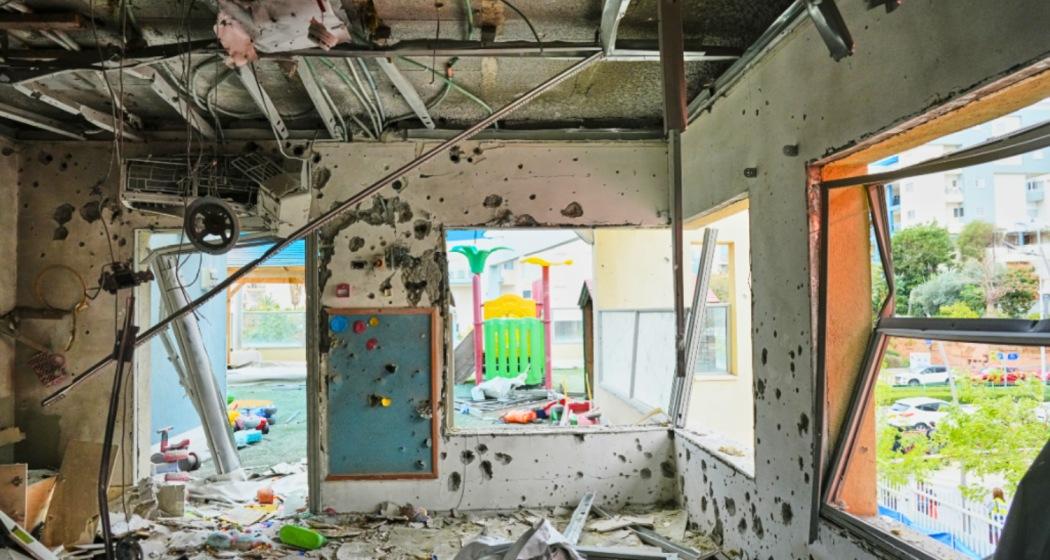
The US-Israel-Iran war has entered its fourth week with fresh escalations, including a reported airstrike on Iran's Natanz nuclear facility and Iran's attempted missile strikes on the Diego Garcia base, even as President Donald Trump signalled a potential "winding down" of operations amid ongoing military reinforcements.
Iranian authorities confirmed that the Natanz uranium enrichment facility was targeted in a US-Israeli airstrike on Saturday. State media, including Mizan news agency, reported no radioactive leakage, no risk to nearby residents, and no off-site radiation increase, per the International Atomic Energy Agency (IAEA).
The site, previously damaged earlier in the conflict, remains a key focus of coalition efforts to curb Iran's nuclear programme. Israel denied direct involvement in the latest strike, while the US offered no immediate comment.
Iran's long-range retaliation: Missiles aimed at Diego Garcia
In a significant show of extended reach, Iran launched two intermediate-range ballistic missiles towards the joint US-UK military base at Diego Garcia in the Indian Ocean, approximately 4,000 km from Iran, Iran's longest strike in this war so far.
According to US officials, neither missile hit: one malfunctioned mid-flight, while the other was engaged by an SM-3 interceptor from a US warship, with interception success unconfirmed. The attack highlighted Iran's advancing missile capabilities and raised concerns over potential threats beyond the Middle East.
Trump rules out ceasefire, hints at de-escalation
US President Donald Trump rejected ceasefire proposals on Friday, stating he did "not want" one and that the Strait of Hormuz would "open itself" in time—while suggesting China could play a role.
He claimed the US was "very close" to achieving objectives, including dismantling Iran's military and nuclear capabilities, and was considering "winding down" the air campaign.
Despite this, the Pentagon deployed three additional warships and around 2,500 Marines to the region, with requests pending for $200 billion more in funding as US national debt hits $39 trillion. US Central Command released a video claiming over 8,000 Iranian military targets struck since late February.
Also read: Iran says its Natanz nuclear facility hit in airstrike
Oil prices soar as US temporarily eases Iranian sanctions
Brent crude settled at $108.65 per barrel, its highest since July 2022, amid disruptions to the Strait of Hormuz and regional energy infrastructure. In response to supply pressures, the US Treasury issued a 30-day waiver lifting sanctions on Iranian oil already at sea, potentially releasing 140 million barrels.
Treasury Secretary Scott Bessent described the move as targeted relief for stranded cargoes to cap prices, without broader sanction relief.
Diplomatic Gestures Amid Escalation
Prime Minister Narendra Modi spoke with Iranian President Masoud Pezeshkian, extending Eid and Nowruz greetings. Modi expressed hope that the festivals would foster peace, stability, and prosperity in West Asia, while condemning attacks on critical infrastructure and emphasising the need to safeguard freedom of navigation and secure shipping lanes.
Iran's defiant rhetoric
Supreme Leader Ayatollah Mojtaba Khamenei, in his Eid and Nowruz message, praised Iran's "relentless resistance" against "global arrogance" and offered condolences to martyrs' families.
Iran discussed partial reopening of the Strait for Japanese vessels with Tokyo and warned of potential strikes on global "parks, recreational areas, and tourist destinations" if attacks on energy sites continued. Strikes hit Tehran during Nowruz celebrations, while Iran targeted Israeli sites, including Ben Gurion airport, and Gulf energy infrastructure.
Israel's Prime Minister Benjamin Netanyahu indicated a pause on attacks against a key Iranian gas field at Trump's request but warned of intensified operations elsewhere.
The conflict remains volatile, with coalition air dominance countered by Iran's asymmetric responses and proxy risks. Diplomatic channels show little progress, leaving energy markets and regional stability under severe strain.

 Follow us