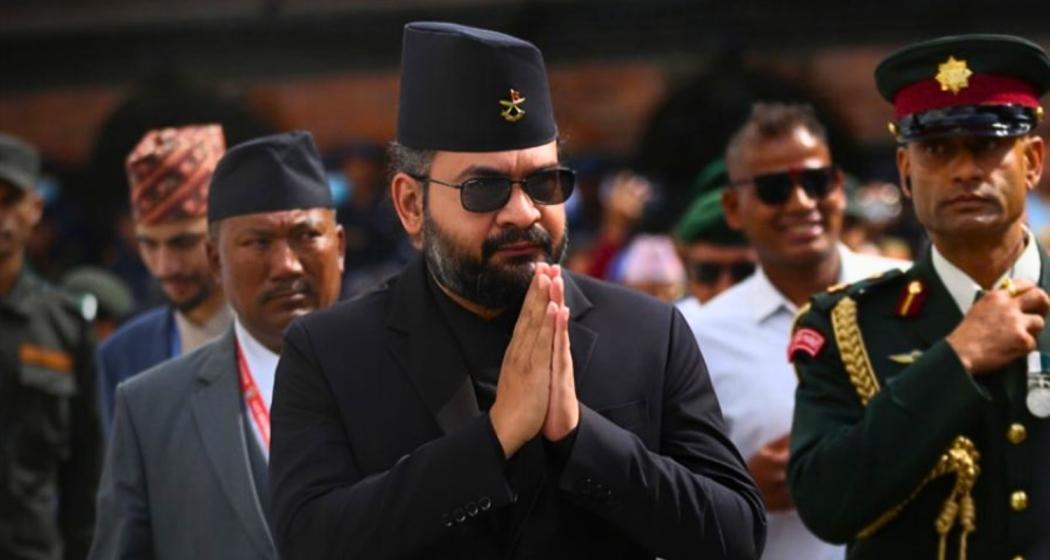
Nepal Prime Minister Balendra Shah on Sunday said that outstanding border issues with India would be resolved through dialogue and diplomatic engagement, signalling Kathmandu's preference for a negotiated settlement of the long-standing dispute.
Addressing Nepal's Parliament for the first time since assuming office following the March elections, Shah underscored the importance of talks in addressing bilateral concerns and said boundary-related issues would be settled “through table talks and diplomatic efforts”.
His remarks come weeks after India reiterated its willingness to engage constructively with Nepal on all bilateral issues, including unresolved boundary matters, through established diplomatic mechanisms.
Earlier this month, responding to queries related to remarks made by Nepal's Foreign Ministry in the context of the annual Kailash Manasarovar Yatra, Ministry of External Affairs spokesperson Randhir Jaiswal said New Delhi's position on the matter remained consistent.
He noted that Lipulekh Pass has served as a route for the Kailash Manasarovar Yatra since 1954 and that the pilgrimage through the route has continued for decades.
Also read: India rejects Nepal’s claim over Lipulekh Pass
India has also maintained that territorial claims concerning areas such as Lipulekh, Kalapani and Limpiyadhura are not supported by historical facts or evidence. New Delhi has consistently stated that unilateral attempts to enlarge territorial claims are not acceptable and that outstanding issues should be addressed through dialogue.
The boundary dispute resurfaced sharply in 2020 when the then Nepal government led by K P Sharma Oli issued a revised political map incorporating Limpiyadhura, Lipulekh and Kalapani within Nepal's territory.
India had rejected the move, describing it as a unilateral action that was inconsistent with the bilateral understanding to resolve boundary issues through diplomatic negotiations.
Despite periodic tensions over the issue, both countries have repeatedly emphasised the importance of maintaining close bilateral ties rooted in historical, cultural and people-to-people connections.
Shah's latest remarks are likely to be viewed as a reaffirmation of Nepal's commitment to resolving the boundary dispute through peaceful engagement rather than confrontation, in line with the long-standing diplomatic approach adopted by both neighbours.

 Follow us