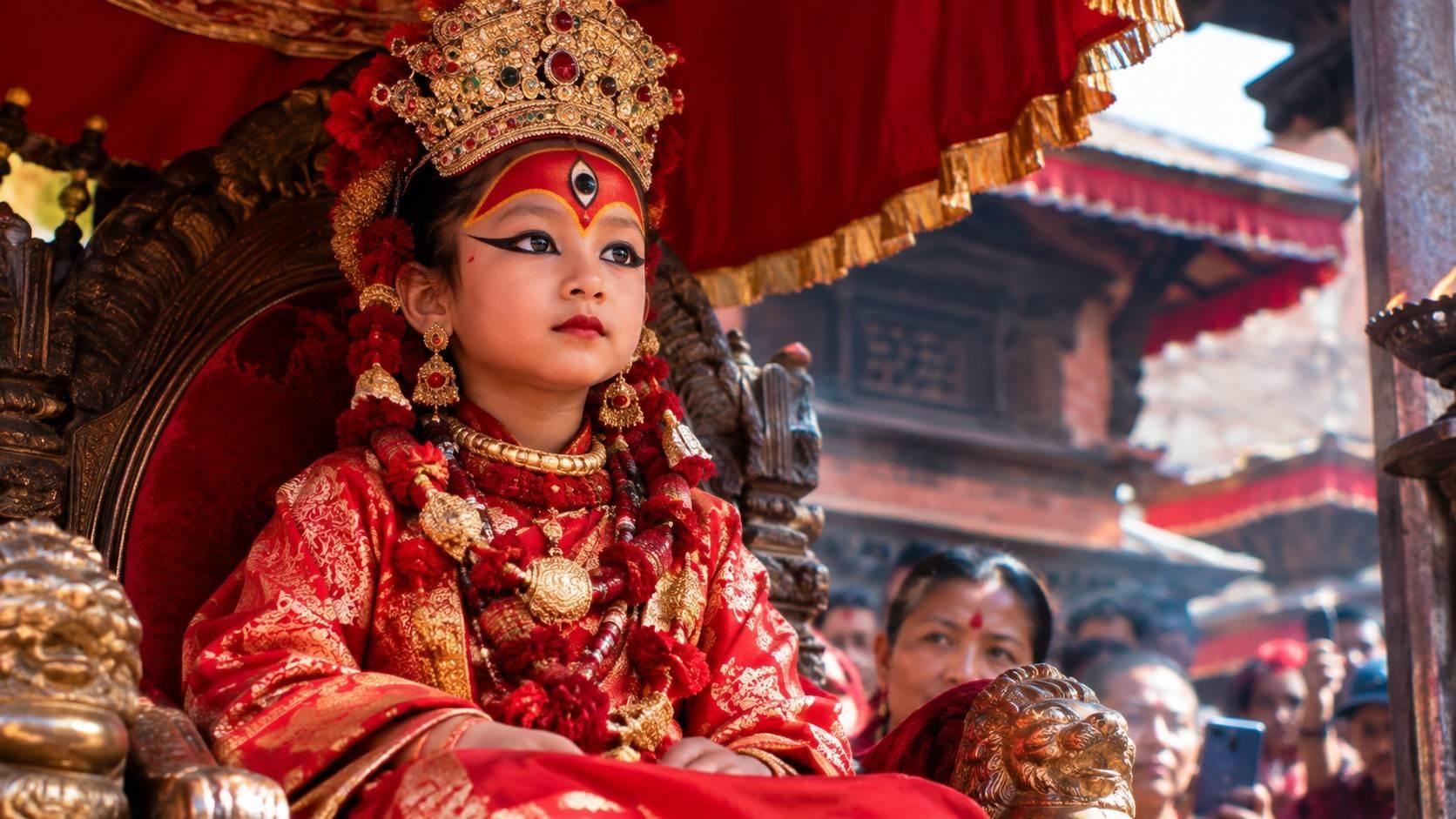
Hundreds of pre-pubescent girls dressed in elaborate traditional clothing gathered at Kathmandu Durbar Square on September 24 for the annual Kumari Puja. Their appearance resembled that of Nepal’s revered living goddess Kumari, bringing colour and ritual activity to the historic UNESCO World Heritage Site despite the rain.
Known locally as “Kanyas”, the girls participated in a ceremony associated with good fortune, protection from misfortune and safeguarding against diseases. The ritual is held before the Taleju Bhawani Temple, a sacred site that opens its doors to devotees for only one day during Dashain.
Taleju Bhawani is considered an earthly manifestation of divine feminine energy and is closely linked to Nepal’s practice of worshipping the Kumari, or living goddess. During the ceremony, the girls are taken around the temple, whose face has traditionally remained concealed from public view for centuries.
The observance brings together elements of Hinduism, Buddhism and Tantrism. Participants are also believed to remain free from health problems after taking part in the annual ritual.
Strict selection for the living goddess
Nepal’s Kumari tradition involves selecting a young Newar girl at intervals through a demanding process to represent Goddess Kumari. She is regarded as an incarnation of Goddess Taleju, the tutelary deity of the Malla and Shah dynasties.
Candidates are drawn from the Shakya caste among the Newars, and some may be as young as four years old. During the selection tests, the chosen girl must remain composed and display no fear.
After her selection, the Kumari moves to the Kumari Ghar, or Kumari’s House. Her feet are not allowed to touch the ground, and she leaves the residence only on specific festival occasions. Her status as the Living Goddess continues until she experiences any form of bleeding, generally when she reaches puberty.
Tradition dating back to the 17th century
The Kumari has been worshipped with deep reverence since the 17th century, when the practice was institutionalised during the Malla era. The Shah rulers, who later replaced the Malla dynasty, retained the tradition. Until 2008, the Shah King visited the Kumari to receive tika on his forehead, a ritual associated with the empowerment of the monarch.
The custom is linked to a centuries-old legend concerning King Jaya Prakash Malla and Goddess Taleju. The legend says that Taleju appeared before the king in human form while he was playing a game. After the king, under the influence of alcohol, began lusting after her, the goddess became offended and ordered him to swear that he would choose a virgin girl in whom she would always reside.
According to the legend, the practice continued from that time. Although King Prithvi Narayan Shah eventually ousted the Malla dynasty, the custom of venerating the Kumari continued under the new rulers. The annual Kumari Puja now brings the tradition into public view as girls dressed as divine figures participate in rituals at one of Nepal’s most historic religious sites.

 Follow us