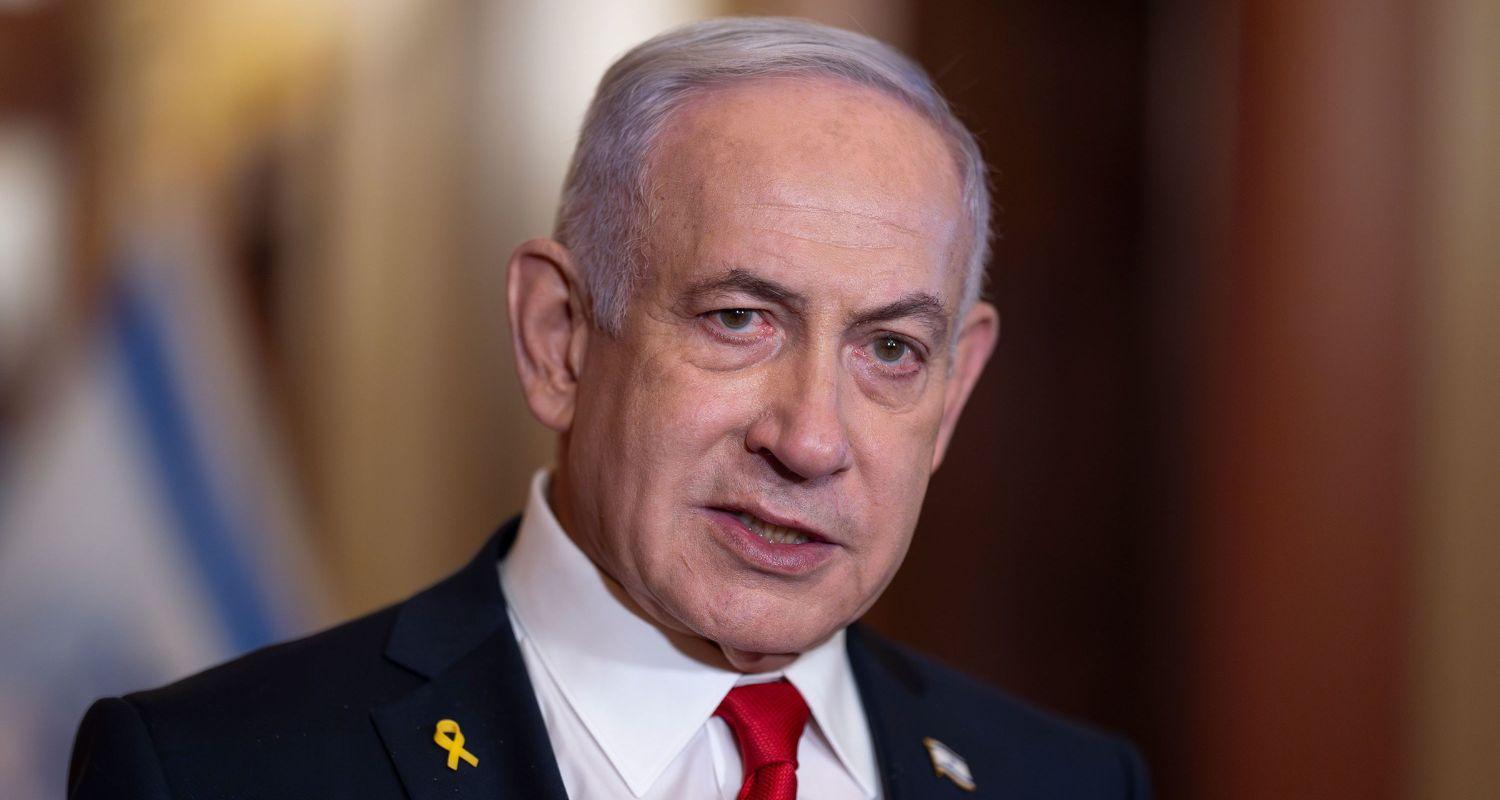
Israeli Prime Minister Benjamin Netanyahu defended the continuing military offensive against Iran, declaring that the US-Israeli strikes serve as a "gateway to peace', not a permanent state of hostilities. Netanyahu also argued that the strike that targeted and killed Iranian supreme leader Ali Khamenei would be an undeniable, but unintentional opportunity to prevent Iran from achieving a perceived 'immunity' to its nuclear weapons programme.
He said while the operations might take some time, the world was not looking at a years-long quagmire. Instead, he framed the current strikes as a way to create the internal conditions necessary for the Iranian people to eventually topple a leadership he described as 'totally fanatical' and 'unreformable'.
Netanyahu was particularly firm in his dismissal of the idea that he had 'dragged' US President Donald Trump into a regional war. Laughing off the suggestion, he praised Trump as the world's strongest leader, stating that Trump acts solely on what he believes is right for American interests. This sentiment was echoed by US Defence Secretary Pete Hegseth, who recently rejected comparisons between the current assault and the long-term occupations of Iraq or Afghanistan.
Hegseth characterised the campaign as an overwhelming and rapid effort to dismantle threats rather than a nation-building exercise, famously remarking that while it wasn't a 'regime change war', the world was certainly better off now that the regime had been forced to change.
According to Netanyahu, the reason for this latest attack lies in intelligence reports indicating Iran was feverishly working to rebuild its ballistic missiles and nuclear arsenal in secret underground bunkers.
Despite the damage caused by the brief but brutal war in June 2025, the Israeli Prime Minister said if they had not acted at this time, Iran would have succeeded in making it impossible for them to reach their aspirations in a matter of months.
At this point, the scale of the operation is enormous. As of today, American administrators report that more than 1,250 targets in Iran have been destroyed, including about half of Iran’s naval vessels.
Netanyahu claims that this was a 'decisive' victory, but the overall cost to the world is extraordinarily high. The Gulf is now a war zone and six American servicemen were killed in retaliatory attacks on Kuwait during the weekend. Not only have numerous civilians in Iran, Israel and Lebanon suffered casualties due to the war, but trade with all parts of the globe had suffered tremendously. With the Strait of Hormuz effectively shut down—a passage for nearly 20 per cent of the world's oil—energy prices have surged, and international aviation remains in a state of total disarray. While Netanyahu remains optimistic about a lasting path to peace, the immediate reality for the Middle East is one of deepening crisis and an increasingly volatile front line.
Also read: Delhi sees protests over Khamenei killing, security tightened

 Follow us