
Trending:
On Day 8 Iran apologises to Gulf as Trump warns 'harsher' strikes
The US-Israel-Iran conflict entered its eighth day with intensified fighting across West Asia, raising fears of a wider regional war. Missile strikes, heavy air raids, and attacks on energy and military infrastructure have pushed oil prices above $90 and disrupted global aviation and shipping routes. Follow us
News Arena Network - Tehran - UPDATED: March 7, 2026, 10:29 PM - 2 min read
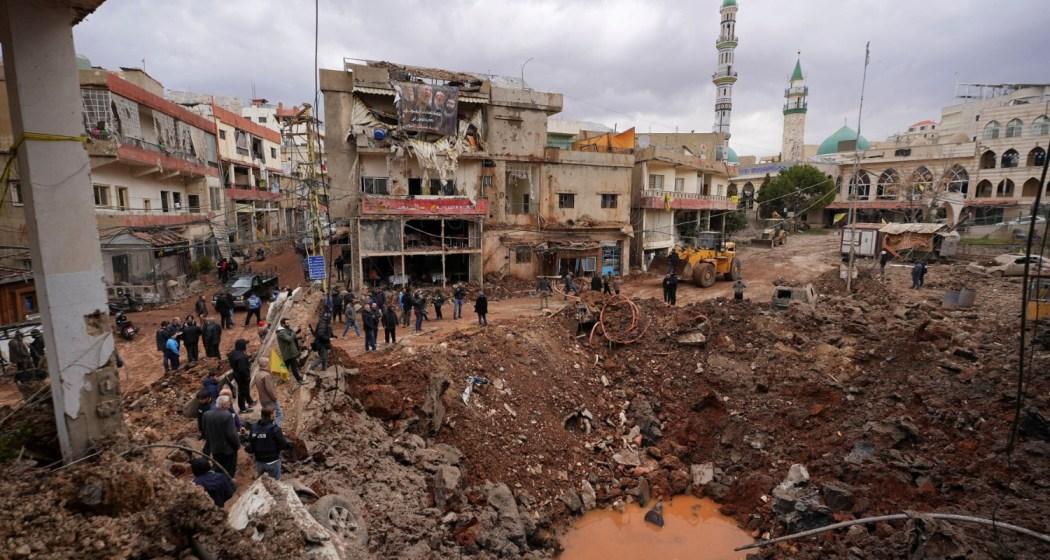
People inspect damage from an airstrike in Nabi Chit, Lebanon, on Saturday.
The US–Israel–Iran conflict entered its eighth day on Saturday with intensified fighting across West Asia, raising fears of a wider regional war. Iranian President Masoud Pezeshkian issued a rare apology to Gulf neighbours even as US President Donald Trump warned of harsher strikes against Iran, underscoring the volatility of the rapidly expanding conflict.
More than 1,300 people have been reported killed since hostilities erupted. Iranian missiles again struck targets across the Gulf region on Saturday, while US and Israeli forces launched some of the heaviest airstrikes yet against Iranian military infrastructure.
The conflict’s effects have rippled across the region. Hezbollah fighters have clashed with Israeli troops in Lebanon, drone swarms have targeted Gulf cities, and commercial aviation routes have been disrupted.
Global energy markets have reacted sharply. Oil prices surged above $90 per barrel amid fears that shipping through the Strait of Hormuz, a vital corridor for global energy supplies, could be disrupted.
Although limited cargo movements resumed under naval escort late on Saturday, tensions remain high as thousands of airstrikes and missile launches continue across multiple theatres.
Trump warns of ‘very hard’ strikes
US President Donald Trump escalated his rhetoric on Saturday, warning that Iran would be “hit very hard” in the coming days and signalling that additional targets could be struck.
Posting on social media, Trump reiterated that the conflict could end only with Iran’s “unconditional surrender”. Speaking later at the White House, he dismissed Tehran’s calls for negotiations, saying talks were “too late”.
US defence officials confirmed preparations for a major bombing campaign targeting Iranian military sites. Strategic bombers, including B-52 aircraft, have reportedly been repositioned to bases in the Gulf.
Analysts warned that a larger US strike campaign could trigger retaliatory attacks on American bases in Qatar and Bahrain, potentially widening the war.
Reports also indicated that more than two dozen Iranian naval vessels have been destroyed since fighting began, highlighting Washington’s naval dominance in the Gulf.
Airline chaos fuels passenger frustration at Gulf hubs
Major carriers such as Emirates, Qatar Airways and Etihad created widespread confusion with conflicting flight updates amid missile alerts near Dubai International Airport. Emirates briefly announced a full suspension before retracting it minutes later, confirming only limited operations for pre-booked flights.
Passengers faced erratic app notifications, cancellations followed by “proceed to airport” alerts, while departure boards changed unpredictably.
Thousands remained stranded, with diverted flights overwhelming secondary hubs such as Istanbul and Mumbai, amplifying anger over GPS jamming and poor communication.
Also read: Iran President apologises to Gulf countries for attacks
Iran strikes US air base in Abu Dhabi
Iran launched missiles at a US air-combat centre in Abu Dhabi just hours after President Pezeshkian issued a conciliatory message to Gulf states.
The strike targeted facilities housing F-35 aircraft and killed two Emirati personnel while injuring 15 others. Air defence systems intercepted most of the missiles, though debris sparked fires near nearby fuel depots.
Iran’s Islamic Revolutionary Guard Corps claimed responsibility, saying the strike was retaliation for US attacks on Tehran’s Mehrabad Airport.
Pezeshkian later condemned what he described as “rogue elements” behind the attack and promised an investigation, though the explanation did little to calm Gulf concerns.
In a televised address, the Iranian President rejected Washington’s demand for surrender, describing it as “unrealistic”. He framed the conflict as a defensive struggle while calling for UN-mediated negotiations to end the fighting.
Heaviest bombing campaign targets Iranian missile sites
The eighth day of the conflict saw the most intense aerial assault so far, with US and Israeli forces launching more than 1,200 strikes on Iranian military infrastructure.
Ballistic missile production facilities in Isfahan and Natanz were among the main targets.
According to Pentagon assessments, the strikes may have degraded nearly 40 per cent of Iran’s missile manufacturing capability. Stealth aircraft reportedly bypassed Iranian air defences while drones targeted mobile launch platforms.
Iranian state media reported significant civilian casualties, including an attack on a bus in Qom that killed dozens.
Oil prices surge past $90
Oil markets reacted sharply to the conflict, with global crude prices rising above $90 per barrel, the highest level in several years.
Energy analysts attributed the surge to fears that fighting could disrupt shipping through the Strait of Hormuz, which carries a significant share of the world’s oil exports. Qatar’s Energy Minister Saad al-Kaabi warned that prices could reach $150 per barrel if hostilities continue to escalate.
Attacks on energy infrastructure in Saudi Arabia and the UAE have further heightened concerns among traders and governments.
Strait of Hormuz transit drops 94%
Shipping through the Strait of Hormuz dropped sharply during the crisis, with tanker traffic falling by as much as 94 per cent at its lowest point.
Security groups said intensified naval patrols and suspected mines had effectively created a temporary blockade. Several commercial vessels reported damage from debris during naval incidents near Bandar Abbas.
Late on Saturday, limited tanker movements resumed under UAE naval escort, providing a small sign of stabilisation.
Hezbollah-Israel clashes ravage Lebanon villages
Fierce clashes erupted between Hezbollah fighters and Israeli troops near Nabi Chit in eastern Lebanon. Israeli airstrikes targeted suspected Hezbollah bunkers while ground forces engaged militants in ambushes. At least 15 Hezbollah fighters and eight Israeli soldiers were reported killed.
Thousands of civilians have fled nearby villages as infrastructure suffered heavy damage.
Beirut suburbs in ruins after Israeli airstrikes
Israeli jets struck Hezbollah positions in Beirut’s southern Dahiyeh district, causing widespread destruction. Emergency teams reported dozens of fatalities and hundreds of injuries as rescue workers searched through rubble for survivors. Hospitals in Beirut struggled to cope with the influx of casualties.
Hezbollah responded by launching rockets towards northern Israel, triggering air-raid sirens in Haifa.
US deploys Merops anti-drone system
The United States deployed its Merops counter-drone defence system to Gulf bases to counter Iranian drone attacks. Pentagon officials said the system had intercepted more than a thousand drones since hostilities began. Using microwave technology directed by artificial intelligence, the system can disable multiple drones simultaneously. Iran dismissed the system as ineffective and said it would continue developing more advanced drones.
