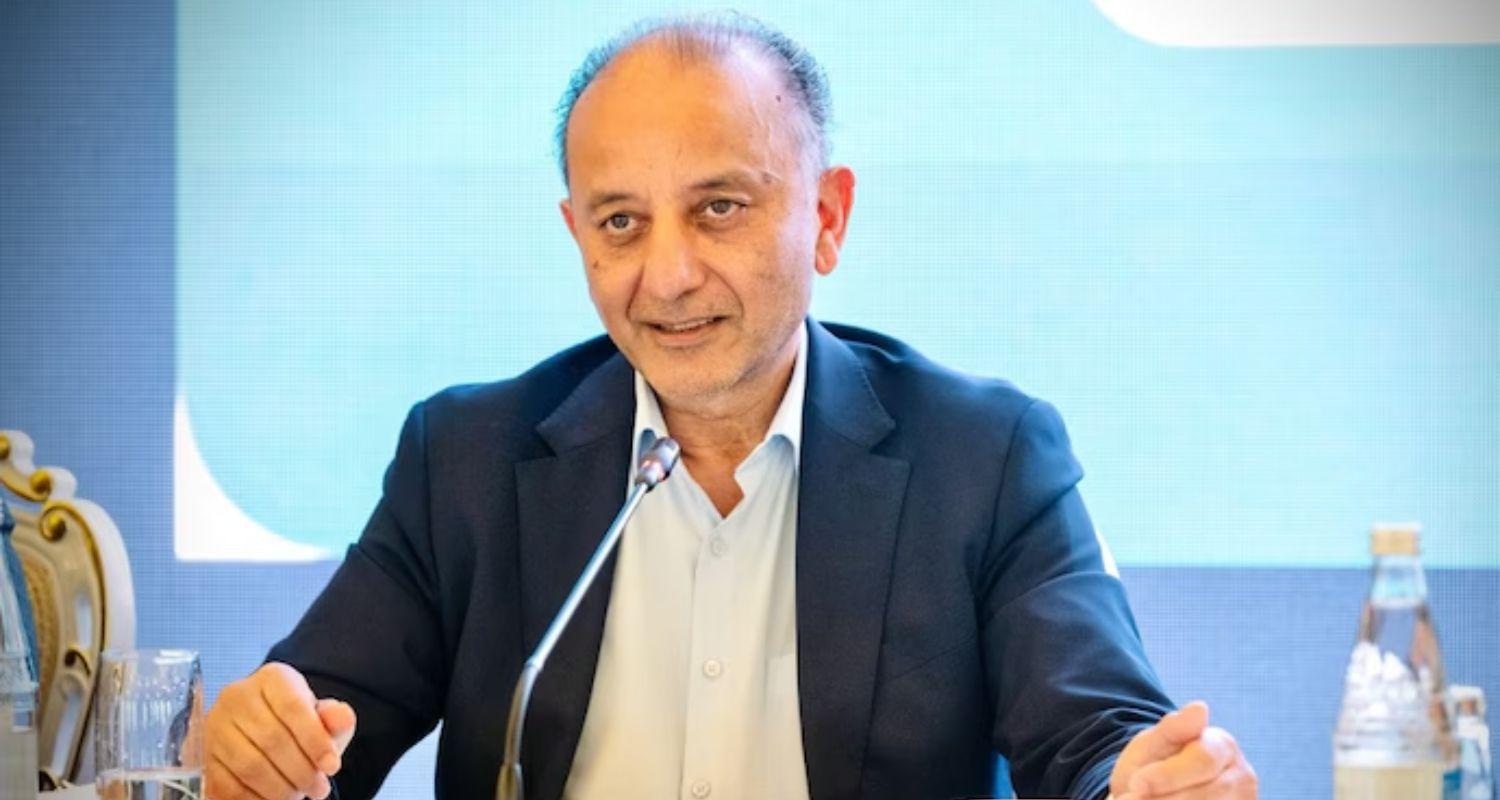
The water dispute between India and Pakistan seems to have become more serious with a threatening statement made by the latter. In a threatening statement, Pakistan's Climate Change Minister Musadik Malik said that his country will "cut off those hands" which tried to snatch their share according to the Indus Waters Treaty. The threats made by Pakistan have come at a time when there have been rising tensions over the long-standing treaty, which has risen even further after the decision taken by New Delhi to put the treaty in abeyance due to the Pahalgam terror attacks in April 2025.
Speaking at a joint press conference with Information Minister Attaullah Tarar, Malik accused India of attempting to control Pakistan’s water supply and warned of severe consequences if its water rights were compromised. He referenced the political control over the river sources, alleging that the prime minister of a neighbouring country held the tap and had threatened to stop all water flow into Pakistan. Whilst clips of these strong remarks have surfaced online and been reported by Pakistani outlets such as Dawn and 24NewsHD, their full authenticity has not been independently verified. Malik reiterated Islamabad’s absolute commitment to protecting its allocated share, emphasising that India would not be permitted to obstruct the water flows.
During the same press conference, Information Minister Attaullah Tarar insisted that the 1960 treaty remains legally binding and cannot be suspended, revoked, or amended unilaterally by either nation. Tarar claimed that Pakistan’s stance has received international backing, whilst New Delhi’s move to suspend the agreement has found little global support. He noted that Prime Minister Shehbaz Sharif and Army Chief Field Marshal Asim Munir have repeatedly made it clear that water represents both a lifeline and a strict red line for the nation. According to Tarar, Pakistan’s rights remain firmly protected by international law.
To further establish its position, Islamabad announced it would host its first international seminar on the Indus Waters Treaty, bringing together legal experts, water specialists, and foreign delegates to examine the technical and legal aspects of the framework. Brokered by the World Bank in 1960, the Indus Waters Treaty allocates control of the eastern rivers—the Ravi, Beas, and Sutlej—to India, while Pakistan receives the vast majority of the waters from the western rivers, namely the Indus, Jhelum, and Chenab.
Although the agreement has survived multiple wars and decades of diplomatic friction, India's recent decision to put it on hold has strained relations to a dangerous low. New Delhi blamed Pakistan-backed terrorists for the Pahalgam attack and stated the treaty would remain suspended until Pakistan credibly and irrevocably ends its support for cross-border terrorism—an allegation that Islamabad firmly rejects. Other Pakistani officials have also hinted at severe escalation, with Defence Minister Khawaja Asif previously warning that Pakistan would definitely go to war if its water and national security were directly threatened.
Conversely, India has defended its decision by arguing that the 1960 agreement is outdated and fails to reflect present-day realities. Addressing the 62nd session of the United Nations Human Rights Council, India’s First Secretary to the UN, Anupama Singh, argued that a state exporting terror cannot logically demand cooperation based on goodwill and friendship. She stated that a treaty negotiated over six decades ago cannot be treated as a perpetual entitlement insulated from accountability. Singh also urged Pakistan to focus on its own internal challenges rather than raising bilateral disputes on international platforms, while New Delhi maintained its long-standing position that Jammu and Kashmir remains an integral and inalienable part of India.
Also read: Govt has no role in unofficial India-Pak talks: Foreign Secretary

 Follow us