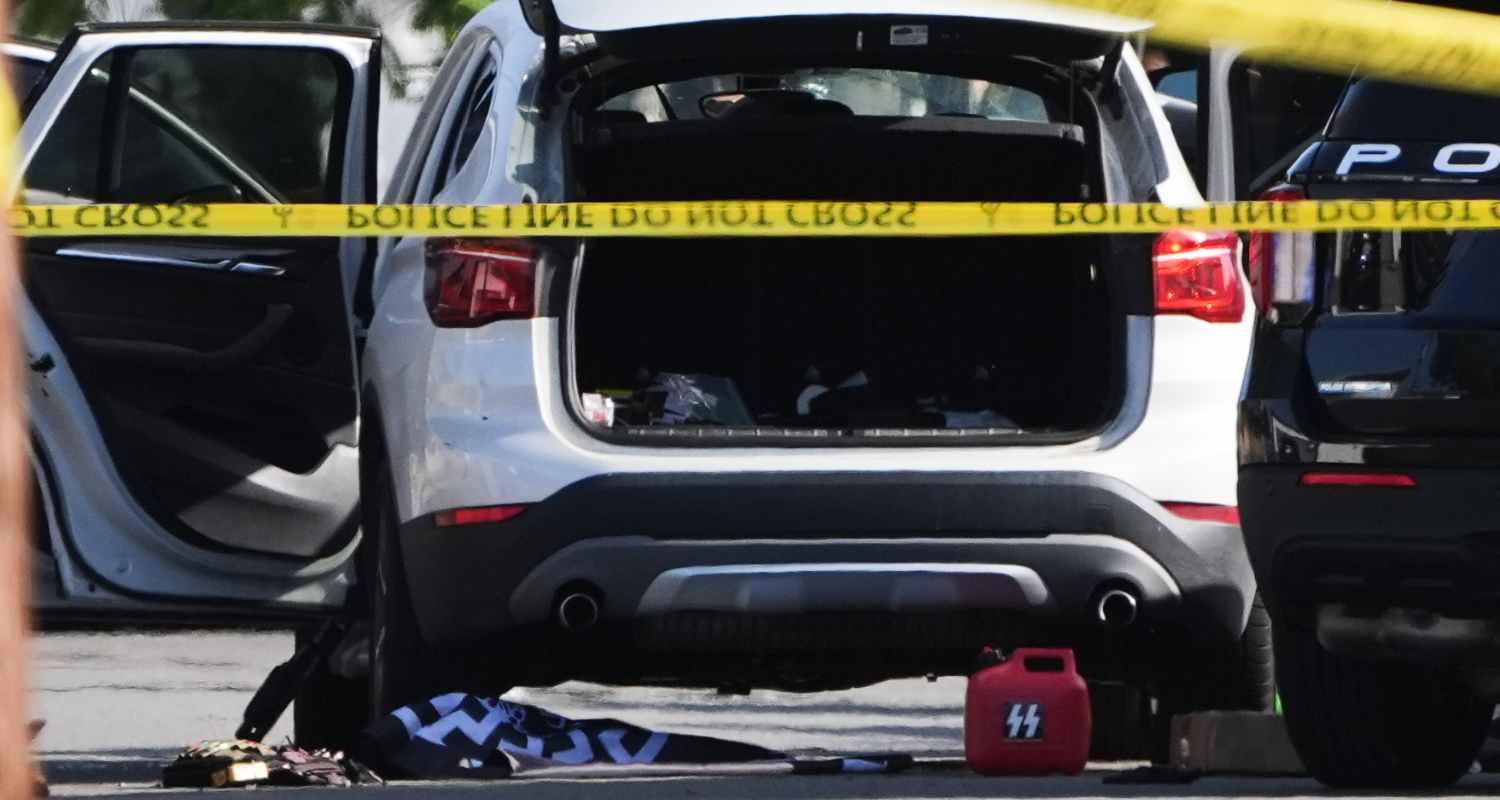
The recent development in the San Diego mosque shooting reveals that the teen shooters who shot and killed three people in the attack were radicalised online, where they first met and shared white supremacist views, according to authorities and writings they authored.
The pair “didn't discriminate on who they hated,” Mark Remily, the lead FBI agent in San Diego, said Tuesday.
The writings include hateful rhetoric toward Jewish people, Muslims and Islam, as well as the LGBTQ+ community, Black people, women, and both the political left and right. Both express beliefs that white people are being eliminated, and one writes about mental health struggles and being rejected by women.
Investigators also found at least 30 guns, ammunition, and a crossbow at two residences after Monday's attack in San Diego and were trying to uncover whether the shooters had broader plans, Remily said.
The shooters, Cain Clark, 17, and Caleb Vazquez, 18, killed themselves, according to police.
The shooting was the latest in a string of attacks on houses of worship and comes amid rising threats and hate crimes targeting the Muslim and Jewish communities since the beginning of the war in the Middle East, forcing increases in security. Authorities have said there was no specific threat against the Islamic center, which is the largest mosque in San Diego and also houses a school, police said. In Cain's writings, he calls for Muslims to be “exterminated”.
The document includes symbols long associated with white supremacists and Nazis. The two referred to themselves as “Sons of Tarrant,” an apparent reference to the white supremacist who attacked mosques in Christchurch, New Zealand, in 2019, killing 51 people.
The two suspects met online before discovering they both lived in the San Diego area, the FBI said. “In terms of how the radicalization occurred, we're still digging into that,” Remily said.
James Canning, a spokesman for the San Diego Unified School District, said Clark had been attending school online since 2021 and was set to graduate next month. In 2024, he was a member of the wrestling team at Madison High School. Canning said Clark had no record of disciplinary issues in high school.
Neighbours Marne and Ted Celaya said they last saw Clark a few hours before the shooting and that he waved as he got into a car alone and drove away. They described the family as good neighbours and recalled watching Cain grow up.
“It's unbelievable,” Marne Celaya said of the shooting. “He's helped me bring in my groceries.” Police said the security guard opened fire when the shooters arrived at the Islamic Center and tried to barge inside.
As the shooters made their way into the lobby, they wounded the guard, who kept firing at them, forcing them back outside, where the attackers fatally shot him, Police Chief Scott Wahl said. The pair went back inside and searched through rooms that were emptied during the lockdown, Wahl said. They exited into the parking lot, where they fatally shot Mansour Kaziha and Nadir Awad, according to police. The men drew the attackers farther away from the building, Wahl said.
Kaziha, known as Abu Ezz, “was everything” to the Islamic Centre, Hassane said. “He was the handyman. He was the cook. He was the caretaker,” Hassane said.
Abdullah had worked at the mosque for more than a decade.
“He wanted to defend the innocent, so he decided to become a security guard,” said family friend Shaykh Uthman Ibn Farooq.

 Follow us