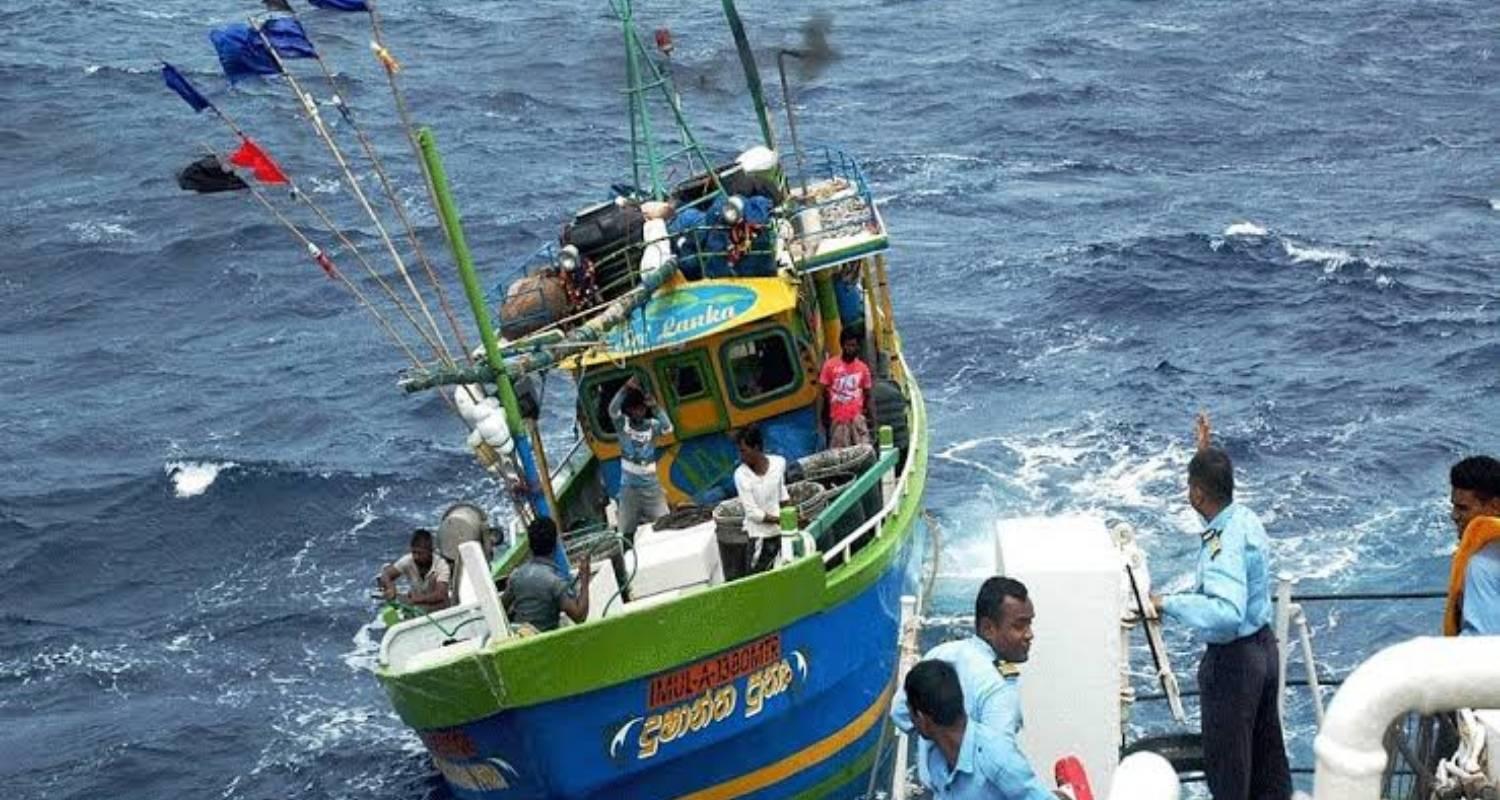
The Sri Lankan Navy has arrested at least nine Indian fishermen and seized their fishing trawler for allegedly entering the island nation's territorial waters and engaging in illegal fishing activities, according to an official statement issued by the Navy on Wednesday.
The arrests were made during a routine maritime patrol conducted in the seas north of Talaimannar, an area located off Sri Lanka's northwestern coast. The Navy said the Indian fishermen had crossed the International Maritime Boundary Line (IMBL) and were found fishing within Sri Lankan waters, prompting authorities to take action.
In its statement, the Sri Lankan Navy said it regularly carries out surveillance and patrol operations to curb illegal fishing and protect the country's marine resources. The operation that led to the arrests was part of these ongoing efforts to prevent foreign fishing vessels from entering Sri Lankan waters without permission.
Following their apprehension, the fishermen and the seized trawler were taken to shore, where they will be handed over to the relevant fisheries and law enforcement authorities for further legal proceedings. Under Sri Lankan law, foreign fishermen accused of violating maritime boundaries or engaging in illegal fishing can face prosecution, fines, and the confiscation of their vessels.
The latest incident comes amid continuing tensions over the fishermen issue, which has remained one of the most sensitive and persistent concerns in India-Sri Lanka bilateral relations. Fishermen from Tamil Nadu frequently venture close to the maritime boundary while fishing in the resource-rich Palk Bay, a narrow stretch of water separating the two countries. Sri Lankan authorities have often accused Indian fishermen of crossing into their waters and using banned bottom-trawling methods that are considered harmful to marine ecosystems.
The Sri Lankan government has repeatedly expressed concern over illegal fishing by foreign trawlers, arguing that such practices threaten fish stocks and damage the livelihoods of local fishing communities, particularly in the Northern Province. Colombo has maintained that strict enforcement of maritime laws is necessary to safeguard its fisheries resources and ensure sustainable fishing practices.
On the Indian side, fishermen's associations have consistently maintained that many arrests occur because the maritime boundary in the Palk Bay is difficult to identify while at sea, especially during adverse weather conditions or at night. They have also pointed to shrinking fishing grounds and declining fish availability in Indian waters as factors compelling fishermen to venture closer to the IMBL.
Also read: Ebola virus claims 1,000 lives in DR Congo
The issue has long been a humanitarian and diplomatic concern, with both governments holding periodic discussions aimed at finding a lasting solution. India has repeatedly urged Sri Lanka to treat detained fishermen in a humanitarian manner and to ensure their early release, while also seeking the return of impounded fishing boats, which are often crucial to the livelihoods of coastal families.
In recent years, New Delhi and Colombo have held several rounds of talks involving officials and fishermen's representatives to address the recurring disputes. Both sides have also explored measures such as promoting deep-sea fishing, encouraging sustainable fishing practices, and strengthening cooperation between their fisheries departments to reduce the frequency of such incidents.
Despite these efforts, arrests of Indian fishermen by the Sri Lankan Navy continue to occur regularly, underscoring the complexity of the dispute and the need for a mutually acceptable and long-term resolution. The latest arrests are expected to draw attention from authorities in both countries as diplomatic channels remain engaged on the issue.

 Follow us