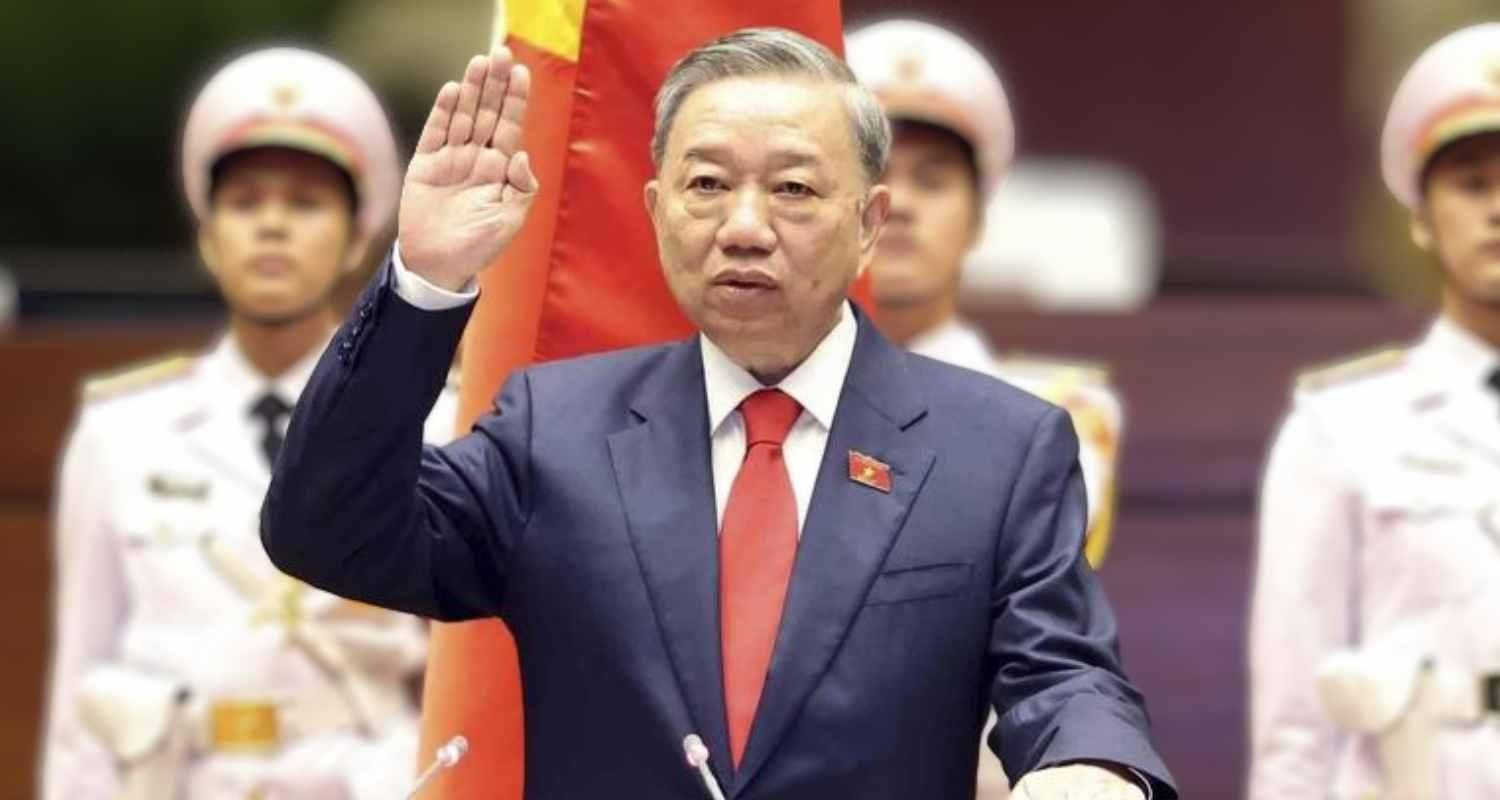
Vietnam gets its new President, unanimously choosing Communist Party General Secretary To Lam as their leader for the next five years. The move departs from Vietnam's tradition of shared leadership, in which the jobs have typically been held by different people, and echoes power structures in China under Xi Jinping and neighbouring Laos.
It has been widely expected since Lam's reelection as Communist Party head in January, when observers noted that his consolidation of party authority positioned him to assume the presidency as well.
After being sworn in, the 69-year-old told the National Assembly that his top priority was to maintain peace and stability.
“We aim to improve people's livelihoods so all can share the benefits of development,” he said.
This is To Lam's second time holding both jobs, after briefly doing so in 2024 when his predecessor as party chief, Nguyen Phu Trong, died.
The concentration of power was significant since it meant that Lam had a “stronger mandate and far more political room to push through his agenda than any leaders” since the 1980s, when Hanoi launched reforms to shed a state-run economy in favour of a market-oriented one open to foreigners, said Nguyen Khac Giang, of Singapore's ISEAS–Yusof Ishak Institute research centre.
“The opportunity is obvious. Faster decision-making, greater policy coherence, and a better chance of pushing difficult reforms at a pivotal moment. But the risk is that concentration of power can move faster than institutional reform,” he said.
Vietnam is facing US pressure over its trade surplus, but also has to balance ties with China, its largest trading partner and rival claimant in the South China Sea.
“It has benefited from a careful balancing strategy in foreign policy, but maintaining that position will become harder in a more turbulent world,” he said.

 Follow us