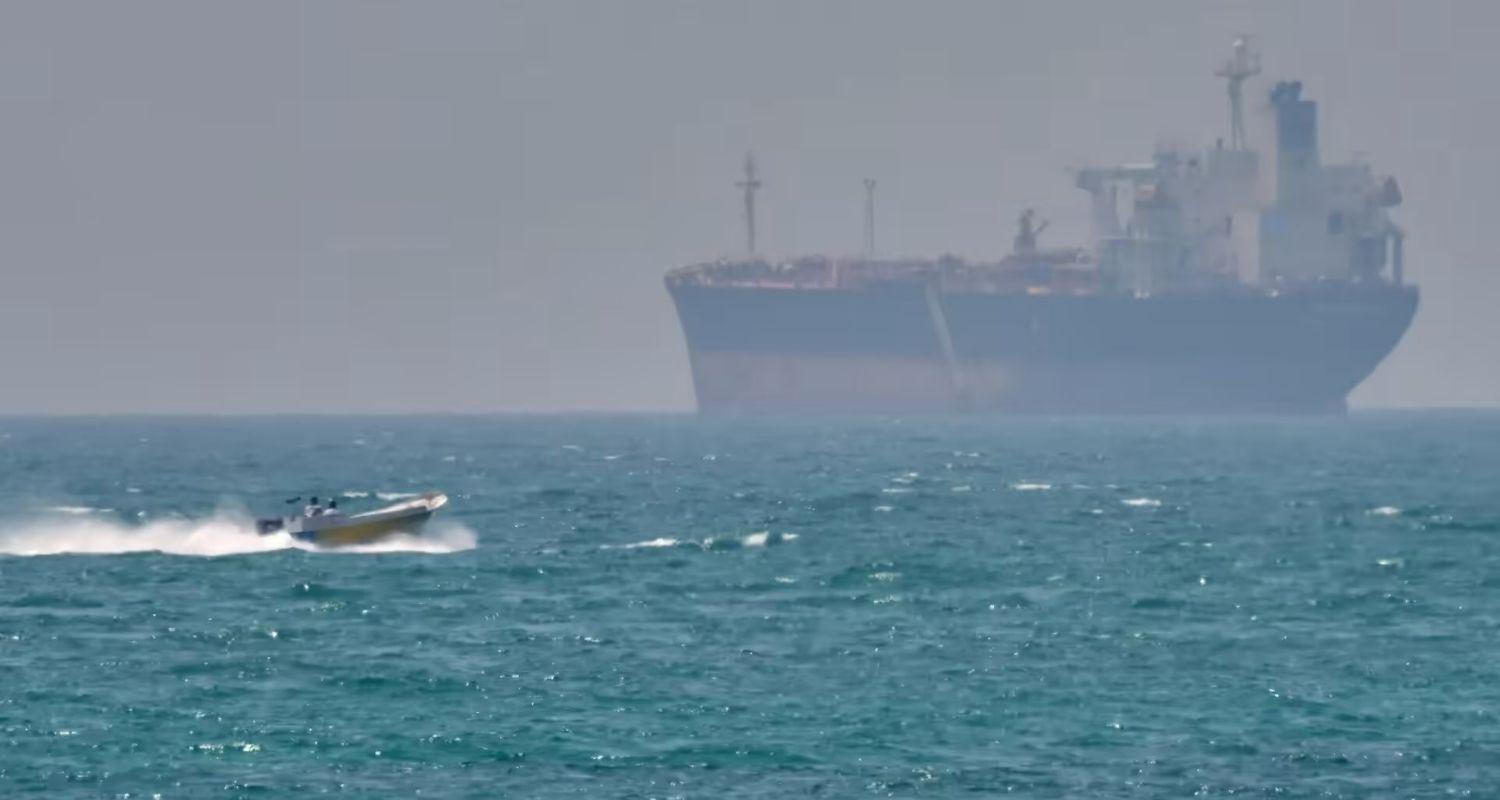
The Indian Navy has significantly bolstered its security presence near the Strait of Hormuz following a dangerous confrontation on 18 April, when the Iranian Revolutionary Guard Corps (IRGC) opened fire on two Indian vessels. In the wake of the incident, naval authorities have issued a stern advisory to all Indian-flagged ships currently in the Persian Gulf, instructing them to maintain a wide berth of Larak Island and to proceed with transit only under direct military guidance.
According to sources, the Navy’s immediate priority is the safe passage of the merchant fleet caught in this volatile corridor. While eleven vessels have managed to navigate the strait successfully so far, the risks were made clear on Thursday. The tanker Desh Garima was the last to make the crossing safely, but on the same day, the Jag Arnav and Sanmar Herald were forced to abandon their route and turn back after coming under fire from Iranian Guards.
The focus on Larak Island is no coincidence; situated at the narrowest bottleneck of the strait, it serves as a nerve centre for Iran’s oil infrastructure and is ringed by a sophisticated network of radar systems and bunkers. Reports suggest the island also serves as a launchpad for the IRGC’s fast-attack craft, which are frequently used to intercept or harass commercial shipping.
Currently, the Desh Garima is being escorted through the Arabian Sea and is due to dock in Mumbai on April 22. However, fourteen other Indian ships remain effectively stranded in the Persian Gulf, awaiting a safe window to move. The Navy has maintained constant radio contact with these vessels, insisting they remain stationary until clearance is granted. To manage the exit, seven Indian warships have been positioned at the mouth of the Gulf, ready to pick up and escort merchant ships the moment they emerge from the strait’s most hazardous stretches.
Also read: US Navy seizes Iranian cargo ship near Hormuz

 Follow us