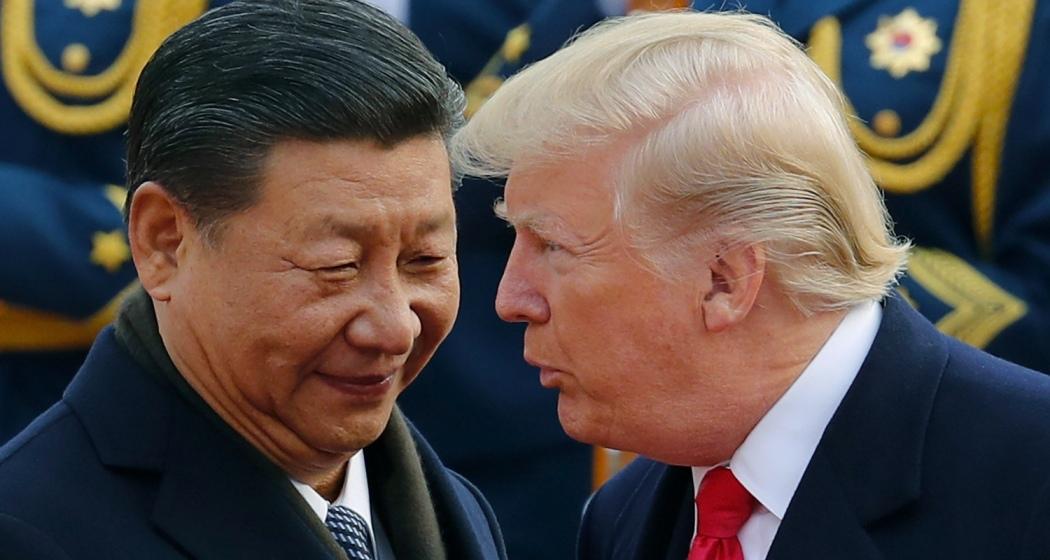
US President Donald Trump said he will travel to China in April and host Chinese President Xi Jinping in the United States later this year, signalling renewed leader-level engagement between the two countries amid easing trade tensions.
Speaking to reporters aboard Air Force One while returning from the World Economic Forum in Davos, Trump said the two leaders would meet twice in 2026. “We’re gonna make a trip. I’m going in April,” he said, adding that Xi would visit the US “toward the end of the year”.
Trump described his personal rapport with the Chinese leader in positive terms. “I’ve always had a great relationship,” he said, while acknowledging that ties had deteriorated during the COVID-19 pandemic. “It was a very strained relationship during COVID, but now it’s an excellent relationship,” he added.
The US President pointed to trade as a sign of improving relations, particularly China’s increased purchases of American agricultural products. “Look at all the farm products they’re buying now,” Trump said. “Soybeans, they’re buying a lot of soybeans.”
He said the purchases were benefiting American farmers. “That makes our farmers happy, and that makes me happy,” Trump said.
Trump also praised Xi personally, calling him “an amazing guy” and speaking favourably about the Chinese President’s wife, underscoring his emphasis on personal diplomacy.
Also read: No tariff on EU; ‘framework’ deal with NATO on Greenland: Trump
The remarks provide the clearest timeline so far for high-level US-China engagement during Trump’s second term. A visit to China in April would be Trump’s first trip there since returning to office, while Xi’s expected visit later in the year would mark Washington’s first hosting of the Chinese leader during this term.
Trump linked the renewed outreach to broader economic conditions at home, saying markets had responded positively and that trade and investment flows were supporting growth. He cited lower fuel prices and improved sentiment as indicators.
US-China relations have been marked by sharp tensions in recent years, with successive US administrations viewing China as the country’s principal global strategic challenge. Disputes have centred on trade, technology and security, even as commercial ties, particularly in agriculture and energy, have continued.
China remains a key market for US farm exports, with soybean purchases closely watched as a barometer of bilateral relations. Large buying commitments from Beijing are often interpreted as signals of diplomatic thaw.

 Follow us