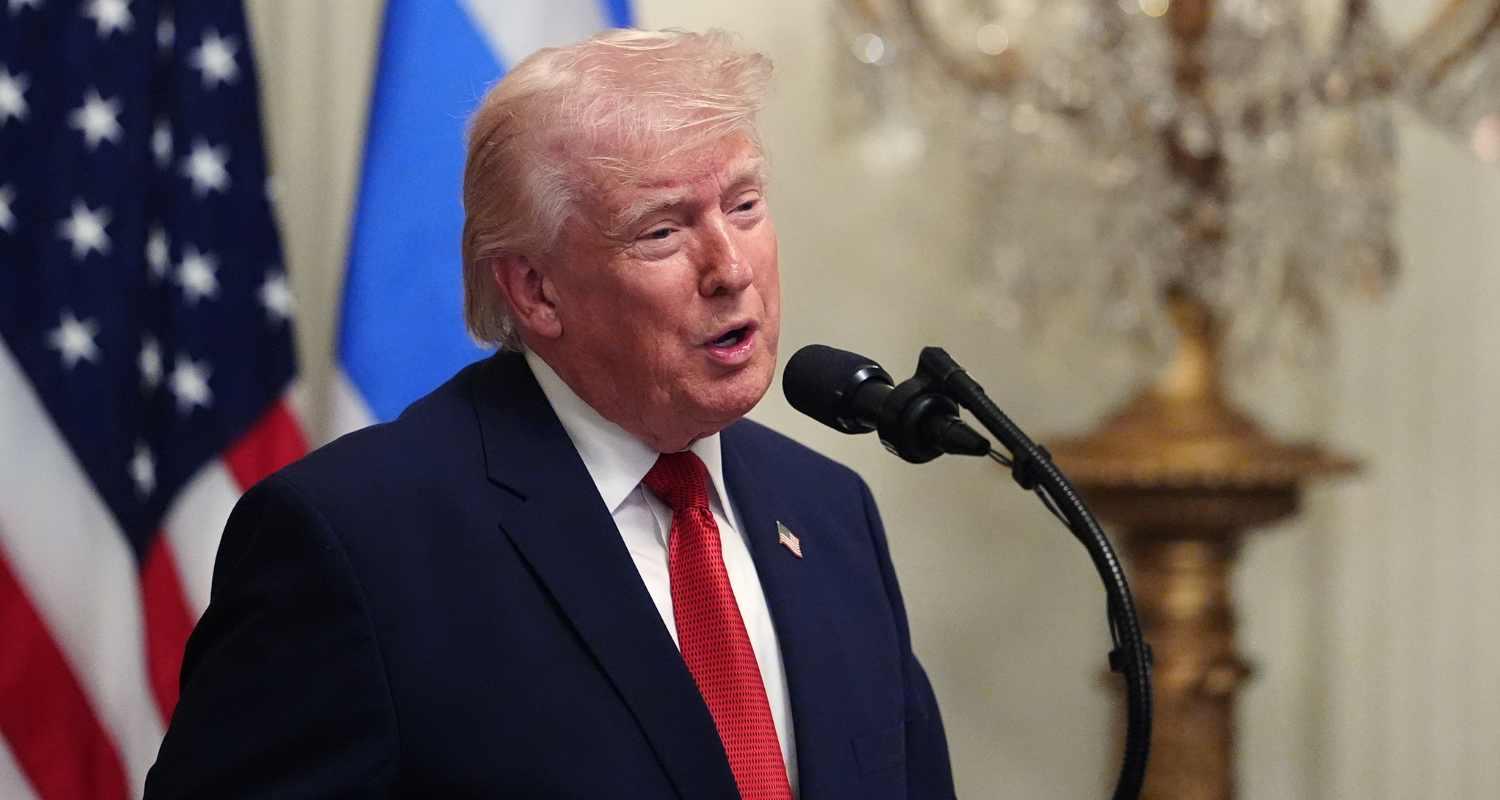
US President Donald Trump said Thursday he will delay a threatened strike on Iran's energy infrastructure and extend his deadline for Tehran to reopen the Strait of Hormuz until April 6, saying talks to end the war are “going very well”.
The move marks a pullback from Trump's earlier warning that the US would target Iran's energy plants if the crucial shipping lane remained closed. Iran has threatened to retaliate against regional infrastructure, including desalination facilities, if the US follows through.
A day after Tehran dismissed Trump's 15-point ceasefire plan, the president said Iran was “begging to make a deal” and urged its leaders to “get serious soon” about negotiations.
Trump's announcement on social media came after US stocks fell sharply and oil prices rose, as doubt took over again on Wall Street about a possible end to the war.
The war has killed more than 1,900 people in Iran and nearly 1,100 in Lebanon, 22 Israelis and 13 US military members, as well as a number of civilians on land and sea in the Gulf region. Millions of people in Lebanon and Iran have been displaced.
Iran sends letter to UN over threats against Araghchi and Qalibaf —
Iran sent a letter to the United Nations over claims that the country's foreign minister and parliament speaker had been “targets for assassination”. The letter, dated Thursday and signed by Ambassador Amir Saeid Iravani, focused on media reports that Foreign Minister Abbas Araghchi and Speaker Mohammad Bagher Qalibaf both had been spared for the time being by Israel and the US as negotiations to reach a ceasefire in the war go on.
“The reports indicate the existence of an operational framework contemplating the assassination of the highest-ranking political officials of the Islamic Republic of Iran,” the letter reads.
It added “The conditional nature of the purported suspension' further underscores that the threat remains real, deliberate and ongoing.” The letter called any such programme “state-sponsored terrorism”.
The war's opening airstrikes by Israel killed Supreme Leader Ayatollah Ali Khamenei. Other military commanders have been killed as well.
Qalibaf has been considered as a possible negotiating partner to the US, while Araghchi has continued diplomatic outreach.
Pakistan is leading an indirect exchange of positions between Tehran and Washington, supported by Egypt and Turkey.
Latest reports of live fire —
Israel's military said early Friday that it had conducted a wave of strikes “in the heart of Tehran”. Smoke was seen billowing in the Beirut skyline early Friday. There was no advance warning of a strike from Israel's military, which didn't immediately provide information.
Kuwait said early Friday that it shot down Iranian drones in an attack targeting the small, oil-rich nation. The United Arab Emirates sounded a missile alert over Dubai around the same time, though there was no sound of an interception heard in the city-state as rain blanketed it.
Israel's military said it was working to intercept a missile launch from Iran early Friday. Sirens sounded in Tel Aviv, surrounding communities and central parts of the occupied West Bank. Emergency services said later that there were no reports of impacts or casualties. There were 10 salvos from Iran on Thursday, and Hezbollah fired at northern Israel throughout the day.
Brig. Gen. Effie Defrin, an Israeli military spokesperson, said Thursday that the army needs about 15,000 soldiers, roughly half of them combat troops, to be at full strength for its multiple missions.
Israel can call up tens of thousands of reservists, but repeated deployments have prompted past pushback, with many citing exhaustion and the financial strain of leaving work and family behind.
With tens of thousands still deployed in Gaza and more sent to Lebanon, Defrin said Israel expected to broaden operations on several fronts. Defrin also pointed to the occupied West Bank.
Lt. Gen. Eyal Zamir, the military's chief of staff, warned last week that the army should not have to divert forces to the West Bank during a multifront war to contend with attacks by Israeli settlers on Palestinians and unauthorized outposts in military-controlled zones.
US inflation projected to reach 4.2 per cent this year —
The Iran war's disruption of oil exports from the Middle East will substantially boost consumer prices while also slowing growth in the United States and many other developed countries, the Paris-based Organization for Economic Cooperation and Development said Thursday.
The OECD expects US inflation to jump to an annual average of 4.2 per cent this year, from about 2.6 per cent in 2025. The increase will manly be driven by spiking gas costs, but fertilizer exports have also been interrupted and could raise food prices in coming months, the OECD said.
“In the United States, the impact of higher energy prices on inflation will more than offset the effect from the decline in effective tariff rates on imports,” the OECD's interim outlook report said.
Growth is expected to slip to 2% this year from 2.1 per cent in 2025, then decline further next year to 1.7 per cent. In 20 of the largest countries, referred to as the Group of 20, which includes Japan, Europe, and large emerging economies such as Brazil, inflation is forecast to rise to 4 per cent from 3.4 per cent.

 Follow us