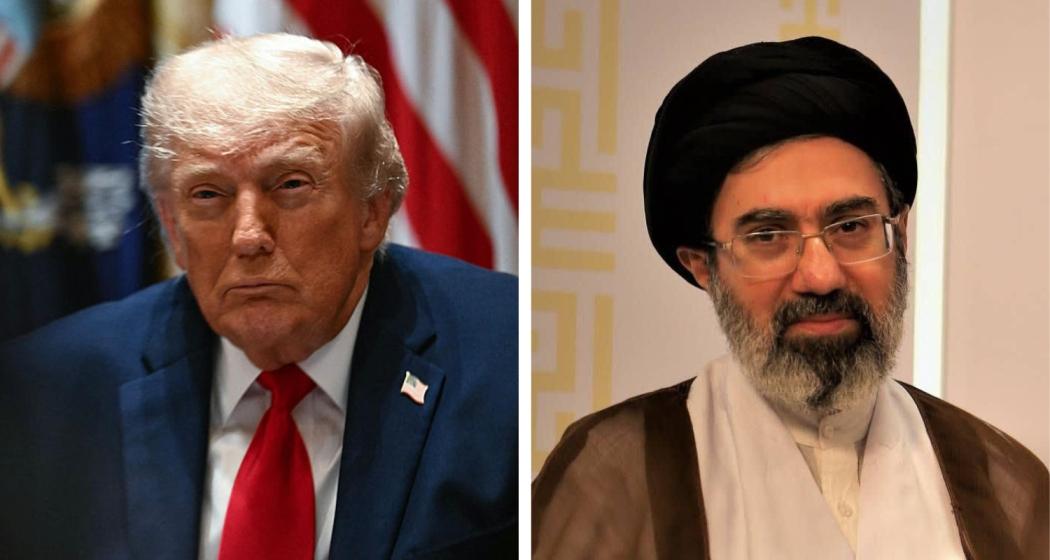
US President Donald Trump said he would “like to meet” Iran’s Supreme Leader Mojtaba Khamenei in the future, days after a reportedly heated phone conversation with Israeli Prime Minister Benjamin Netanyahu over West Asia tensions.
Speaking on the New York Post’s “Pod Force One” podcast, Trump suggested that a meeting with the Iranian leadership could take place depending on how diplomatic developments unfold. “I would like to meet him, and we probably will meet at some point, depending on how it all works out,” he said.
Trump also indicated that he believed the Iranian Supreme Leader was playing a central role in decision-making amid ongoing talks involving Washington. His remarks come amid continuing instability in the region, where Israel, Iran and their allies remain locked in wider geopolitical and military tensions.
The comments followed reports of a strained exchange between Trump and Netanyahu, during which the US President admitted to using strong language. According to an Axios report, Trump allegedly told Netanyahu in a phone call, “Are you f***ing crazy,” during a disagreement over Israel’s military operations in Lebanon. When asked about the exchange, Trump confirmed he had spoken in those terms, saying he was “a little bit perturbed” by the developments and urged Netanyahu to “stop this.”
Also read: US admn to scrap $1.8-bn fund meant to compensate Trump’s allies
The conversation reportedly came amid Israel’s expanded military activity in southern Lebanon, involving its ongoing conflict with the Iran-backed Hezbollah group. The escalation has further complicated diplomatic efforts in the region.
Trump also commented on the broader situation involving Iran, suggesting uncertainty over the condition of its leadership following earlier strikes and political shifts. He said he was not hearing “great” reports and added, “If you believe the stories, he’s missing a lot of different parts,” referring to the Iranian leader.
The US President’s remarks come as Washington continues to explore diplomatic channels aimed at stabilising tensions, including potential discussions on Iran’s nuclear programme and regional security arrangements. Any future engagement with Tehran would mark a significant shift in tone amid the ongoing conflict dynamics involving Israel, Iran and their regional allies.

 Follow us