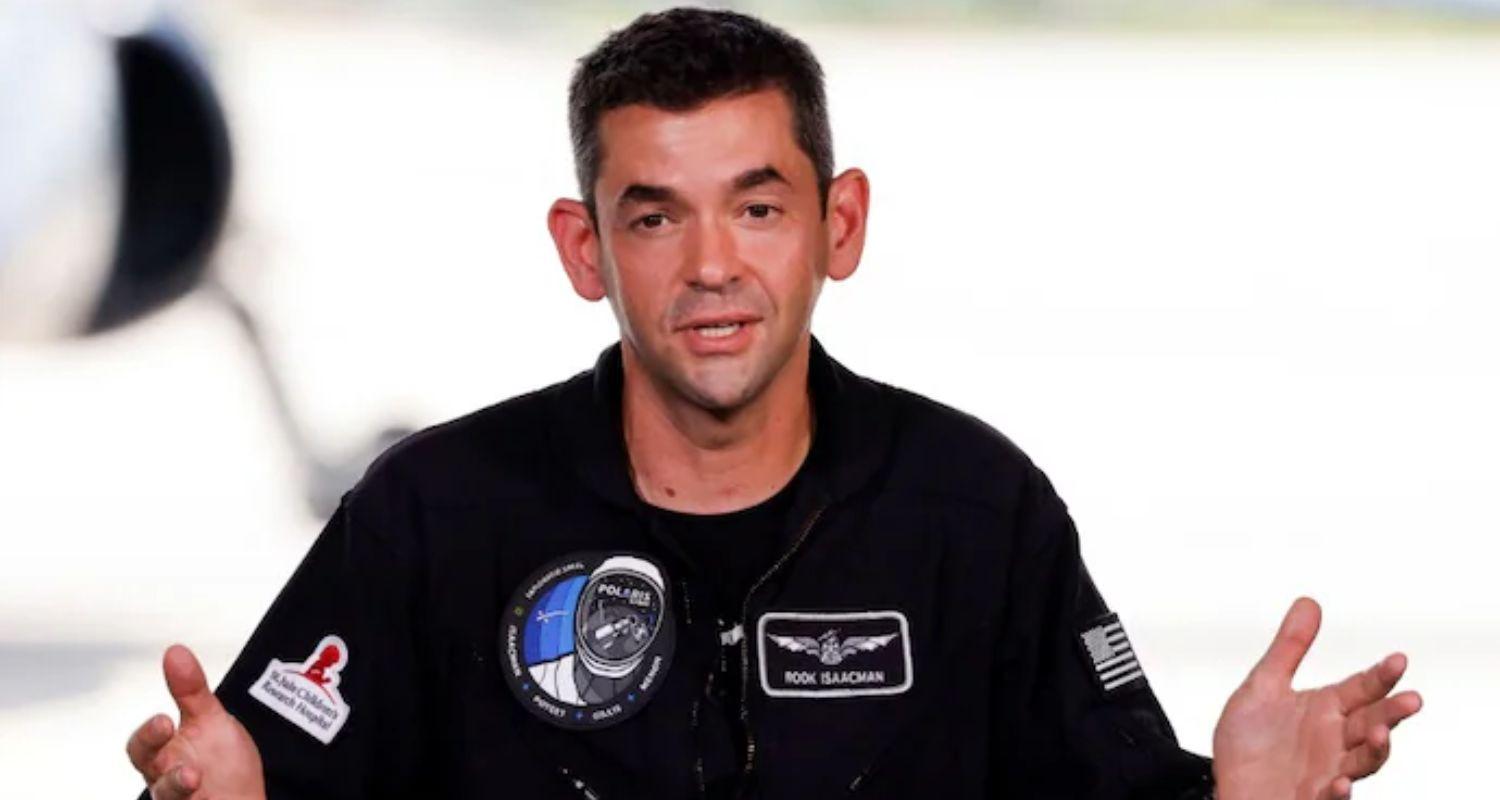
Jared Isaacman, the billionaire astronaut and space entrepreneur, is set to replace Bill Nelson as the new NASA Administrator, a role that puts him at the forefront of America's space exploration efforts.
Known for his pivotal role in private astronaut missions, Isaacman brings a wealth of experience from both the business and space sectors.
From his early days as a high school dropout to becoming a leading figure in commercial spaceflight, Isaacman’s journey is one of ambition, innovation, and a passion for space exploration.
Born in New Jersey on February 11, 1983, Isaacman’s story is not one of traditional academic success. Dropping out of high school at the age of 16, he went on to earn his General Educational Development (GED) and began his entrepreneurial career.
Working out of his parents’ basement, Isaacman quickly found his footing in the world of business, founding Shift4, a payment processing company. His entrepreneurial drive later expanded into the space sector, where he began making his mark as a private astronaut.
Isaacman’s path to space leadership began when he founded Draken International, a company that leased former military fighter jets. This venture further bolstered his reputation and deepened his connection to aviation and space exploration.
However, it was his involvement in SpaceX missions that truly catapulted him into the public eye. In 2021, Isaacman commanded and funded the first all-civilian mission aboard SpaceX's Crew Dragon. The mission was a milestone in private space travel, with Isaacman at the helm as both leader and financier.
His second major mission took place three years later, again aboard Crew Dragon. This mission broke several records, including reaching the highest altitude achieved by a crewed mission since Apollo 17 in 1972.
Notably, it also included the first-ever private spacewalk, an achievement that marked a significant moment in space exploration. The mission raised funds for St. Jude Children's Research Hospital, further cementing Isaacman’s role as a philanthropist within the space community.
Isaacman’s selection to lead NASA was announced by US President-elect Donald Trump, who praised his passion for space, extensive astronaut experience, and commitment to pushing the boundaries of exploration.
The appointment, however, comes with its challenges, particularly considering Isaacman’s lack of formal government or political experience.
If confirmed by the Senate, Isaacman will take on the responsibility of overseeing NASA’s $25 billion budget, with the main goal of advancing the Artemis programme, which aims to return humans to the Moon.
Isaacman’s vision for NASA is rooted in the belief that space holds the potential for groundbreaking advancements in various industries.
He sees immense opportunities in biotechnology, manufacturing, and even mining, all of which could revolutionise industries back on Earth.
In his view, space could also be a source of new energy, creating avenues for exploration that benefit both humanity and the environment. Isaacman’s approach to NASA’s future focuses on fostering a new commercial space era, one where private companies play a central role in accessing and utilising space.
This vision aligns with NASA’s increasing reliance on private companies for space travel, a strategy that has proven successful with partnerships like that of SpaceX.
A key part of Isaacman’s vision for NASA’s future is to push for a spacefaring civilisation, where humanity is no longer confined to Earth but is actively engaged in space exploration and utilisation.
His leadership could potentially accelerate the commercialisation of space, as NASA collaborates with private companies like SpaceX, which is central to the Artemis programme.
Isaacman’s commercial space focus is expected to reshape NASA’s approach, especially with the ongoing competition between NASA’s Space Launch System rocket and SpaceX’s Starship.

 Follow us