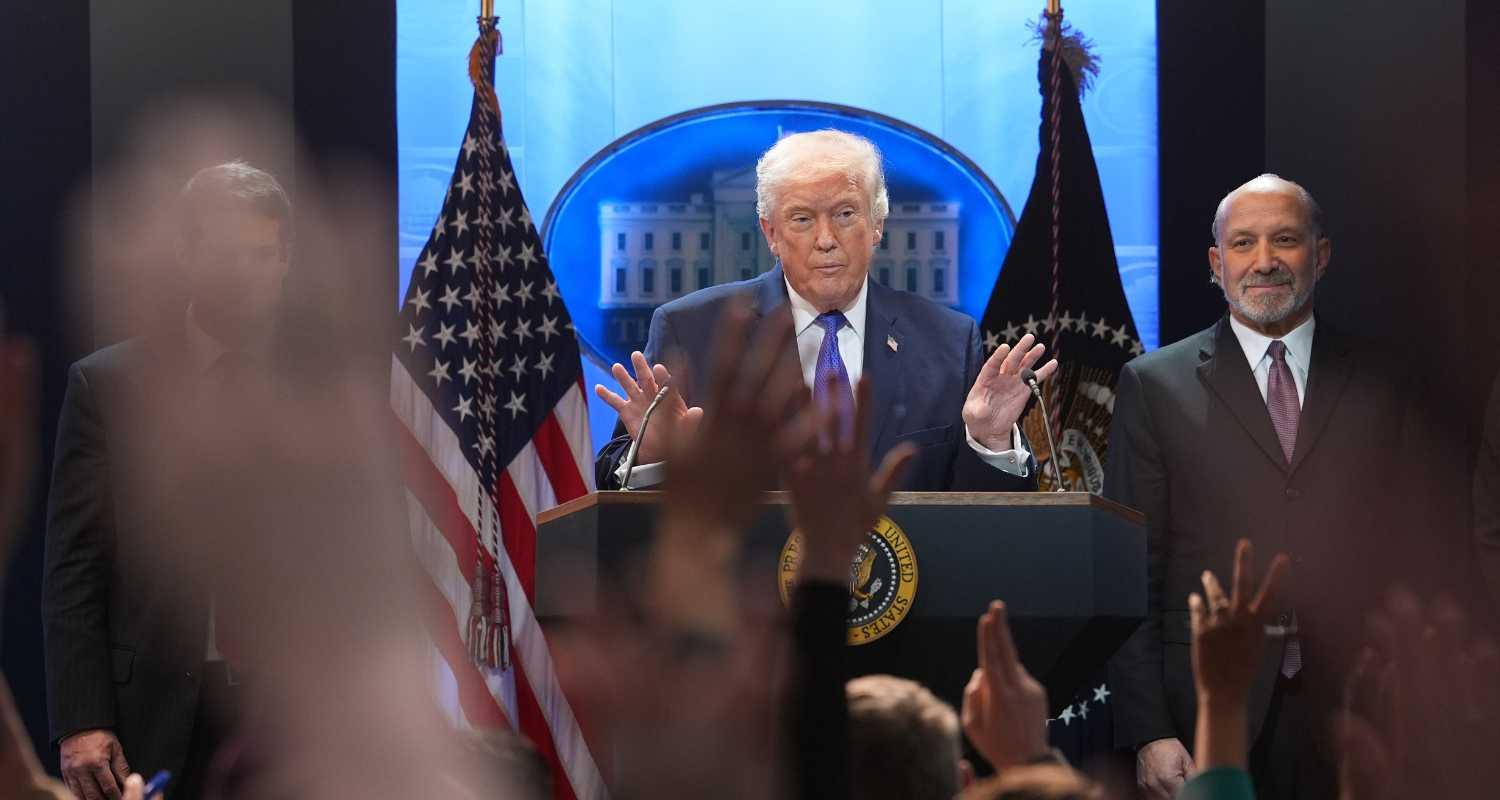
After the Supreme Court struck down Donald Trump's far-reaching global tariffs, the US President imposed a global 10 per cent tariffs as an alternative while continuing to press his trade policies through other means. The new tariffs order was signed on Friday, making 10 per cent global tariff on all countries, effective "almost immediately", informed the US President via Truth Social post.
"It is my Great Honor to have just signed, from the Oval Office, a Global 10% Tariff on all Countries, which will be effective almost immediately. Thank you for your attention to this matter! PRESIDENT DONALD J. TRUMP."
A White House official stated that this new tariff will remain in place until another authority is invoked, emphasising the expectation that trade partners abide by US trade deals while advising all the trade partners to abide by the trade deals.
The announcement was made after lashing out at the Supreme Court for striking down much of his sweeping tariff infrastructure as an illegal use of emergency power.
Trump said he was “absolutely ashamed” of justices who voted to strike down his tariffs and called the ruling “deeply disappointing.”
“Their decision is incorrect,” he said, adding, “But it doesn't matter because we have very powerful alternatives.”
Meanwhile, American Farm Bureau Federation President Zippy Duvall says farmers understand Trump's efforts to use tariffs “to create a more level playing field for US goods, US workers and the US economy,” but urged the administration to seek another way.
“Unfortunately, trade disruptions and declining prices for agricultural goods created additional hardships for farmers who came into 2025 already dealing with crippling inflation and declining farm prices. With supply costs already at or near record highs, we strongly encourage the president to avoid using any other available authorities to impose tariffs on agricultural inputs that would further increase costs.”
Court ruling adds uncertainty and confusion, but economic ties with ASEAN remain strong, says business group.
“At the end of the day, Southeast Asian leaders are deeply pragmatic; they recognize the scale of the U.S. market and the quality and staying power of U.S. investments,” said Brian McFeeters, president and CEO of the business council.
He said the broader trajectory remains “firmly intact.” ASEAN is a grouping of ten governments in Southeast Asia.
Indonesia, Malaysia, and Cambodia have reached trade agreements with the Trump administration.

 Follow us