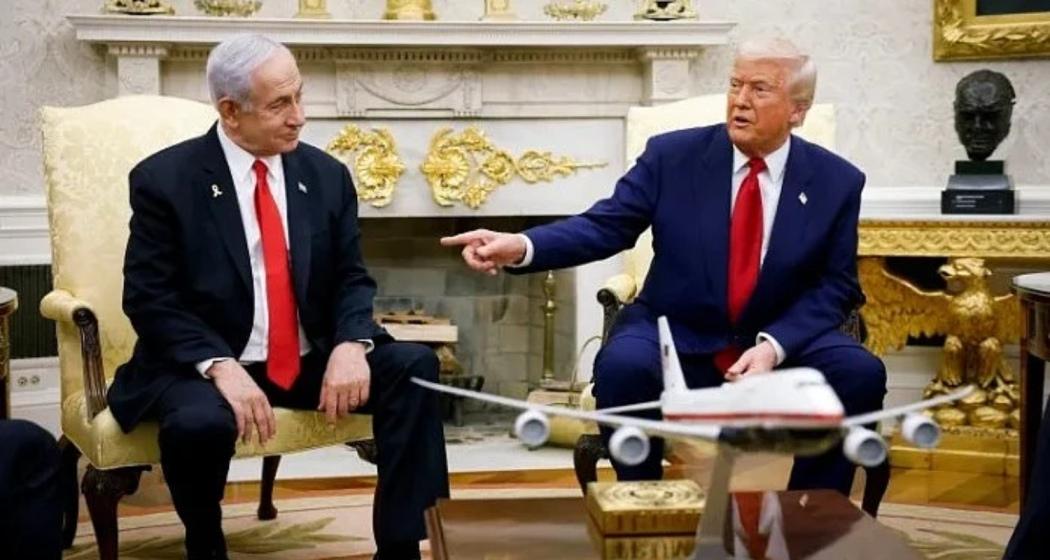
In a sharp public break with Israel, President Trump confirmed the US had no role in the strike on the world’s largest gas field and warned Iran that any further assault on Qatar would trigger American retaliation “at an amount and strength and power that Iran has never seen.”
Tensions in the US-Iran-Israel war surged on Thursday as President Donald Trump sharply rebuked Israel for its unilateral strike on Iran’s South Pars gas field, calling the assault an uncoordinated escalation and explicitly distancing Washington from the operation.
“The United States knew nothing about this particular attack,” Trump posted on Truth Social late Wednesday, adding that even Qatar, which shares the massive field with Iran, had no prior knowledge. He described Israel as having “violently lashed out” and declared that “NO MORE ATTACKS WILL BE MADE BY ISRAEL” on the facility unless Iran strikes Qatar, in which case the US would “massively blow up the entirety of the South Pars Gas Field.” Trump condemned Iran’s retaliatory missile strikes on Qatari LNG facilities as “unjustified” while urging restraint to prevent a wider regional conflagration that has already sent oil and gas prices soaring.
The strike on South Pars, a cornerstone of Iran’s energy supply, triggered immediate Iranian retaliation, including attacks on Qatar’s Ras Laffan LNG site and threats against other Gulf energy infrastructure.
US detects drones over Washington, DC
Unidentified drones were spotted overnight over Fort McNair in Washington, DC, the Army base where Secretary of State Marco Rubio and Defense Secretary Pete Hegseth reside. Officials are investigating the incursions amid heightened security concerns linked to the Iran conflict; relocation of the two senior officials is under consideration.
Pentagon seeks $200 billion war fund
The Pentagon has formally requested White House approval for a supplemental funding package exceeding $200 billion to Congress to sustain operations in the Iran war, replenish munitions stockpiles depleted by thousands of US and Israeli strikes, and ramp up production of critical armaments. Defense Secretary Pete Hegseth described the request as essential: “It takes money to kill bad guys.” The sum dwarfs earlier costs of Operation Epic Fury.
Indian ships to escort oil vessels
India has deployed additional warships, including Visakhapatnam-class destroyers, to the Gulf of Oman and Arabian Sea to escort Indian-flagged oil and LPG tankers through the Strait of Hormuz. Three destroyers are now positioned to protect vessels carrying critical energy supplies as Iran’s threats to Gulf shipping intensify.
The developments signals strains in the US-Israel alliance even as both nations press the campaign against Tehran. Global energy markets remain volatile, with fears of prolonged disruption in West Asia. As of Thursday, the conflict, now in its third week, has claimed over 2,000 lives across the region and shows no immediate signs of de-escalation.
Also read: Iran attacks Gulf energy sites after Israel's gas field strike
Iranian missile barrage hits Israel, killing four
Overnight Iranian missile strikes, including some with cluster munitions, triggered sirens across Israel and caused deaths and injuries. Four people were killed in central Israel, with damage reported in populated areas like Ramat Gan near Tel Aviv. This marks a significant escalation in direct attacks on Israeli civilian zones despite ongoing US/Israeli air superiority.
Pentagon Briefing: War "On-Plan," No timeline given
Defense Secretary Pete Hegseth and Joint Chiefs Chairman Dan Caine held a press briefing, describing operations as progressing according to plan but refusing to provide goals, end dates, or troop withdrawal timelines. Hegseth emphasized continued deep strikes into Iran, including on missile sites and IRGC assets.
Iran expands retaliatory strikes on Gulf energy sites
Following Israel's hit on South Pars, Iran intensified attacks Thursday, targeting additional facilities: Kuwaiti oil refineries set ablaze, Saudi Aramco sites near Riyadh damaged, and further strikes on UAE and other Gulf infrastructure. Qatar reported extensive damage at Ras Laffan LNG (world's largest), with potential force majeure declarations on contracts lasting years and annual losses estimated at $20 billion.
Other developments
- Hezbollah retains significant rocket stocks despite strikes; ground clashes continue in Lebanon.
- No progress on ceasefire talks; mediation by Oman/Egypt stalled.
- Broader impacts include market drops ($800B+ wiped from US equities in recent days) and rising calls for de-escalation on energy targets.

 Follow us