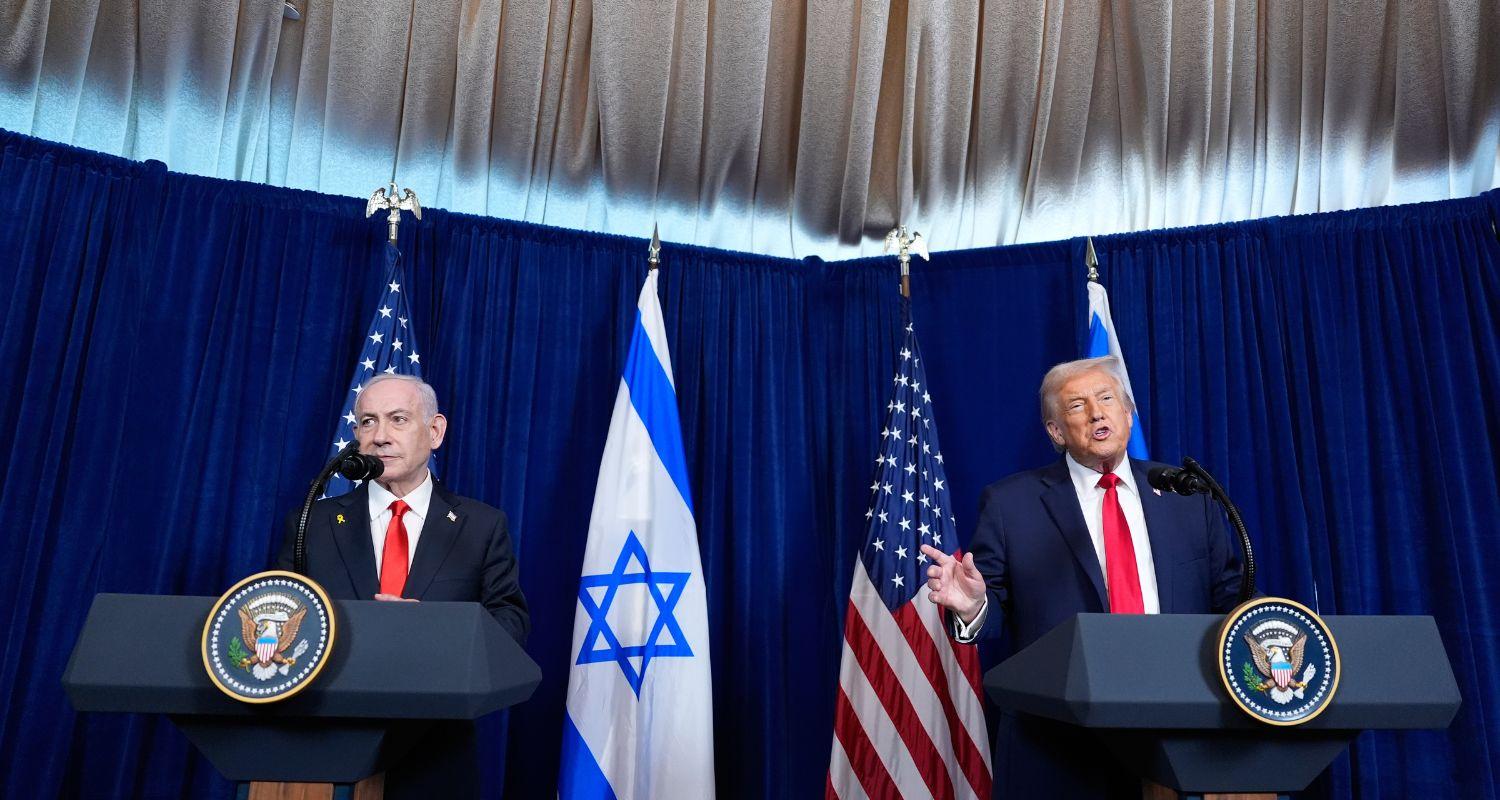
US President Donald Trump on Monday minced no words when he warned Iran of “more powerful” strikes than the last time if it attempted to restart its nuclear programme.
His remarks came after a meeting with Israeli Prime Minister Benjamin Netanyahu in Florida, at Trump’s lavish Mar-a-Lago resort, late on Monday, in which the two leaders discussed the Gaza peace plan, regional political situation, and Iran’s ballistic missile programme.
When asked about how the US will respond to Iran’s nuclear programme if Tehran rebuilds it, Trump said: “We’ll knock them down.
We’ll knock the hell out of them. But hopefully that’s not happening.”
The US President also lent unequivocal support for Israel, should it clash with Iran again, saying the US would “absolutely” support Israeli military action against Iran’s ballistic missile programme, and that it would act “immediately” against any nuclear advances.
“We know exactly where they’re going and what they’re doing, and I hope they’re not doing it, because we don’t want to waste the fuel on a B-2 – it’s a 37-hour trip both ways,” Trump added.
Also Read: Trump-Netanyahu meeting: US President says Hamas must disarm
The US and Israel had carried out coordinated airstrikes targeting Iranian nuclear sites at Natanz, Fordow, and Isfahan, back in June, citing concerns over Iran’s attempt at acquiring nuclear weapons, even while Israel, which has long maintained an undeclared nuclear arsenal estimated at around 80 warheads, has faced international scrutiny.
A 12-day war between Iran and Israel had led to Tehran attacking the US army base in Doha, and condemning the strikes as unprovoked violations of its territorial sovereignty. Iran also denied allegations of seeking or pursuing a covert nuclear weapons programme, although top Iranian officials, including Foreign Minister and lead negotiator in US-Iran nuclear talks, Abbas Araghchi, have repeatedly reiterated their country’s intention to rebuild the damaged nuclear sites.
Araghchi said these sites will be rebuilt for Uranium enrichment, as Iran reserves the right to use nuclear energy for civilian purposes.
Meanwhile, Iran has insisted that it will welcome any talks with Washington that are aimed at reaching a deal with the US, but only if it stops setting what Araghchi has previously described as “impossible and unacceptable preconditions”.
Additonally, Washington’s two major adversaries, China and Russia, have expressed support and solidarity with Iran and uphold Tehran’s right to use nuclear energy for civilian and medical science research.

 Follow us