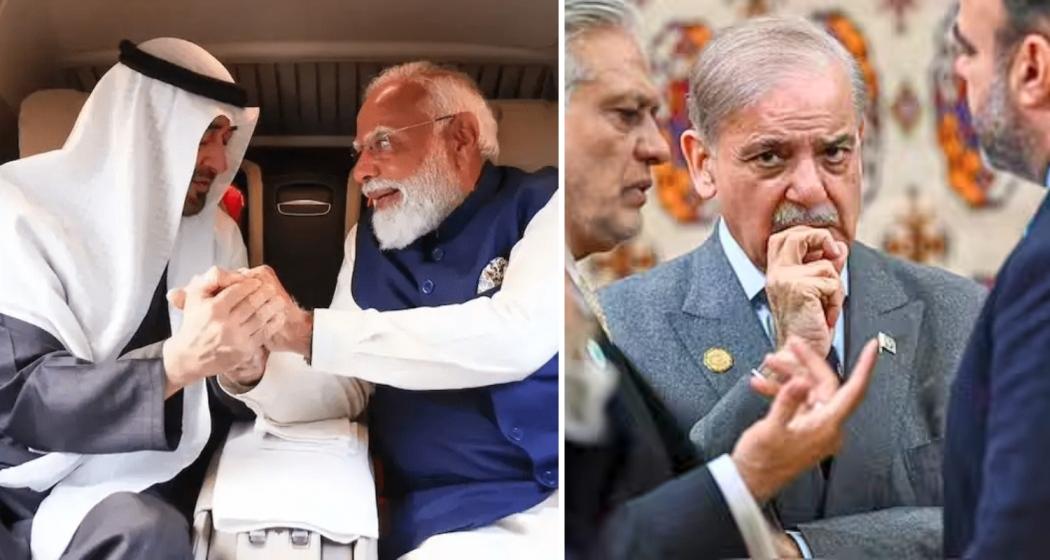
The United Arab Emirates has shelved plans to operate Islamabad International Airport after President Sheikh Mohamed bin Zayed Al Nahyan’s surprise visit to India last week, with Pakistani media reporting that Abu Dhabi lost interest in the project and failed to finalise a local operating partner.
According to Pakistani news reports, discussions on the airport operations agreement, which had been underway since August 2025, were dropped after the UAE did not move forward with the required arrangements. The report did not attribute the decision to political reasons.
The development comes amid shifting alignments in the Gulf and South Asia, as relations between Abu Dhabi and Riyadh show signs of strain over regional issues, including support for rival groups in Yemen.
Pakistan has recently deepened defence engagement with Saudi Arabia and has expressed interest in forming a broader security grouping with Riyadh and Ankara, while the UAE has moved to expand defence and strategic cooperation with India.
Also read: UAE President arriving on third official visit to India on Jan 19
The UAE had previously been among Pakistan’s largest trading partners and a major source of remittances, with extensive cooperation across defence, energy and investment. In recent years, concerns over governance, regulatory uncertainty and ageing infrastructure have weighed on investor confidence.
Despite Abu Dhabi’s experience in managing airports in complex environments, including Afghanistan, the decision to step back from the Islamabad project reflects growing caution towards large infrastructure commitments in Pakistan.
In contrast, India-UAE ties have seen fresh momentum following Sheikh Mohamed’s visit to New Delhi. The UAE President has approved the release of 900 Indian prisoners, a move seen as a significant goodwill gesture.
During the visit, Prime Minister Narendra Modi and Sheikh Mohamed reviewed the full spectrum of bilateral cooperation and agreed that the Comprehensive Strategic Partnership had entered a more ambitious phase. A Letter of Intent was signed to move towards a Strategic Defence Partnership, paving the way for a formal framework agreement.

 Follow us