
Trending:
'UK's richest 10% extracted half of India's wealth during colonialism'
According to Oxfam’s latest flagship global inequity report, between 1765 and 1900, the UK extracted USD 64.82 trillion from India, with the richest 10% taking USD 33.8 trillion – a stark reminder of colonial exploitation and its enduring impact on global wealth inequality. Follow us
News Arena Network - Davos (Switzerland) - UPDATED: January 20, 2025, 10:45 AM - 2 min read
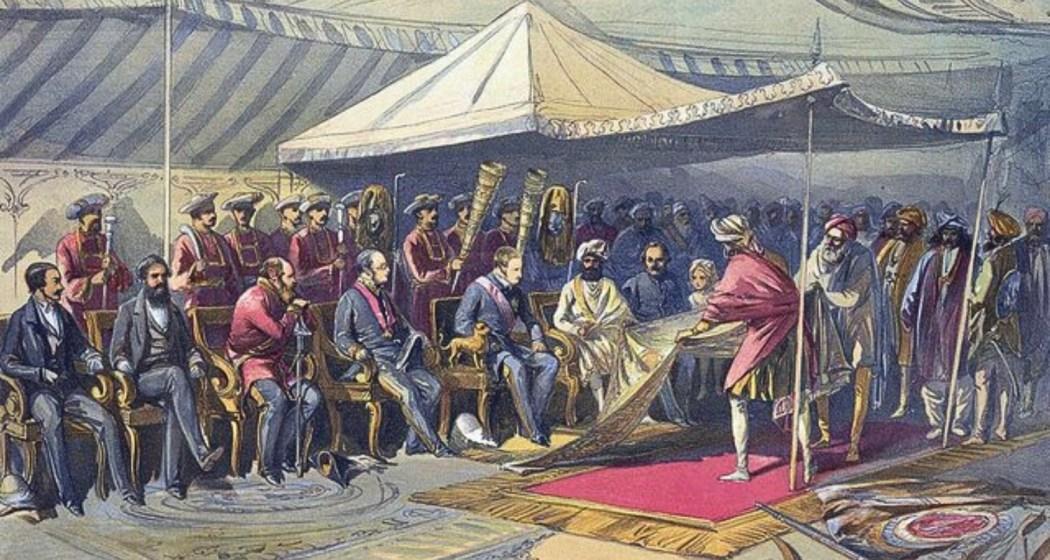
A portrait from the early 1850s showing British colonial officials egotiating with Indian representatives, reflecting the exploitative practices of resource extraction, heavy taxation, and economic policies designed to drain wealth from India to Britain during the colonial era.
The United Kingdom extracted USD 64.82 trillion from India during over a century of colonial rule between 1765 and 1900, with USD 33.8 trillion going to the richest 10 per cent—enough to carpet London with £50 notes almost four times over.
This forms the crux of Oxfam International’s latest flagship global inequity report, released annually on the first day of the World Economic Forum Annual Meeting.
Titled ‘Takers, not Makers’, the report was unveiled here on Monday, mere hours before the commencement of the annual gathering of the world's most powerful elites.
The report asserts that the modern multinational corporation is a legacy of colonialism, primarily driven by the exploitation of labour and resources in the Global South for the benefit of the Global North.
“Legacies of inequality and pathologies of plunder, pioneered during the era of historical colonialism, continue to shape modern lives,” said Oxfam. “This has created a deeply unequal world, divided by divisions based on racism—a world that systematically extracts wealth from the Global South to primarily benefit the richest people in the Global North.”
Oxfam has drawn extensively from various studies and research papers to calculate that between 1765 and 1900, the UK’s richest 10 per cent extracted wealth from India amounting to USD 33.8 trillion in present-day value.
“This would be sufficient to carpet the entire surface area of London with £50 notes nearly four times over,” the report highlighted.
The organisation further pointed out that a significant proportion of the wealth amassed in the UK today can be traced back to colonialism and slavery.
Specifically, compensation paid to wealthy enslavers when slavery was abolished played a crucial role in this.
On the role of multinational corporations, Oxfam emphasised the pivotal role played by entities such as the East India Company, which became a law unto itself and was responsible for numerous colonial crimes.
“In the modern era, multinational corporations, often holding monopoly or near-monopoly positions, continue to exploit workers in the Global South—especially women workers—on behalf of rich shareholders primarily based in the Global North,” the report stated.
Global supply chains and export processing industries represent modern colonial systems of wealth extraction from south to north, with workers often enduring poor working conditions, lack of collective bargaining rights, and minimal social protection.
According to Oxfam, wages in the Global South are between 87 per cent and 95 per cent lower than those in the Global North for equivalent skill levels.
Oxfam highlighted that large multinational corporations dominate these global supply chains, benefiting disproportionately from cheap labour and the continued extraction of resources from the Global South.
These corporations capture a substantial share of profits, perpetuating dependence and exploitation through economic means.
In discussing the wealth extracted from India during over a century of colonialism, Oxfam noted that beyond the richest 10 per cent, the newly emergent middle class also significantly benefited from colonial wealth, receiving 32 per cent of the extracted income after the richest 10 per cent.
In 1750, India contributed approximately 25 per cent of global industrial output. However, by 1900, this figure had plummeted to just 2 per cent. Oxfam attributes this decline to Britain’s implementation of protectionist policies that systematically suppressed India’s industrial growth potential.
During World War One (1914–18), the disruption of colonial trade inadvertently catalysed industrial growth in colonies, with regions experiencing significant decreases in British imports seeing enhanced industrial employment. This trend continues today, according to Oxfam.
The report also underscored the role of private multinational corporations during the colonial period, often granted monopolies and making massive profits through overseas expansion. These companies frequently employed private armies to suppress rebellions.
“The East India Company, for instance, maintained an army of 260,000 soldiers—twice the size of Britain’s peacetime army,” Oxfam noted. “They engaged in land dispossession, violence, and corporate mergers, driving the formation of the world’s first global financial system.”
From the 1830s to 1920, an estimated 3.7 million Indians, Chinese, Africans, Japanese, and others were forcibly transported to work in colonial plantations and mines or lay down infrastructure as indentured labourers.
By 1940, the profile of top earners in India had shifted from predominantly European officers of the army and administration to primarily traders, bankers, and industrialists.
This shift represents the concentration of wealth and power among a select few, a legacy that persists post-independence.
Oxfam criticised the ongoing impact of colonialism as a “fruit from the poisoned tree,” citing the negligible use of India’s mother tongues in education systems.
Only 0.14 per cent of India’s mother tongues are used as a medium of instruction, while 0.35 per cent are taught in schools.
Moreover, Oxfam highlighted the institutionalisation of divisions—such as caste, religion, and gender—during the colonial period.
For instance, the caste system was formally codified through legal and administrative measures, intensifying inequalities that are still evident today.
The report also examined the British state’s role as a “colonial drug pusher,” pointing to the opium trade as a means to consolidate colonial control.
The British East India Company held a monopoly over opium production in eastern India, exporting it to China and triggering the Opium War, which led to China's ‘century of humiliation’.
In the mid-19th century, opium accounted for more than half of China’s total imports and represented the third-largest revenue stream for the British Raj, after salt and land taxes.
Public spending in areas associated with poppy cultivation was notably lower compared to other regions, perpetuating socio-economic disparities that persist to this day.
Oxfam further noted that countries in the Global South have faced instances of “biopiracy”—the exploitation of genetic resources for commercial purposes without compensation.
For example, the US multinational corporation WR Grace was granted a patent for a neem tree seed extract in 1994, a substance widely used by rural farmers in India for centuries. The patent was revoked after a decade-long legal battle.
The exploitation of fossil fuels during the colonial period also continues to drive environmental degradation today, according to Oxfam.
The extraction of these resources has exacerbated climate change and pushed the world towards ecological collapse.
The report also delved into the ways colonial powers partitioned the Ottoman Empire and India, resulting in mass displacement and social fragmentation.
Additionally, Oxfam cited studies estimating 59 million excess deaths under British rule between 1891 and 1920 in India.
During World War Two, grain import restrictions imposed by Britain exacerbated the Bengal famine of 1943, which claimed an estimated three million lives.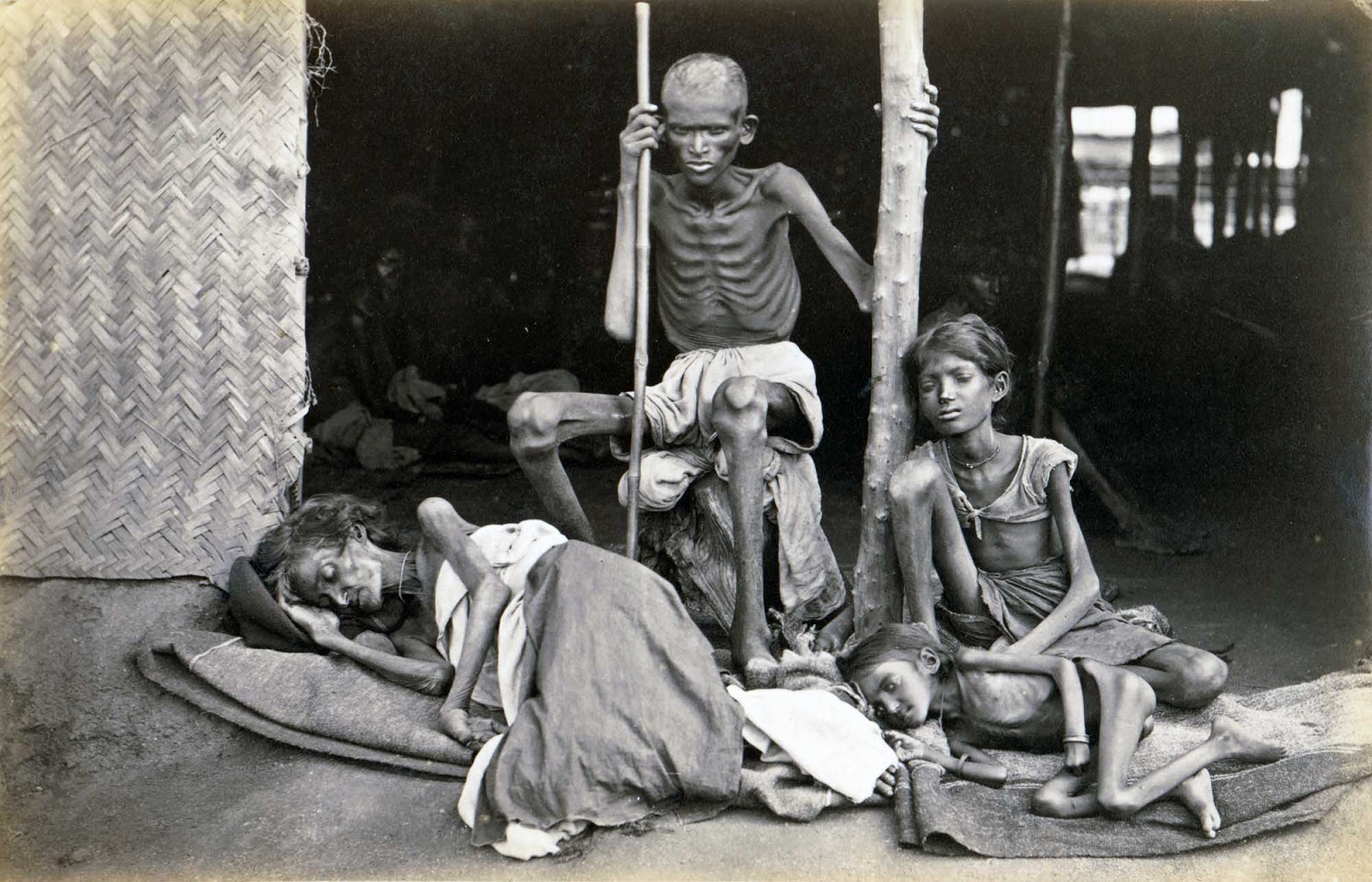
Higher rates of obesity and type 2 diabetes in subsequent generations have been linked to recurrent cycles of starvation during the colonial period, according to Oxfam.
The organisation noted that the Global North continues to dominate, even when nations hold formal equal status at global institutions.
The World Trade Organisation (WTO), for instance, has historically failed to adequately represent the interests of the Global South.
During the COVID-19 pandemic, South Africa and India proposed a full waiver of intellectual property restrictions on life-saving vaccines, treatments, and other technologies. The proposal received overwhelming global support but was ultimately blocked by wealthy nations.
Additionally, the World Bank and European development finance institutes, in partnership with private capital from the Global North, are pushing the privatisation and financialisation of public services in the Global South, the report stated.
The role of military power in maintaining colonial inequality was highlighted, with military expenditure during East India Company rule accounting for nearly 75 per cent of the budget, while public works comprised just 3 per cent on average.
Authorities often neglected the repair of crucial irrigation systems, worsening agricultural productivity and intensifying famines and droughts.
This continued use of overwhelming force has left a lasting impact on present-day socio-economic conditions.
