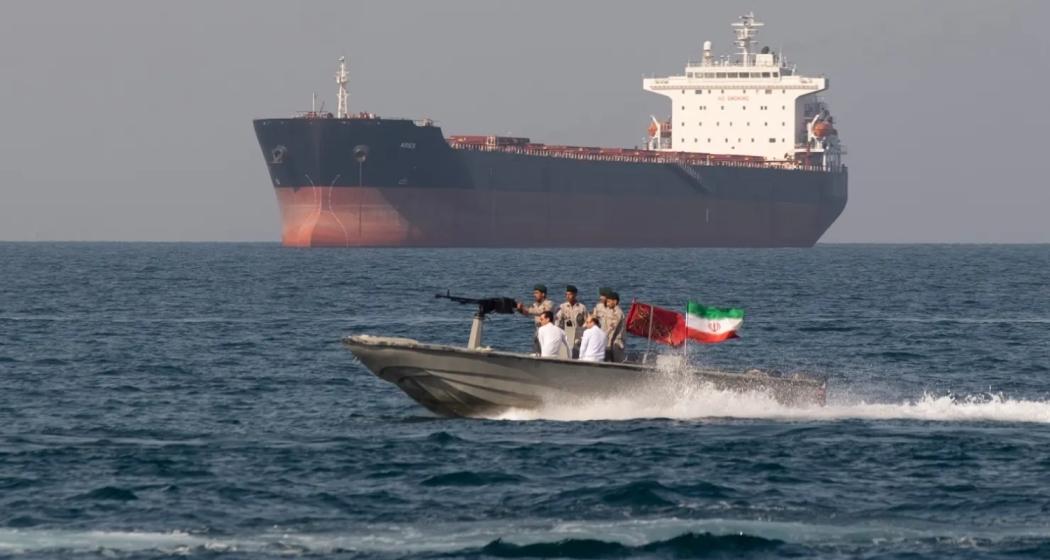
Iran’s Islamic Revolutionary Guard Corps has declared the Strait of Hormuz effectively closed, warning that any shipping through the vital waterway will face “harsh measures”. The move, now in its fourth week, continues to disrupt nearly a fifth of global oil shipments and keeps energy markets on edge.
The IRGC has forbidden transit to and from ports of US and Israeli allies. Maritime traffic has slowed to a near-standstill, with only limited approved vessels, including some Pakistani-flagged tankers, reportedly allowed passage. A Thai-flagged ship was attacked earlier, adding to safety concerns in the region.
Trump extends deadline
President Donald Trump has extended his deadline for Iran to reopen the strait by ten days to April 6, saying it follows an Iranian request. He claimed indirect talks were progressing “very well” and that the closure “doesn’t affect” the United States due to its domestic energy position. Oil prices eased after the announcement, with Brent crude falling below $106 per barrel
Strikes target Iranian steel plants
Fresh US and Israeli attacks hit steel plants in southwestern Iran and the central city of Isfahan on Friday. Israeli Defence Minister Israel Katz warned that operations “will escalate and expand” to more targets linked to Iran’s weapons programme.
Casualties rise sharply
According to the International Federation of Red Cross and Red Crescent Societies, more than 1,900 people have been killed and at least 20,000 injured in Iran since the war began on February 28. The figures were released by the Iranian Red Crescent.
Israel threatens wider offensive
Israeli Defence Minister Israel Katz warned that strikes on Iran “will escalate and expand” after a fresh wave of attacks on Tehran. He accused Iran of continuing to fire missiles at Israeli civilians despite earlier warnings. Israeli officials said additional targets linked to Iran’s weapons programme would be hit.
Also read: Why US hasn’t used force to secure the Strait of Hormuz?
G7 seeks clarity from Washington
At a meeting in France, G7 foreign ministers pressed US Secretary of State Marco Rubio for details on America’s strategy. Allies expressed concern over the depth of Russia-Iran ties and the risk of the Middle East conflict diverting attention from Ukraine. German Foreign Minister Johann Wadephul said Moscow hoped the war would shift focus from its actions in Ukraine.
Other developments
Iran-linked hackers claimed to have breached the personal email of FBI Director Kash Patel. Tehran dismissed social media reports of friction with Pakistan as “misleading”. The Iranian ambassador to the UN in Geneva confirmed that Supreme Leader Mojtaba Khamenei remains safe and active despite maintaining a low public profile.
The conflict, now in its fourth week, continues to raise fears of broader regional instability and possible nuclear risks, with one UN-affiliated diplomat resigning in protest over what he described as UN preparations for potential nuclear use.

 Follow us