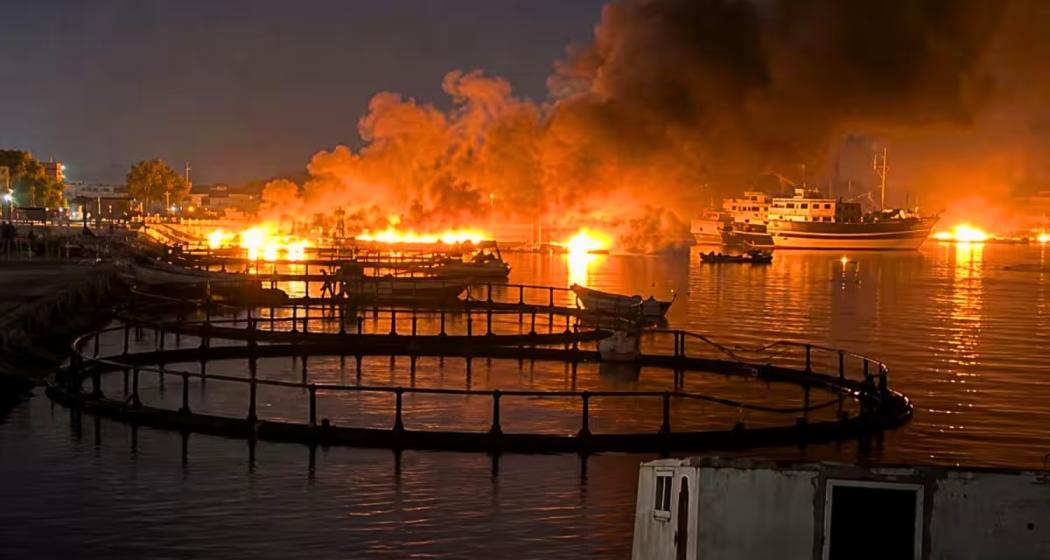
The United States and Iran edged closer to a wider regional conflict on Thursday after Washington launched a fresh wave of airstrikes on nearly 90 military targets across Iran, including areas around the Bushehr nuclear power plant and the strategically significant Chabahar port, prompting Tehran to retaliate with missile attacks on US-linked military installations across the Middle East.
The latest escalation comes months after the killing of Iran's Supreme Leader Ayatollah Ali Khamenei in a US strike and days after President Donald Trump declared the fragile ceasefire with Tehran was effectively "over", even as diplomatic channels technically remain open.
Bushehr, Chabahar among key targets
Iranian state media reported that the perimeter of the Bushehr nuclear power plant was struck by a US projectile after explosions rocked Bushehr province. Simultaneously, the US targeted military facilities around Bandar Abbas, Konarak and Chabahar, with damage reported to maritime infrastructure near the India-backed port.
The overnight strikes also disrupted electricity supplies in parts of Chabahar after damage to power lines and port infrastructure, including the maritime traffic control tower and marine piers. Chabahar is of strategic importance to India, which operates the Shahid Beheshti terminal to access Afghanistan and Central Asia while bypassing Pakistan.
The US Central Command (CENTCOM) said the operation was intended to "degrade Iran's ability to attack commercial shipping" and ensure safe navigation through the Strait of Hormuz, one of the world's most critical energy chokepoints.
Also read: India-Australia sign arrangement for Civil Nuclear Agreement
Iran retaliates, warns US bases 'not safe'
Iran's Islamic Revolutionary Guard Corps (IRGC) said it fired 10 ballistic missiles at Jordan's Azraq military base, describing it as a "US command-and-control centre". The IRGC warned that all American military bases across the region would become legitimate targets if Washington continued its attacks.
Jordan said it intercepted eight incoming missiles, adding that no casualties or damage were reported. Earlier, Iran had also launched attacks targeting US-linked facilities in Qatar, Bahrain and Kuwait, significantly widening the conflict.
Iran's Health Ministry said the latest two days of US strikes had killed 14 people and injured 78 others. Meanwhile, missile alert sirens sounded across parts of Jordan as regional militaries remained on high alert.
Oil jumps as Hormuz tensions deepen
The renewed fighting pushed global oil prices higher, with Brent crude rising to around $78.8 a barrel and West Texas Intermediate (WTI) climbing above $74 amid fears that prolonged hostilities could once again disrupt shipping through the Strait of Hormuz, through which nearly one-fifth of global oil supplies pass.
While Trump insisted further negotiations could continue, he expressed little optimism, saying talks were unlikely to succeed. Iranian Deputy Foreign Minister Kazem Gharibabadi dismissed Trump's remarks, calling them "an admission of the failure" of US policy.
With fresh strikes, retaliatory missile launches and key strategic infrastructure coming under attack, fears are mounting that the conflict could spill into a prolonged regional war with significant implications for global energy security, international shipping and geopolitical stability.

 Follow us