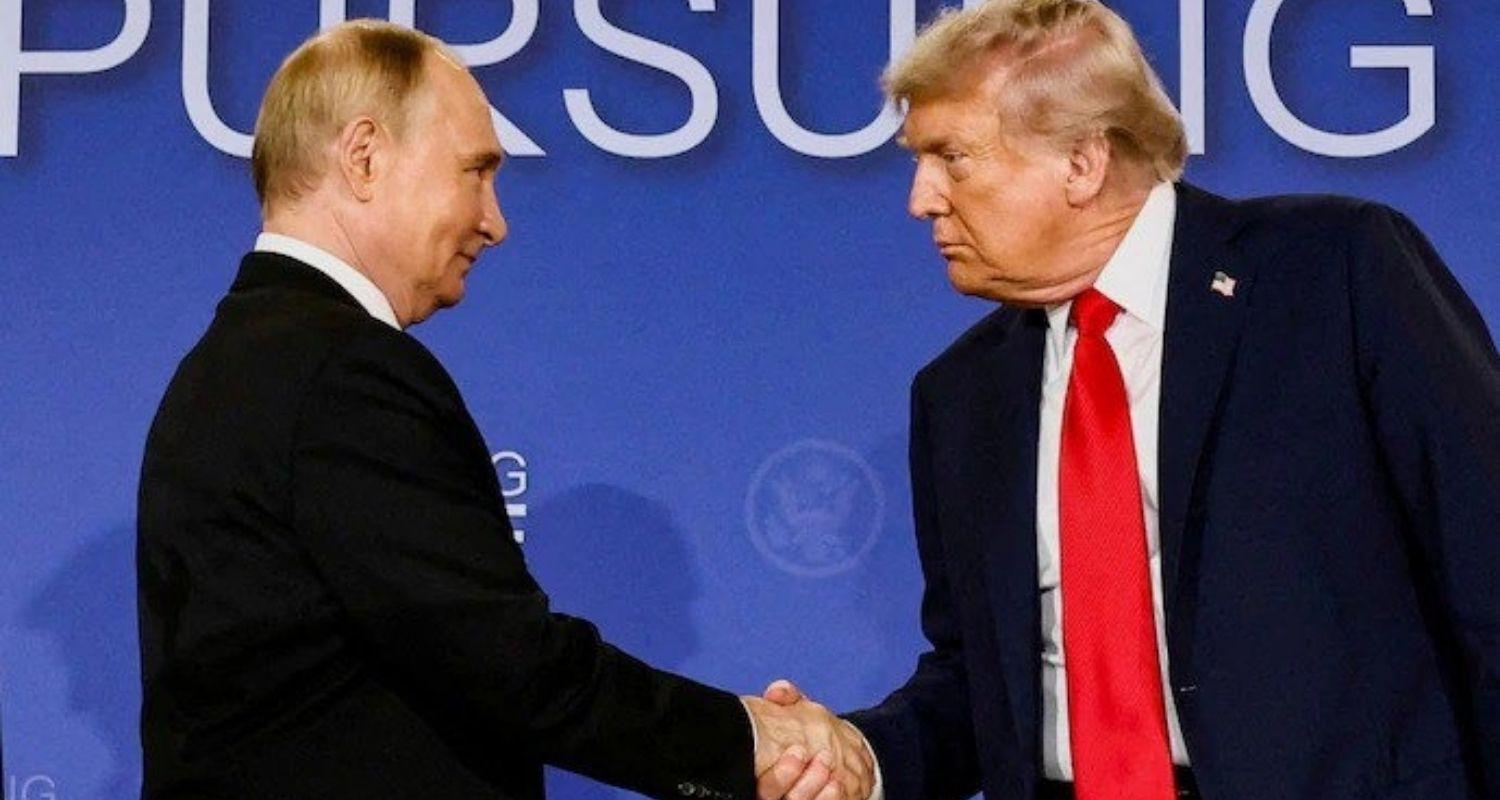
The world’s last nuclear arms control treaty between Russia and the United States, which restricts the deployment of strategic nuclear weapons, is set to expire on February 5, 2026.
The expiration comes as US President Donald Trump, pursuing an “America First” policy, dismantles or withdraws from international agreements that constrain the United States. However, in the case of ‘New START’ (Measures for the Further Reduction and Limitation of Strategic Offensive Arms), the issue appears to be more inertia than ideology.
The all-important treaty restricted both the US and Russia from deploying more than 1,550 strategic nuclear warheads, including ICBMs and ballistic and hypersonic missiles. It also limits launchers and heavy bombers to 800 each – although that number is still easily sufficient to destroy the Earth.
Russian President, Vladimir Putin, suggested in September a one-year extension of the treaty between the two countries, to which Trump had responded in the affirmative, saying it “sounds like a good idea”. But, little was heard from the two since, on the treaty.
Putin’s ally, Dmitry Medvedev, who signed the treaty with his counterpart Barack Obama in 2010, too acknowledged that Russia hadn’t received a substantive response on New START, but added that it is “still giving time to Trump”.
Also Read: Putin has agreed to not attack Ukraine ‘for a week’: Trump
White House sources have now confirmed that Trump would like to see what “limits are capped on nuclear weapons” and wishes to involve China in the arms control talks.
Daryl Kimball, Executive Director of the Arms Control Association, which supports reducing nuclear risks, said the Trump administration has sidelined career diplomats on the issue and entrusted decision-making only to a handful of people.
“Trump seems to have the right instinct on this issue but has thus far failed to follow through with a coherent strategy,” Kimball added.
In October last year, Trump announced that the United States was resuming nuclear testing to deter its enemies, including China and Iran, though no official confirmation has since been issued from Washington regarding the retesting of nuclear weapons.
In 2023, Russia suspended a key element of New START – allowing inspections – as relations deteriorated sharply with the Biden administration over Russia’s invasion of Ukraine.
Alexander Khramchikhin, a Russian military analyst, said it was clear the treaty had reached its end. “It’s just an empty formality that will disappear,” he added.
US allies France and Britain also maintain established nuclear arsenals on a smaller scale, while India, Pakistan, Israel and North Korea possess known nuclear weapons but are not party to international arms control agreements.

 Follow us