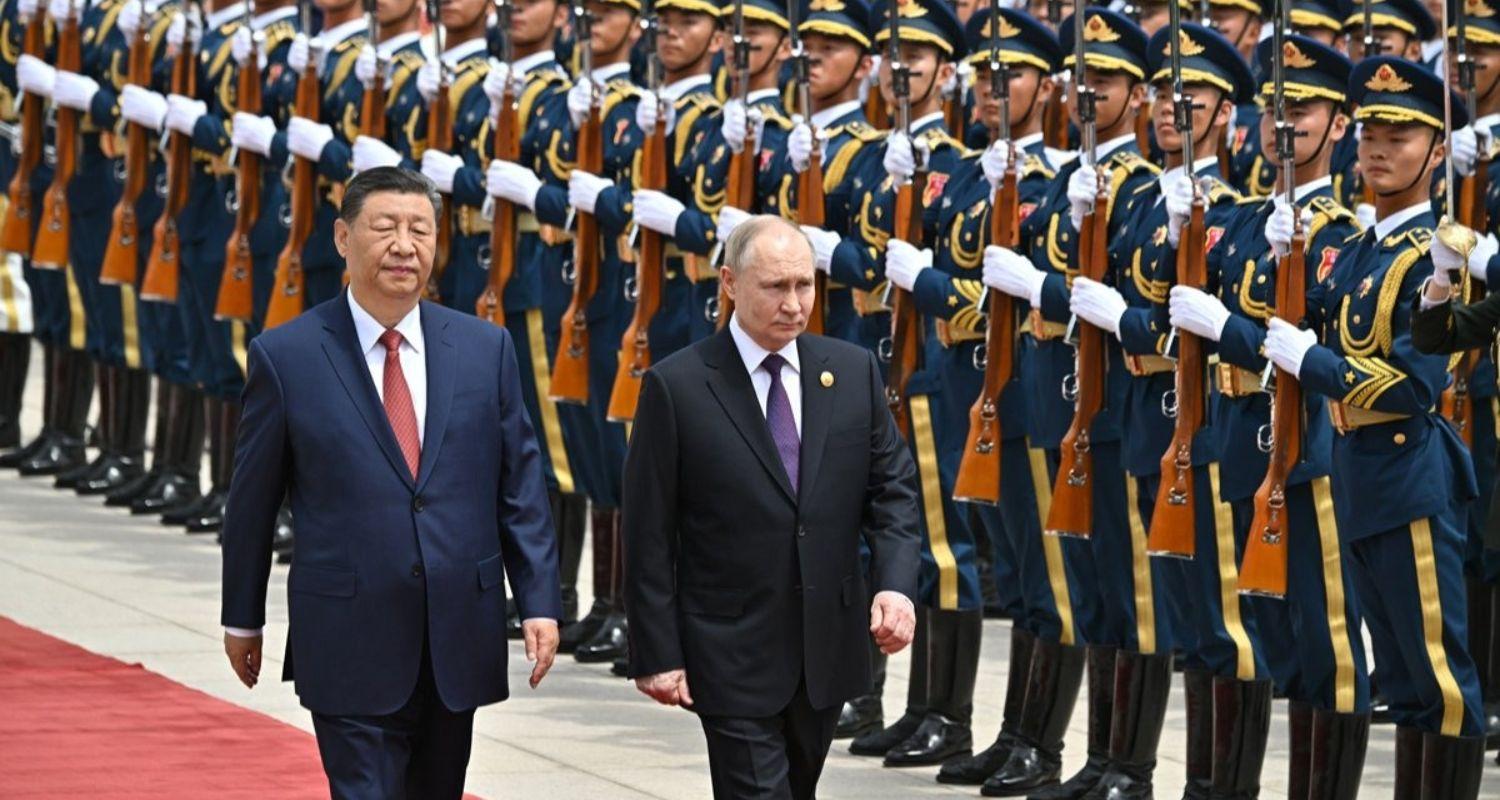
Russian President Vladimir Putin is expected to arrive in China today, just days after US President Donald Trump wrapped up his all-important visit to Beijing. Like Trump, Putin will stay in China for two days in a meeting that will be closely followed and watched by the international community as Beijing seeks to maintain its bilateral cooperation and security ties with Russia.
The two are natural allies challenging the Western order run by the United States for decades, as both sides aim to collectively dethrone the sole superpower with an alternative world order.
Among the major issues, Moscow and Beijing will seek to strengthen their ties in military, economic, trade and security partnerships, which experts suggest will dominate the agenda of the talks in Beijing.
Unlike the Beijing-Washington talks, which left the international order more destabilised, the Beijing-Moscow talks are expected to be driven by result-orientated discussions, as has been the case between the two over the past two decades.
The visit coincides with the 25th anniversary of the Sino-Russian Treaty of Friendship signed in 2001.
“The Trump visit was about stabilising the world's most important bilateral relationship; the Putin visit is about reassuring a long-standing strategic partner,” said Wang Zichen, deputy secretary-general for the Beijing-based think tank Centre for China & Globalisation. “For China, these two tracks are not mutually exclusive.”
Putin last visited China in September 2025 to attend the annual summit of the Shanghai Cooperation Organisation in Tianjin, watch a military parade honouring the 80th anniversary of the end of World War II and hold talks with Xi.
At the time, Xi called his counterpart an “old friend” while Putin addressed Xi as “dear friend”.
Both sides will be signing some key agreements, particularly on defence, where Beijing and Moscow are cooperating; the war in Ukraine; and the ongoing war in Iran, as the two sides maintain cordial relations with Tehran.
The outcomes of the upcoming discussions would hold a key for the global community, especially the countries which depend on imported crude oil.
Majority of the Asian countries, be it India, Japan, South Korea or Taiwan, are considered allies of the United States in the region.
If the situation continues to evolve like it has since February 28, an economic nightmare is about to unfold if supplies are not restored.
Also read: Putin to visit Xi days after Trump’s trip to Beijing

 Follow us