
Trending:
'Zhuhai Air Show' reveals China's advanced military tech
The 2024 Zhuhai Air Show, held in southern China from November 12-17, has once again become a dazzling spectacle, showcasing China's remarkable military-industrial complex. Follow us
News Arena Network - Zhuhai - UPDATED: November 12, 2024, 06:22 PM - 2 min read
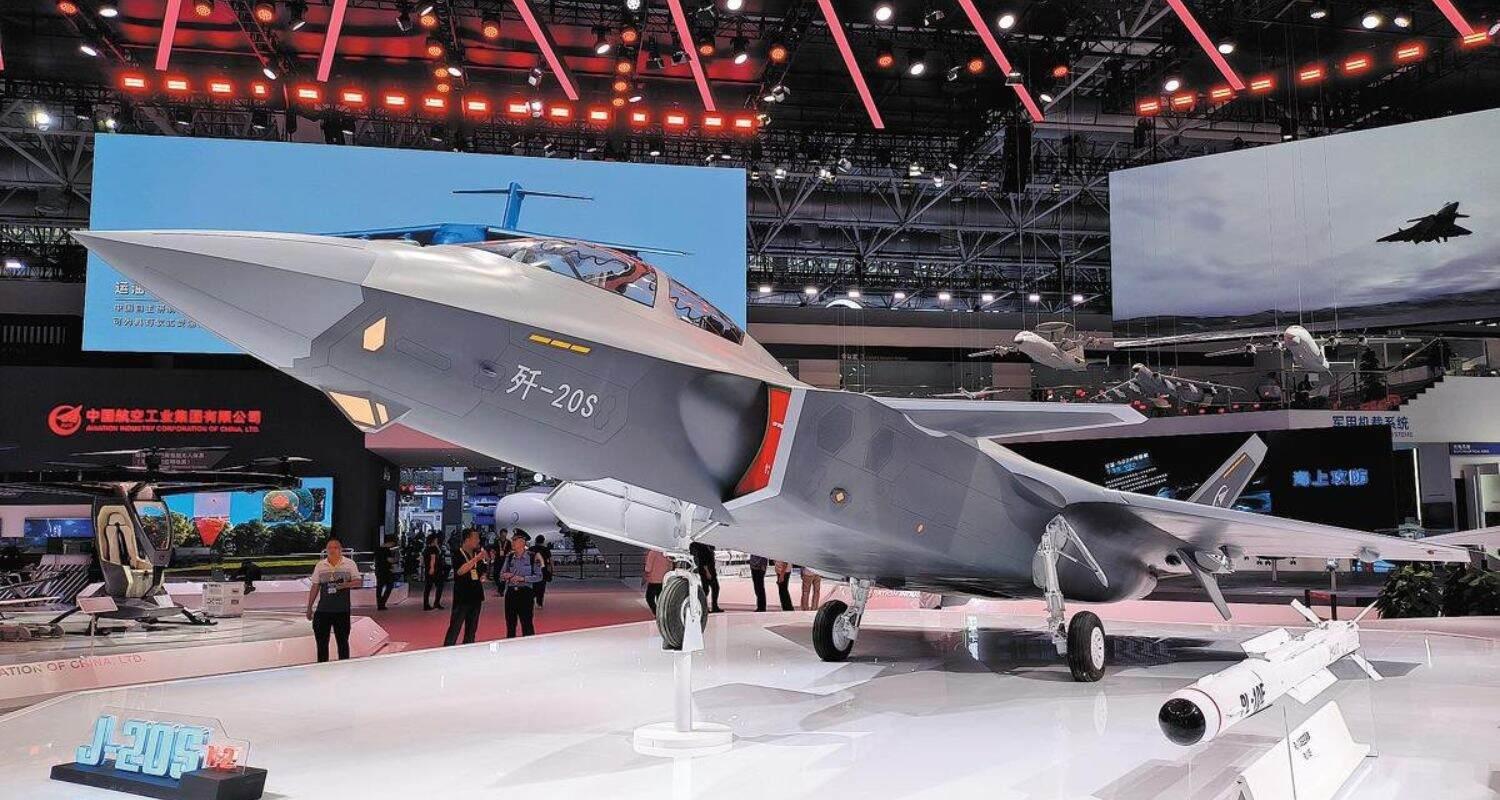
China showcases stealth fighters, drones and other Military High techs at Zhuhai Air Show.
The 2024 Zhuhai Air Show, held in southern China from November 12-17, has once again become a dazzling spectacle, showcasing China's remarkable military-industrial complex.
The biennial event, also known as the China International Aviation and Aerospace Exhibition, has become a crucial stage for China to exhibit its military prowess and technological innovations.
Despite the ongoing recovery from the effects of COVID-19, this year’s show features a series of high-tech military equipment, ranging from advanced fighter jets to sophisticated drones and missile systems.
This year’s Zhuhai Air Show highlights China’s ever-expanding capabilities in aerospace and defence technology. Aerial demonstrations, featuring jet engines roaring overhead during aerobatic displays, set the tone for the event.
On the ground, diesel engines powered heavy armoured vehicles over obstacles, further illustrating China’s strength in military technology. Exhibition halls are packed with cutting-edge systems, from advanced drones to high-performance fighter jets, marking a powerful statement of China’s military potential.
However, the 2024 show is also a reflection of the country’s increasingly insular stance toward foreign media and companies. After the disruptions of the COVID-19 pandemic, the air show has not fully returned to its pre-pandemic scale, and international media presence has been significantly curtailed.
While the 2018 event saw more than 150,000 trade visitors and 300,000 members of the public, foreign journalists are notably absent this year, much like in the 2022 edition.
Only Chinese journalists are covering the event, reinforcing China’s desire to control the narrative surrounding its military capabilities. Among the most significant revelations at this year’s show is the debut of the J-35A stealth fighter, marking a significant milestone in China’s aviation development.
The J-35A, which is part of the People’s Liberation Army Air Force (PLAAF), bears a striking resemblance to the American F-35, a multirole fighter developed by Lockheed Martin.
This fighter is expected to complement China’s existing J-20, creating a formidable fleet of fifth-generation stealth fighters. While experts believe that the J-35A is still undergoing initial operational training and evaluation, its presence at Zhuhai signals China’s growing ambitions in modern aerial warfare.
The J-35A, manufactured by the Shenyang Aircraft Corporation, is seen as a more affordable, medium-weight alternative to the larger J-20, which remains the primary air superiority fighter in China’s arsenal.
Experts speculate that the J-35A will be primarily used for air superiority, with a secondary strike capability, similar to the role of the J-20. While its range may not match the J-20, the J-35A is expected to be equipped with advanced avionics, weapons, and stealth features, making it a formidable player in modern aerial combat.
Interestingly, the J-35A is not only a part of China’s Air Force but is also set to be used by the People’s Liberation Army Navy (PLAN). The carrier-borne variant of the J-35 is designed to operate off China’s expanding fleet of aircraft carriers, further solidifying the military’s capability to project power in the region.
The introduction of both the J-35A and J-20 into China’s military fleet places the country alongside the United States in operating two types of fifth-generation fighters, something previously unique to the U.S. military.
The air show also features other advanced fighter jets, such as the J-15T, which is designed for carrier operations, and the J-15D, an electronic warfare version. These fighters highlight the increasing sophistication of China’s naval aviation capabilities.
The J-15T, which utilises domestically manufactured WS10 engines, marks a significant step forward from earlier models that relied on Russian engines. Another important addition is the Z-20J, a specialised anti-submarine warfare helicopter that further enhances the PLAN’s ability to defend its maritime borders.
One of the most anticipated pieces of military technology at the Zhuhai Air Show was the CH-7 stealth unmanned combat aerial vehicle (UCAV). Developed by the China Aerospace and Technology Corporation (CASC), the CH-7 represents China’s efforts to make strides in unmanned aerial systems.
The CH-7’s sleek, flying-wing design and stealth capabilities make it a powerful addition to China’s arsenal, capable of carrying out precision strikes while evading detection.
Alongside the CH-7, the show also features the YJ-21E, a hypersonic anti-ship missile capable of being launched from the UCAV, further demonstrating China’s edge in developing hypersonic weapons.
In addition to airborne and unmanned technologies, Zhuhai 2024 also showcased a series of advanced ground and naval defence systems. The HQ-19 air defence system, often compared to the U.S. THAAD (Terminal High Altitude Area Defense) system, was displayed as a critical component of China’s missile defence capabilities.
Mounted on an 8×8 truck chassis, the HQ-19 is designed to intercept incoming ballistic and hypersonic missiles, making it a key part of China’s defence strategy against emerging threats. Alongside the HQ-19, the show also featured the HQ-17AE, an unmanned surface vehicle optimised for defending against drones and loitering munitions.
Other interesting developments at the air show include the Orca, a high-speed unmanned surface vessel (USV) developed by China State Shipbuilding Corporation (CSSC).
This vessel, capable of missions ranging from missile interception to anti-submarine warfare, introduces a new dimension to the air show by showcasing naval defence technology.
The Orca’s autonomous capabilities, combined with its weapon systems, highlight China’s growing investments in unmanned systems across all domains of warfare.
