
Trending:
Bangladesh ex-HM alleges deep-state plot behind Hasina’s ouster
Former Bangladesh Home Minister Asaduzzaman Khan Kamal, now sentenced to death alongside Sheikh Hasina, alleges a deep-state conspiracy involving top military and intelligence officials who, he claims, misled the government during the 2024 protests and orchestrated Hasina’s removal from within. Follow us
News Arena Network - New Delhi - UPDATED: November 28, 2025, 10:58 PM - 2 min read
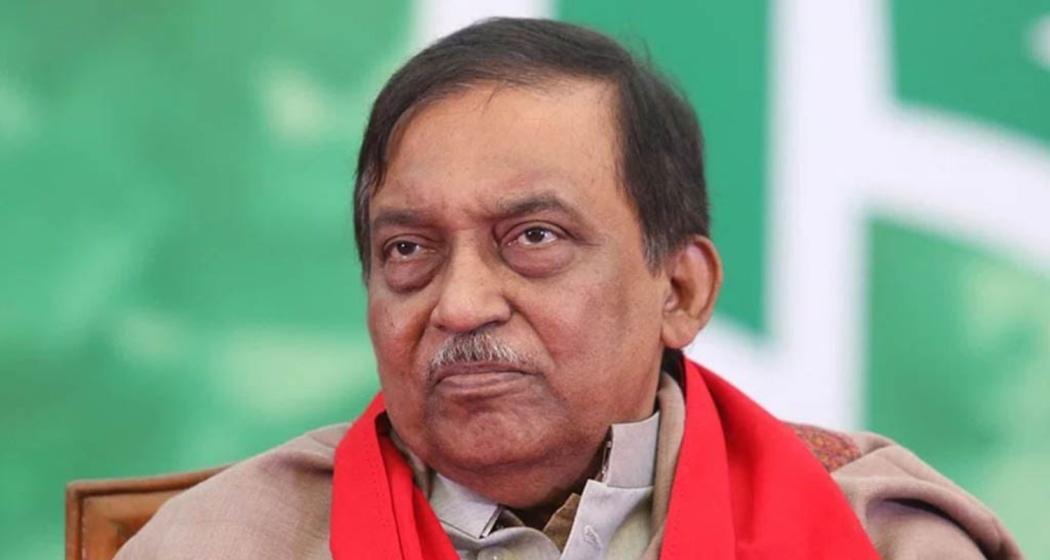
A file photo of former Home Minister of Bangladesh, Asaduzzaman Khan Kamal.
Asaduzzaman Khan Kamal, former Home Minister of Bangladesh and recently sentenced to death alongside former Prime Minister Sheikh Hasina by the International Crimes Tribunal Bangladesh (ICT-BD) on November 17, has spoken to News Arena India (NAI) from an undisclosed location and revealed details of an alleged deep-state conspiracy. In the interview, Kamal claimed that elements within the intelligence agencies and top military leadership orchestrated a plan to topple Hasina’s government.
Kamal said he initially advocated a political response to the student protests, mobilising Awami League’s youth and student fronts, but alleged that the Army chief misled the government with “false assurances” that the military would control the situation, a move he now believes was designed to oust Hasina.
Q: When did you realise that Prime Minister Hasina’s most trusted man, Army Chief Waker-Uz-Zaman, had betrayed her?
A: On August 5, 2024, I was inside my personal residence, my official Dhanmondi residence had already been under attack since August 3. I was glued to the television, following the situation minute by minute. Around 2:30 pm, when I saw the helicopter carrying Sheikh Hasina leaving Ganabhaban and news channels flashed reports of her exit, I did not suspect Waker. I genuinely believed he had facilitated a safe passage for the Prime Minister.
I waited for Waker’s media briefing, but he kept delaying it. When he finally appeared, he announced the formation of an interim government — one that excluded any representative of the Awami League. He also promised investigations into the protest-related killings and “punishment for the guilty”. The Army had acted entirely under his command; the Prime Minister had never ordered firing on protestors.
It was at that moment that things became clear. I realised the helicopter was not a means of protection, it was a means of removal. That was the first unmistakable sign of betrayal.
The next morning, around 10 am, a trusted contact told me he could arrange my safe exit from Bangladesh, but clearance from Waker was essential. He emailed Waker requesting that permission, but the message went unanswered the whole day. By 10 pm, my contact advised me to find my own way out.
Sensing imminent danger, I went into hiding at my cousin’s home for a month. After that period, I messaged Waker saying I wished to surrender. He did not reply.
Only then, connecting every incident from the start of the student protests to the Prime Minister’s forced exit, did the full picture emerge. It was a conspiracy rooted within the government itself.
Q: What was the role of the Directorate General of Forces Intelligence (DGFI), the Bangladesh Army’s intelligence wing?
A: In hindsight, I now understand that the then DGFI Director General, Major General Hamidul Haque, was also deeply involved in the conspiracy. On the night of August 3, 2024, a meeting was called at the Prime Minister’s residence in Ganabhaban. I suggested declaring an emergency immediately, as the situation was rapidly spiralling out of control. The PM turned to Hamidul for his assessment. “Everything is under control. There is no need to worry,” he told the Prime Minister.
On August 4, around 11 pm, another emergency meeting was convened. Protesters had decided to advance their march to the next morning instead of August 6. I was present with Waker in that meeting with the Prime Minister. I suggested countering the rally politically by saying, “Give me permission, and I can mobilise over one lakh Awami League supporters, from the party’s youth and student wings, within an hour in Dhaka.”
But Waker immediately intervened: “Leave it to me, sir. Protecting Dhaka and the Prime Minister is our responsibility.” I was not convinced, especially since I had already received reports of police personnel being killed. So I asked him, “How can you be so confident?”
Waker replied, “I am issuing orders to move additional forces from all nearby army bases and from Mymensingh. The Army will handle the protestors.”
I said, “Good night,” and left Ganabhaban around 11:30 pm. That was my last meeting with both the Prime Minister and Waker.
Now it is clear why Waker resisted involving our party supporters to counter the protestors. He leveraged the Prime Minister’s trust in him — because that trust was central to the conspiracy.
Q: Special Branch (SB) was under your jurisdiction. What was SB’s role?
A: Yes, SB reported to me, while other intelligence agencies, such as DGFI, were controlled by the Army, and the National Security Intelligence (NSI) functioned directly under the Prime Minister. But because the Prime Minister had absolute trust in Waker, he effectively controlled NSI as well.
One incident convinced me that SB, too, had been compromised. In July 2024, when protests were erupting across Bangladesh, SB chief Monirul Islam was abroad on a trip to the United States. At a time of national crisis, his absence was inexplicable, and highly suspicious.
Q: How did Border Guard Bangladesh (BGB) respond during the crisis?
A: Although BGB operates under the Home Ministry, during the unrest it was functioning entirely under the Army, and therefore under Waker’s command.
On August 3, 2024, our party headquarters in Dhaka came under attack. General Secretary Obaidul Quader informed me that attackers were firing and throwing bombs at the office. I contacted BGB chief Mohammad Ashrafuzzaman Siddiqui, who assured immediate assistance. Yet BGB took more than an hour to arrive, when they should have reached within 15-20 minutes.
The same suspicious delay occurred when my official residence in Dhanmondi was attacked. These delays clearly point to collusion.
Q: Was there high-handedness on the part of DGFI?
A: I believe so. DGFI detained six injured protestors and they were admitted to a government hospital near my residence, and I only learned of it when communist groups began protesting outside.
I informed the Prime Minister, who suggested releasing the detainees. I told her that if we released them immediately, they might be attacked by angry party supporters. She instructed me to move them to a safe location and release them after a few days.
Arrangements were made, but before their release, DGFI made the detainees sign a declaration stating that the issues behind the protests had been resolved and urging withdrawal of the movement. This was done without my approval and was a disastrous mistake.
After their release, leaders of the protesting students alleged the six had been tortured into signing the document, which only inflamed the situation further. Now it seems that this, too, was part of the conspiracy.
Q: ICT-BD sentenced you and Sheikh Hasina to death. How do you respond?
A: The verdict against me and the Prime Minister was delivered by a rigged tribunal established by an unelected government with no democratic legitimacy. The process was biased, politically driven, and aimed at eliminating us. Their demand for the death penalty exposes the violent intent of extremist elements within the interim administration.
Q: Bangladesh is scheduled to hold elections next year, but Awami League is barred. What is your party’s plan?
A: We will mobilise a nationwide mass movement and intensify it further. The people of Bangladesh now understand that they have no real alternative to the Awami League. We will ensure they recognise that any election held without our participation is nothing but a façade.
Q: What do you expect from India?
A: India has always stood by the elected governments of Bangladesh. We expect India to exert diplomatic pressure on Dhaka to ensure an inclusive, credible election process.
By Pranab Mondal
