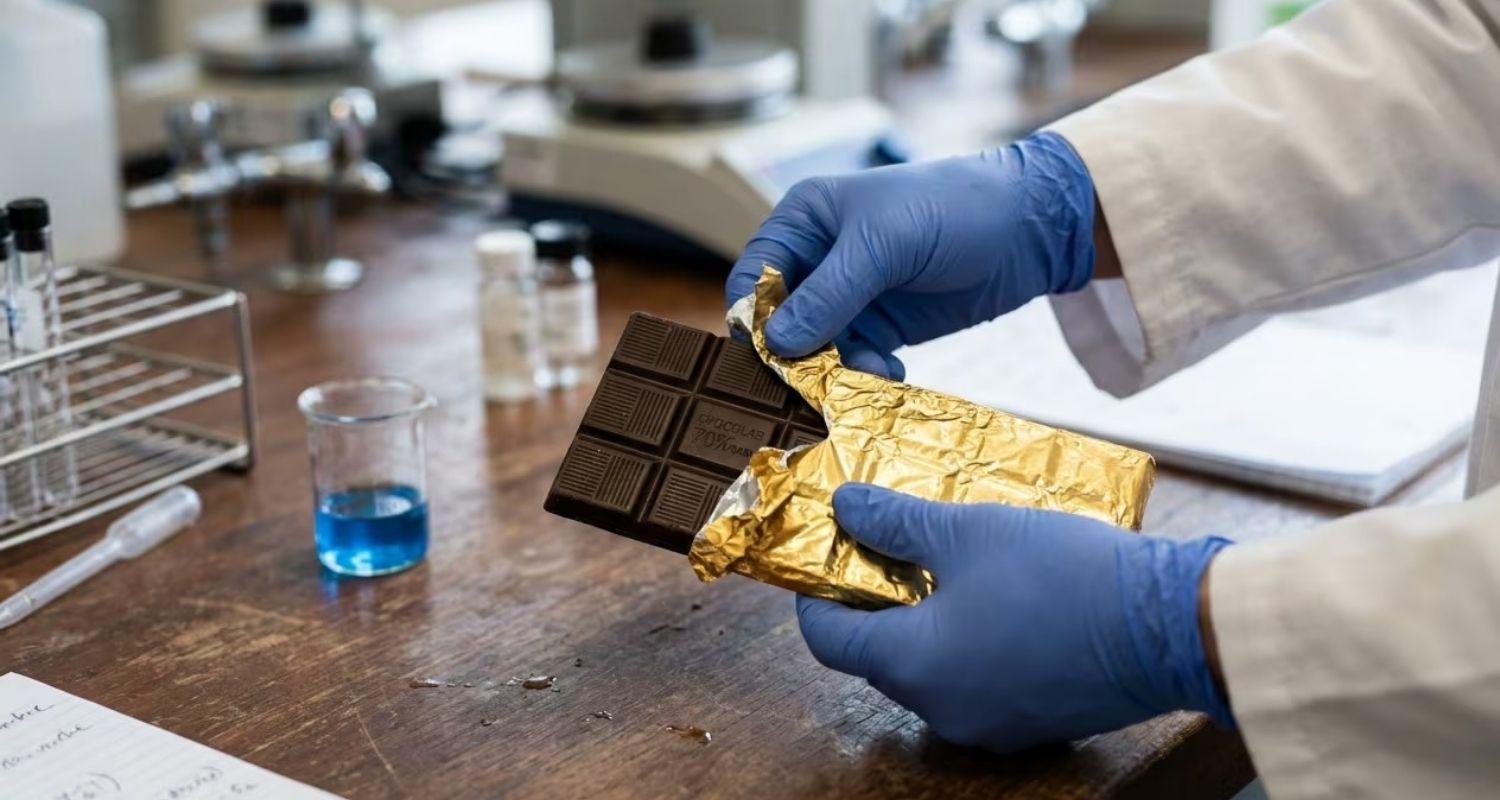
Cocoa lovers are soon set to be left with a bitter taste in their mouth—unfamiliar and maybe unhealthy too. Lab grown chocolate bars could hit the shelves anytime in 2027. Now is that piece of news terrific or terrible depends on whether you are a cocoa-lover or a chocolate manufacturer. Last month, an Israeli food start-up Celleste Bio, in collaboration with Mondelez International unveiled the world’s first chocolate bar made with lab-grown cocoa butter rather than the one found on trees. Using cocoa butter grown in a bioreactor, the bar was made with cocoa harvested through cell suspension technology.
What do the chocolate companies say?
The companies making a case for laboratory grown cocoa have their pitch in place, which is also central to climate sensitivity. Traditional cocoa cultivation requires vast stretches of land and has been closely linked to deforestation in some regions. Celleste argues that cocoa sourced from a laboratory could dramatically reduce the carbon footprint on these counts. Its engineers have said that a ton of cocoa butter annually could be generated from a single cocoa bean in a 1000-liter bioreactor. Hanne Volpin, the company’s chief technical and scientific officer confidently announced, “The same output would otherwise require about a hectare of cocoa trees,” adding, “to that end, we’ve curated a very robust bank of multiple cocoa bean varieties we can use to grow, test and scale material without ever having to cut down a single tree in the rainforest.”
The company further claims that its cell-cultured cocoa butter is “bio identical” to conventionally and naturally obtained cocoa and delivers the same “melt profile and texture.”
The argument further gains leverage in the face of the climate crisis and unpredictable havoc it can cause in the future. Reportedly, one third of cocoa plantations could die by 2050, while the consumption is nowhere close to slowing down or even stagnating.
Also read: Zero-alcohol drinks redefine Paris wine fair
According to trade association The Swiss Platform for Sustainable Cocoa, globally cocoa farmers produce around five million tonnes of cocoa beans per year, with the biggest cocoa growing countries being Ivory Coast and Ghana, accounting for more than half of the world’s cocoa production. But deforestation and shifting weather patterns could render cocoa producing nations unsuitable for cultivation within the next 30 years.
The consumption statistics, on the other hand, are almost insane. According to global distributor Weitnauer Group and Statista, projections for 2030 suggest that the chocolate market could grow to USD 182.09 billion. Some forecasts go as high as USD 219.1 billion. In terms of volume, the global chocolate consumption is expected to hit 11.2 billion kg by 2030.
What about regulatory procedures, public health?
While industry conglomerates celebrate and hope to bring the products on shelves soon, for consumers and cocoa-lovers the concerns are many and obvious. The development will undeniably have far-reaching repercussions on public health, including children although the effects may take a long while to simply show up.
Dark chocolate and raw cocoa are genuinely healthy foods to include, but between the cocoa that grows on the trees and the chocolate bars that hit the shelves, a lot of food mutations occur.
Several products on the store shelves can already not be marketed as chocolate because they do not contain enough cocoa.
Cadbury, allegedly has been quietly changing the ingredients of its flagship Dairy Milk, while just about meeting the UK legal minimum requirement of 20 per cent cocoa solids to be labelled as a chocolate. Milk chocolate in the UK must have at least 20 per cent cocoa solids and 20 per cent milk solids to legally be called a chocolate. Without which it has to be labelled as “chocolate flavour.”
Mondelez International, which acquired the brand in 2010 and now owns a massive portfolio of brands, including Oreo, Ritz, Toblerone has denied the widespread social media claims that its classic chocolate bar has been replaced by vegetable fat, palm oils, a blend of industrial oils and emulsifiers.
The social media is filled with influencers warning consumers about lab-grown chocolate, the companies that are already investing in them. The calls of boycott, although have been made, haven't as yet picked up.
The lab-grown cocoa still faces hurdles like regulatory approvals and consumer acceptance. But recent food history is testimony that consumer acceptance is often gained through a blend of massive marketing budgets, misleading promotions, lack of options and sometimes ignorance on the part of end consumers.
The regulatory approvals that are compromised or obtained with pressure from industry lobbies and with political leverage are nothing new either. The development in food technology once again shifts the debate back to should human food be grown on farms or produced in laboratories? The answer is clear to that at least.
By Manpriya Singh

 Follow us