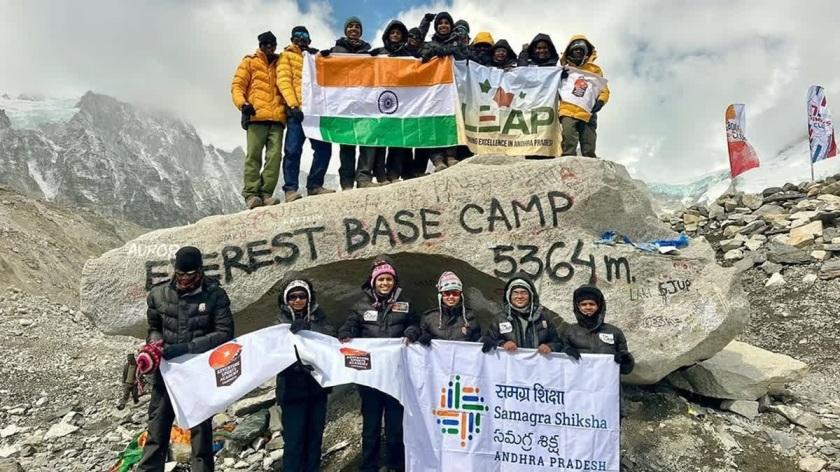
In a first-of-its-kind achievement, 21 specially abled students from government schools in Andhra Pradesh have successfully completed the Everest Base Camp trek in Nepal, marking a major milestone in inclusive education and adventure initiatives.
The group, comprising eight girls and 13 boys from Classes 9, 10 and Intermediate, reached the Everest Base Camp at an altitude of 5,364 metres on Saturday after beginning their expedition on April 15. The initiative, organised under Samagra Shiksha Andhra Pradesh with support from the state’s School Education Department, is the first government-backed expedition of its kind for specially abled students.
Defying physical limitations and societal scepticism, the students completed the challenging trek through determination, discipline and extensive preparation. The expedition has been widely hailed as a symbol of resilience and inclusivity.
The participants underwent rigorous training before embarking on the journey. This included 45 days of intensive preparation at an adventure academy in Gandikota, followed by 15 days of high-altitude training in Ladakh under sub-zero conditions. The team then travelled to Kathmandu before commencing the trek.
Also read: ITBP to soon undertake first all-women Everest expedition
The expedition received strong support from Andhra Pradesh IT and HRD Minister Nara Lokesh, who flagged off the team and described the achievement as a “historic moment”. He said the students had set an inspiring example and reaffirmed the government’s commitment to promoting inclusive opportunities.
The team was accompanied by experienced mountaineers, including Malavath Purna and Sheikh Himanshu, along with officials from the sports wing of Samagra Shiksha.
Parents of the participants expressed pride and gratitude, saying the initiative had provided their children with a rare opportunity to pursue their ambitions and prove their capabilities on a global stage.
Officials said the success of the expedition underscores the importance of inclusive policies in education and extracurricular activities, and could pave the way for similar programmes in the future, enabling more specially abled students to take part in challenging and transformative experiences.

 Follow us