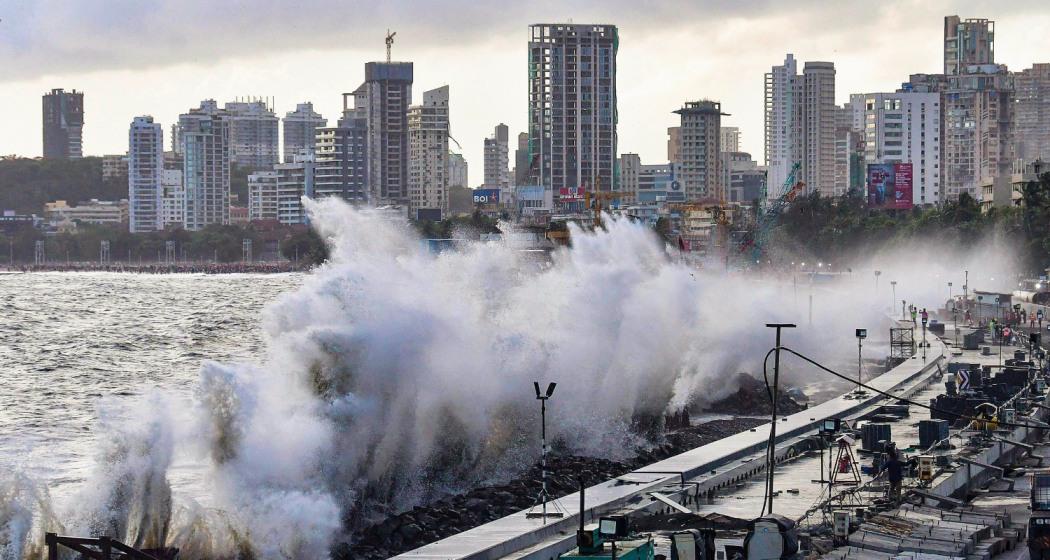
The government has spent over Rs 4,300 crore under the National Cyclone Risk Mitigation Project (NCRMP) since its launch in 2011 to strengthen disaster resilience in coastal states, the Rajya Sabha was informed on Wednesday.
In a written reply, Minister of State for Home Affairs Nityanand Rai said a total expenditure of Rs 4,331.68 crore has been incurred under the project so far.
He said the first phase of the NCRMP, approved in January 2011, saw an expenditure of Rs 2,524.84 crore, while Rs 1,806.84 crore was spent under the second phase, approved in July 2015.
The project aims to minimise vulnerability to cyclones by building resilient infrastructure and enhancing the preparedness of coastal communities, while maintaining ecological balance.
The NCRMP was implemented in two phases across eight coastal states. The first phase covered Andhra Pradesh and Odisha and was completed in December 2018. The second phase, which included Goa, Gujarat, Karnataka, Kerala, Maharashtra and West Bengal, was completed in March 2023.
Also read: Andhra explores beach sand minerals to cut dependence on China
“The Government of India had approved the NCRMP with the overall objective to build better infrastructure for minimising vulnerability to cyclones and making people and infrastructure disaster resilient,” Rai said.
Key components of the project include the establishment of early warning dissemination systems, construction of multi-purpose cyclone shelters, development of evacuation roads and bridges, saline embankments, underground cabling and capacity-building initiatives.
The minister said capacity-building measures were also undertaken through training programmes and awareness campaigns to improve preparedness at the community level.
For effective implementation, a Project Monitoring Unit was set up at the Centre, while states adopted similar coordination and monitoring mechanisms to ensure timely execution of the project.
The government said the initiative has played a significant role in enhancing disaster preparedness and reducing risks in cyclone-prone coastal regions, particularly in vulnerable districts across participating states.

 Follow us