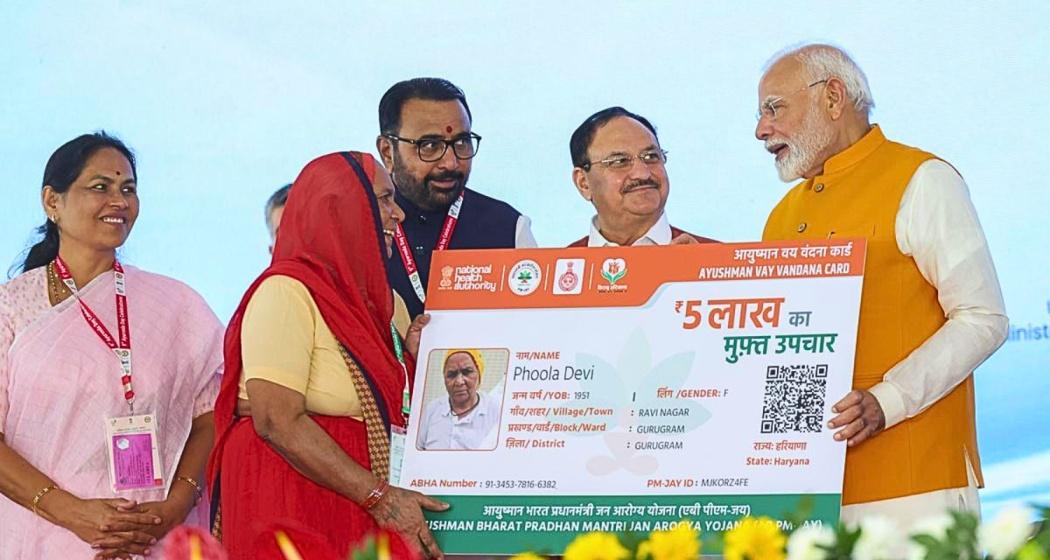
India’s flagship digital healthcare initiative, the Ayushman Bharat Digital Mission (ABDM), has crossed a major milestone with the creation of more than 90 crore Ayushman Bharat Health Accounts (ABHAs), marking a significant step towards building a connected and citizen-centric digital health ecosystem across the country.
Implemented by the National Health Authority (NHA) under the Ministry of Health and Family Welfare, the mission aims to create a seamless digital framework that enables citizens to securely access, store and share their health records with consent.
ABHA, a unique 14-digit digital health identity, serves as a key component of the mission. It allows individuals to link medical records generated across hospitals, clinics, laboratories and digital health platforms, reducing dependence on physical documents and facilitating continuity of care.
According to official data, the number of ABHAs has grown steadily since the launch of the mission. Cumulative registrations rose from 14.7 crore in 2021 to 30.4 crore in 2022, 50.6 crore in 2023, 72.2 crore in 2024 and 84.5 crore in 2025 before crossing the 90-crore mark this year.
National Health Authority Chief Executive Officer Dr Sunil Kumar Barnwal described the achievement as a reflection of growing public participation and institutional support for the digital health ecosystem.
Also read: Women account for 49 pc of Ayushman Bharat admissions: Govt
“The creation of over 90 crore ABHAs reflects the growing participation of citizens, States, UTs and ecosystem partners in the Ayushman Bharat Digital Mission,” Barnwal said. He added that the digital health identity would help empower citizens through secure and consent-based access to their health information while supporting continuity of care and greater transparency in healthcare delivery.
Among states, Uttar Pradesh leads with more than 15.3 crore ABHAs, followed by Rajasthan and Maharashtra with 7.1 crore each. Bihar has recorded 6.3 crore accounts, while West Bengal has created 5.9 crore.
Several states and Union Territories have also reported high saturation levels relative to their populations. Andaman and Nicobar Islands, Ladakh, Lakshadweep, and Dadra and Nagar Haveli and Daman and Diu have achieved full saturation. Andhra Pradesh has recorded 98.5 per cent saturation, followed by Odisha at 91.9 per cent and Chandigarh at 90.8 per cent.
The initiative has also seen significant participation from women, who account for nearly half of all ABHA holders, constituting 49.75 per cent of total registrations.

 Follow us