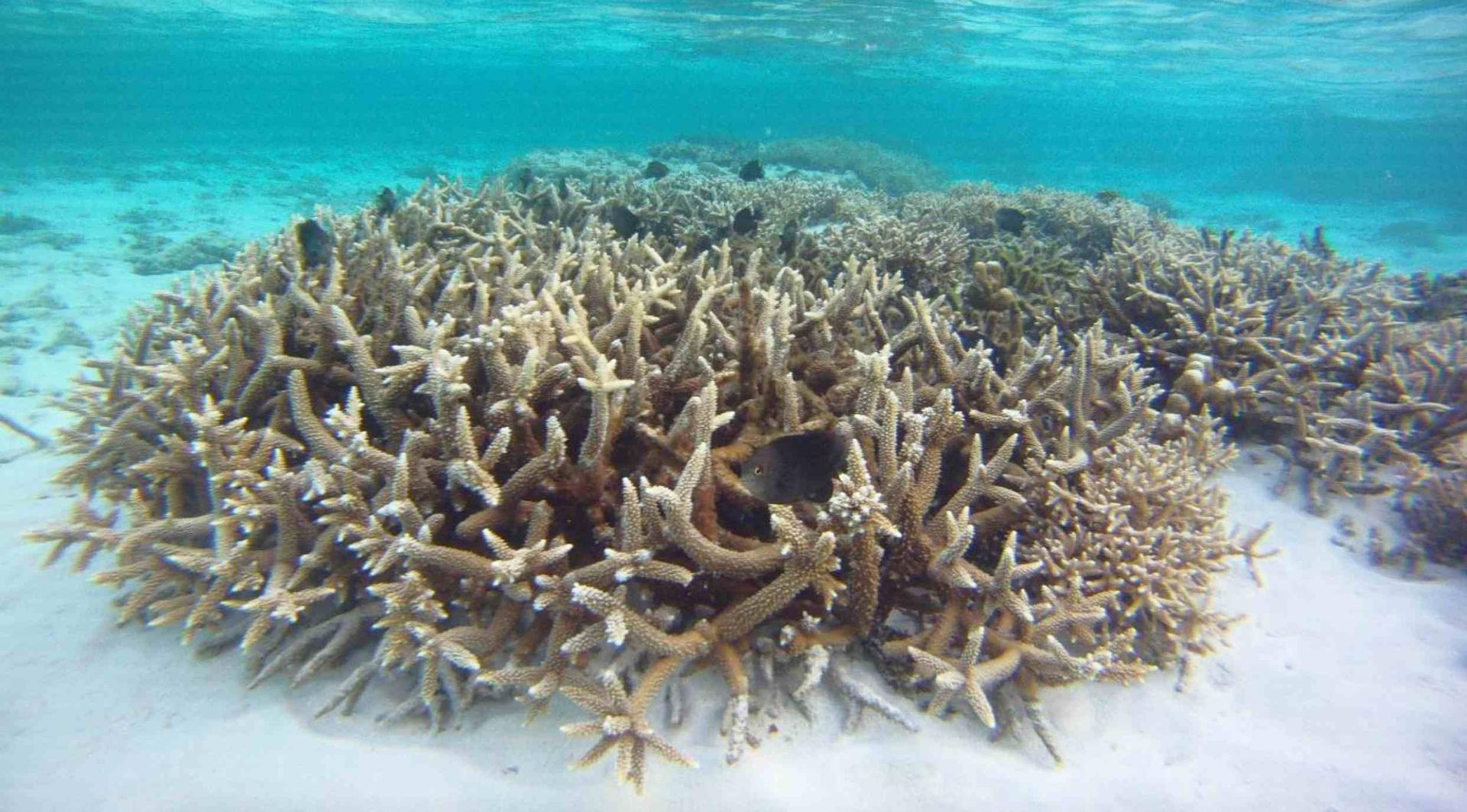
Marine heatwaves are triggering widespread bleaching of coral reefs in the Lakshadweep Sea, where corals lose their vibrant colours due to stress—a concerning phenomenon, according to a new study.
Lakshadweep Sea is a part of the massive Indian Ocean.
According to researchers at the ICAR-Central Marine Fisheries Research Institute (CMFRI), survey results from various Lakshadweep Islands have shown that a significant percentage of hard coral species have suffered from severe bleaching.
The primary reason for this bleaching is a prolonged period of marine heat waves that have been affecting the region since late October 2023.
The Central Marine Fisheries Research Institute (CMFRI) has released a statement stating that marine heat waves are rare extreme weather events that cause prolonged periods of abnormally high ocean temperatures.
Based on historical data, these temperatures often exceed the 90th percentile of typical regional ocean temperatures.
The National Oceanic and Atmospheric Administration (NOAA) warns that this DHW (degree heating weeks) poses a substantial risk of coral bleaching risk, which can threaten the region's diverse marine ecosystems.
"Such heat stress levels signify a severe threat to coral health, leading to extensive bleaching where corals lose the symbiotic algae (zooxanthellae), compromising their survival by depriving them of essential nutrients," said Dr K R Sreenath, Senior Scientist of CMFRI.
The Lakshadweep Sea, covering the area between 80.0 to 12.0 N latitude and 71.0 to 75.0 E longitude, has been experiencing a rise in temperatures greater than one degree Celsius above the normal level since October 27, 2023.
The heatwaves pose a risk to important marine habitats, including seagrass meadows. Like corals, these meadows are being adversely affected by the heatwaves, which result in impaired photosynthesis, reduced growth, and hindered reproductive functions.

 Follow us