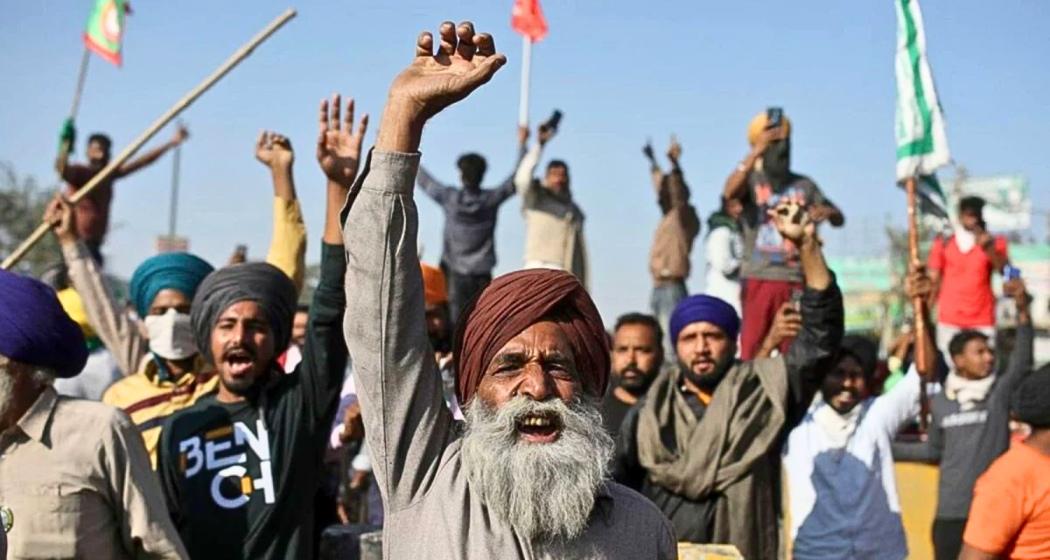
The All India Kisan Sabha on Saturday warned that ongoing trade negotiations between India and the United States could open up the agricultural sector to imports, adversely impacting domestic farmers.
Marking its 90th anniversary, the organisation renewed demands for a legal guarantee of Minimum Support Price (MSP), loan waivers and safeguards against land acquisition, while flagging what it termed a growing trend of “land grab”.
Addressing the event, senior Communist Party of India (Marxist) leader Prakash Karat said AIKS had evolved into the country’s largest farmers’ body, playing a key role from the freedom movement onwards by mobilising peasants against colonial rule and feudal forces.
“From the freedom struggle onwards, the Kisan Sabha has consistently raised the basic issues of farmers — land, remunerative prices and debt relief,” he said.
Karat expressed concern over what he described as corporate-driven policies and external pressure on India’s farm sector, particularly in the context of the proposed India-US trade agreement. “So far, agriculture was not open to imports. The indications we have are that some agricultural imports may be agreed to,” he said.
Also read: Farmers protest against India-US trade deal in Kurukshetra
AIKS president Ashok Dhawale said the agrarian situation was marked by distress due to land acquisition, rising input costs, privatisation and weakening rural support systems. He reiterated demands for MSP based on the Swaminathan Commission formula of 1.5 times the cost of production, along with pensions, land rights, employment, education and healthcare.
Referring to the farmers’ protest against the three farm laws, Dhawale said the year-long agitation at Delhi’s borders was among the largest mass movements in independent India and had compelled the Centre to repeal the laws. “The struggle continues, and it will continue,” he said.
He also recalled historic agrarian movements such as the Telangana armed peasant struggle, noting that nearly 10 lakh acres were redistributed among farmers and labourers. He cited land reforms in Kerala, West Bengal, Tripura and Jammu and Kashmir as outcomes of such struggles.
However, Dhawale alleged that these gains were now being reversed. “What is happening today is not land reform but land grab,” he said, claiming that land was being taken from farmers and tribal communities and handed to corporations through state-backed acquisition. He pointed to states such as Jharkhand, Odisha and Chhattisgarh as examples where such trends have triggered protests.
AIKS general secretary Vijoo Krishnan said the organisation, with over 1.56 crore members across 27 states, would continue nationwide agitations alongside the Samyukta Kisan Morcha on issues including land acquisition, loan waivers and procurement.
“We are not going to give up even an inch unless these policies are withdrawn and alternative policies in favour of farmers are put in place,” he said.
Krishnan added that the AIKS would intensify its campaign against the proposed India-US trade deal and policies it believes favour corporates over farmers.
The event also commemorated the founding of AIKS in 1936 in Lucknow and highlighted its role in key agrarian struggles, from anti-colonial movements to contemporary protests against land acquisition and trade liberalisation.

 Follow us